18.11.2025 tarihinde sembol PAXG hakkında Teknik Buranku analizi

Buranku
تسلا، هوش مصنوعی و معمای سرمایهگذاری: سه نیروی اصلی بازار در هفتهای پرنوسان
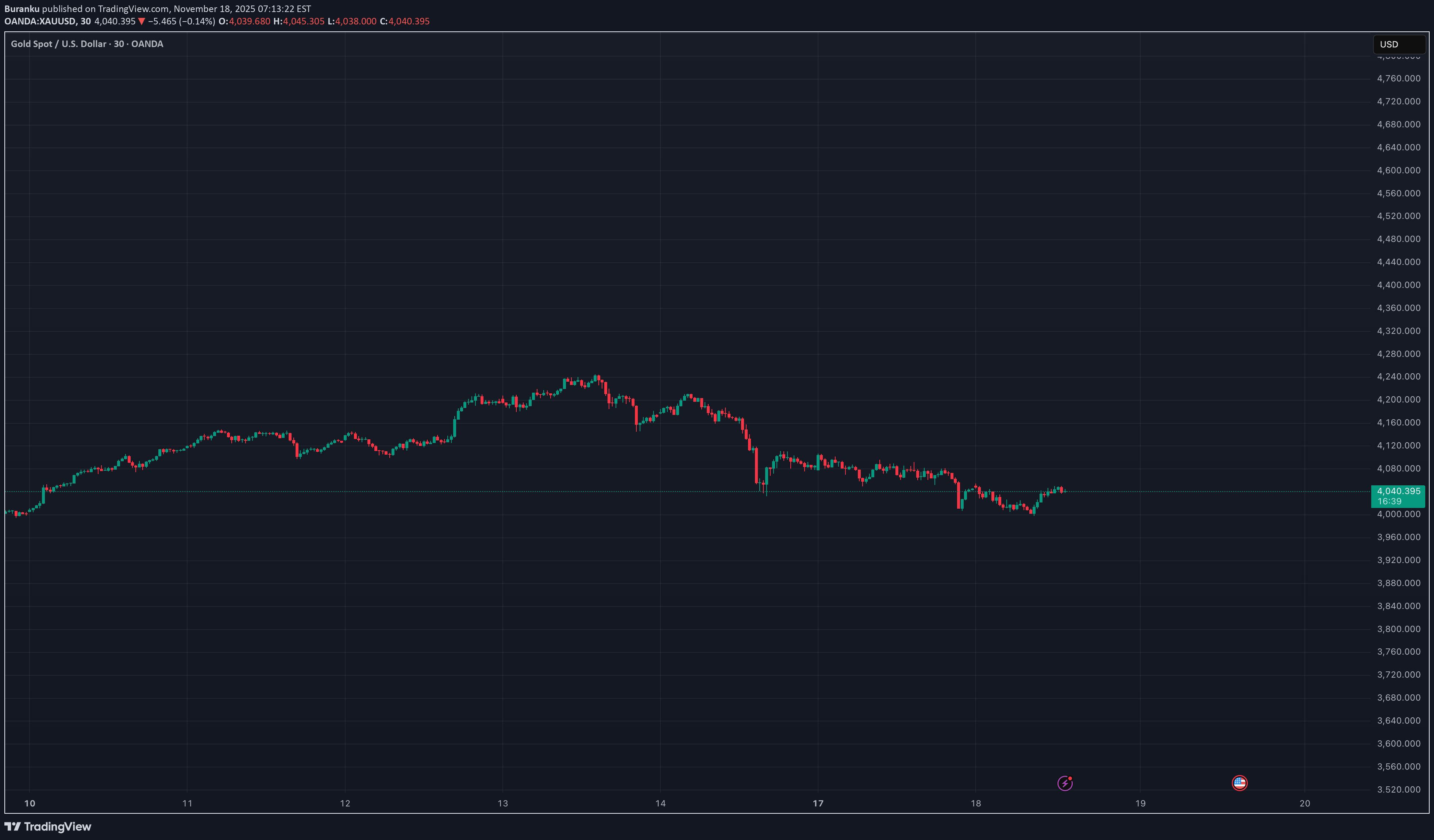
Summary The next leg of the market narrative is being pulled in opposite directions by three forces: Tesla’s shareholder vote on an unprecedented, performance-contingent $1 trillion award that would cement Elon Musk’s control over a “physical-AI” strategy; a renewed wave of mega-cap AI capex that is visibly compressing margins at some tech leaders while strengthening others via cloud cash flows; and a fragile, tariff-truce détente between Washington and Beijing that eased tail risk but leaves core strategic frictions unresolved. Into this mix, risk appetite wobbled as a broad selloff swept across equities, crypto, and even gold late last week, while oil slumped and the dollar stayed firm against the yen, reminding investors that positioning and liquidity matter as much as fundamentals in the near term. Tesla’s vote is the catalyst that concentrates these themes. The package would lift Musk’s stake to roughly 25% on stretching milestones, including audacious targets for market value and operational delivery tied to robotaxis and the Optimus humanoid platform. The governance optics are controversial, but the market read is binary: either lock in the “key-man” premium that underwrites Tesla’s robot ambitions, or risk a multiple that re-anchors on autos and energy storage if leadership or strategy fragment. Reporting indicates investors broadly expect passage, and U.S. press has framed the plan near-term as “likely to pass,” with big holders signaling support. The immediate vector for TSLA, then, is not demand for EVs in Q4, but whether investors are willing to keep discounting high-variance, long-dated FSD/robotaxi/robot cash flows on faith that Musk stays, and executes. At the same time, Big Tech’s AI arms race is reshaping P&Ls and factor exposures. Meta has guided capex up again into a ~$64–72 billion band for 2025 (with spending heavily skewed to data-center equipment that depreciates over ~5½ years), and its Q3 results showed costs rising faster than revenue, souring sentiment as investors reassessed the “spend now, profits later” trajectory. Alphabet also lifted capex materially this year (to the ~$70–75 billion zone), but benefits from Cloud profitability and stronger free-cash-flow momentum, softening the blow relative to Meta. Microsoft continues to show Azure revenue growth around the 30–40% range with high-40s to low-40s operating margins in Intelligent Cloud, keeping the cash-engine humming even as depreciation ramps. The message for markets is straightforward: AI is no longer just an “NVIDIA trade”, it is a capital-intensive, margin-shifting infrastructure build-out that helps owners of rentable compute (clouds) and strains ad-only models that lack a cloud payback. The macro backdrop isn’t standing still. A fragile U.S.–China trade calm followed leadership talks that paused some tariff escalations and delayed rare-earth restrictions for a year, lowering immediate supply-chain stress and trimming the “worst-case” path for the dollar and global growth volatility. But analysts caution that structural rivalry remains intact, and any reprieve could fade as technology controls and election-year politics re-assert themselves. The effect is “less bad, not solved,” which markets will treat as volatility-suppressing while it lasts. Market reactions (now) Into the weekend and Monday session, risk assets stumbled in concert. U.S. stocks slid, the Dow closed near 46,590, oil fell hard toward the high-$50s, and even havens wobbled as traders de-risked broadly; the euro hovered near $1.16 and USD/JPY around ¥155. A single-session snapshot never tells the whole story, but the breadth of the selloff, “ensnaring everything from gold to crypto to highflying tech”, speaks to tight positioning meeting a liquidity pocket, not a sudden change in the economic data. Strategic forecasts For the next 1–3 months, the path of least resistance is choppy but range-bound risk. If Tesla’s plan passes, the “physical-AI” optionality narrative can re-inflate specialty AI and autonomy beta even if near-term EV unit data stay soft; if it surprises by failing, expect an abrupt de-rating in “far-dated optionality” names and a quality/margin rotation back toward cash-rich cloud providers. Beneath the surface, AI-capex leakage into the real economy, power demand, land for data centers, transformers, grid upgrades, should keep non-tech cyclicals like utilities equipment, select industrials, and specialized REITs on a firmer trajectory, even as ad-driven platforms digest depressed operating leverage. On policy, the tariff truce keeps DXY capped versus Europe but supported against Asia until there is clarity on tech controls; any renewed chip-export tightening would be dollar-positive vs. CNY/JPY but equity-negative near term. Fiscal and political implications The AI build-out is becoming a fiscal and regulatory story. Power-grid bottlenecks will invite incentives, permitting reform, and local tax debates; capex-heavy tech will lobby for rapid interconnection timelines and favorable depreciation schedules to cushion income statements. Internationally, Washington’s need to coordinate with allies on “de-risking” versus China will continue to produce mini-deals that ease immediate trade noise without resolving the core strategic contest, keeping corporate planning in a “just-in-case” mode. Domestic labor and household stress remain in focus, shutdown aftershocks and partial SNAP payments demonstrate both the system’s resilience and its limits, with court-ordered funding workarounds creating administrative frictions that can dent near-term consumption at the margin. Risks Execution risk dominates. For Tesla, commercialization of FSD at meaningful attach rates and regulatory-permitted robotaxi operations is the hurdle, not demos; any high-profile setback in autonomy safety would sharply compress the “option value” embedded in TSLA. For Big Tech, the risk is a capex-driven margin air-pocket that collides with a softer ad tape or slower cloud bookings. Macro-politically, the U.S.–China respite could evaporate on chips, rare-earths, or maritime incidents; sanctions slippage via Russia-China energy trade complicates oil balances and could reignite volatility if enforcement tightens. Lastly, positioning risk is acute: with crowded exposures in AI beneficiaries and gold/crypto hedges, air pockets can produce “sell everything” days like we just saw. Opportunities Investors can lean into AI infrastructure second-derivatives, power, grid equipment, switchgear, long-lead transformers, specialized construction, and select data-center landlords, where backlog visibility is rising with less headline risk than ad-supported platforms. Within tech, prefer cloud vendors with improving unit economics over ad-only models until depreciation crests. In autos, position for dispersion: high-quality suppliers leveraged to driver-assist and power electronics should hold up better than commodity EV assemblers until pricing stabilizes. For macro hedges, maintain a barbelled approach, quality duration and cash-generative defensives on one side; selective commodity exposure (especially if China continues to build oil reserves) on the other, while avoiding crowded, high-beta hedges that can unwind violently. Asset-by-asset take XAUUSD (Gold): The latest de-risking wave hit gold alongside crypto, which is unusual but not unprecedented when funds raise cash. Structurally, gold is still supported by negative real-rate impulses if the Fed leans easier into 2026 and by central-bank buying. Tactically, expect choppy consolidation after a parabolic year; add on dips that coincide with DXY spikes rather than chase strength. S&P 500 / Dow Jones: Mega-cap tech’s capex shock and margin questions argue for a narrower leadership with rolling corrections beneath the index. The Dow’s latest pullback to ~46,6k reflects de-risking, not a growth scare; breadth and earnings revisions, particularly in cloud, utilities-adjacent industrials, and healthcare, will dictate whether dips are bought. Near-term, a 3–5% volatility band is base case. DXY: The tariff truce and softer oil tone limit upside versus EUR, but DXY stays supported by U.S. growth differentials and higher carry versus JPY and some EM. Range 102–106 feels appropriate unless a new policy shock re-prices the Fed path or a sharper European slowdown materializes. USDJPY: With yen near ~¥155 and the BoJ’s normalization still glacial, USDJPY remains a funding-beta barometer. Episodes of global de-risking can pull it lower, but the structural trade favors rallies unless Tokyo accelerates policy shifts or U.S. yields break lower decisively. Crude Oil: Prices slipped toward the high-$50s despite geopolitics, aided by ample supply and China’s stockpiling strategy smoothing demand. Sanctions friction around Russian flows is real but porous; watch for enforcement surprises as the main upside risk. Base case: $58–70 WTI unless inventories tighten. TSLA (as a proxy for “physical-AI” beta): Passage of the plan likely sustains the optionality premium; failure compresses the multiple quickly toward autos/energy storage comps. Either way, volatility is elevated into and right after the vote; risk-manage with staged sizing and options overlays if expressing a view.