
King_BennyBag
@t_King_BennyBag

تریدر چه نمادی را توصیه به خرید کرده؟
سابقه خرید
تخمین بازدهی ماه به ماه تریدر
پیام های تریدر
فیلتر
نوع پیام
King_BennyBag
رمز موفقیت در ترید: چرا ثبات از استعداد مهمتر است؟
به یک پست دیگر خوش آمدید! در پست امروز تفاوت بین تجارت استعدادهای درخشان و معاملات مداوم را بررسی کرد. چرا ثبات در تجارت استعداد را شکست می دهد؟ بسیاری از معاملهگران جدید معمولاً با این باور وارد معامله میشوند که موفقیت متعلق به باهوشترین افراد، تحلیلگرترین یا «طبیعیترین استعداد» است. در هر زمینه ای. وقتی در واقعیت، بازار فقط چیزی را پاداش میدهد که به مراتب جذابتر است، و آن ... قوام استعداد می تواند به شما کمک کند نمودارها را سریعتر بفهمید و/یا مفاهیم را خیلی سریعتر درک کنید، اما اینطور است قوام که تعیین می کند و نشان می دهد که آیا شما به اندازه کافی زنده مانده اید تا سودآور شوید و بازدهی مثبت داشته باشید. استعداد ایجاد پتانسیل | سازگاری باعث ایجاد نتایج می شود استعدادها زود خود را نشان می دهند، مثل یکی دو هفته اول. ممکن است فوراً الگوها را مشاهده کنید، win چند معامله، یا احساس کنید که تجارت "فقط برای شما منطقی است". سازگاری بعدا ظاهر می شود و بسیار نادرتر است. بازار اهمیتی نمی دهد که چقدر باهوش هستید. فقط به این موارد پاسخ می دهد: - چند بار از قوانین و سیستم خود پیروی می کنید. - چقدر ریسک را مدیریت می کنید ( یا آن را قمار کنید ) - چقدر تحت فشار و استرس هستید - یک معامله گر با استعداد که به صورت احساسی معامله می کند، در نهایت ضرر کرد، ( همیشه از دست دادن ) - یک معامله گر ثابت با مهارت های متوسط می تواند آنها را به طور پیوسته در طول زمان compound کند. چرا تاجران با استعداد اغلب در حال مبارزه هستند از قضا، استعداد می تواند یک نقطه ضعف باشد ( به خواندن ادامه دهید ) معامله گران با استعداد اغلب: - به جای قواعد خود یا قوانین بازی به شهود تکیه کنید ( یا عقل سلیم ) - معاملات را خارج از برنامه خود قرار دهید ( مانند بالا، قوانین آنها را رعایت نمی کند. ) - افزایش ریسک پس از چند برد ( باز هم، عدم پیروی از قوانین RM. ) - نادیده گرفتن data زیرا " آنها احساس اعتماد به نفس می کنند ” این منجر به ناسازگاری بردهای بزرگ و به دنبال آن ضررهای بزرگتر می شود. ( قمار ) بازار در نهایت هر کسی را که احتمال را مانند قطعیت میپندارد مجازات میکند. سازگاری احتمال را به لبه تبدیل می کند معامله به معنای درست بودن نیست، بلکه شروع یک فرآیند یکسان است. سازگاری یعنی: - فقط تنظیماتی را که تعریف کرده اید انجام دهید. (تعریف کرد که A+ چیست) - ریسک کردن به همان میزان در هر معامله. (مدیریت ریسک) - قبول ضرر بدون انحراف. (حرکت بعد از باخت) - برنامه خود را حتی پس از از دست دادن رگه ها دنبال کنید. (حفظ ثبات) یک معامله معنایی ندارد. صد معامله ای که به همین ترتیب انجام می شود، مزیت شما را نشان می دهد. سازگاری به احتمالات اجازه می دهد که برای شما کار کنند، نه علیه شما. بازار به نظم و انضباط پاداش می دهد، نه درخشش بهترین معامله گران جهان دائماً در تلاش برای پیشی گرفتن از بازار نیستند. آنها: - تنظیمات کمتری را معامله کنید - رویکرد آنها را ساده نگه دارید - ابتدا از سرمایه محافظت کنید - بگذارید زمان و تکرار کار را انجام دهند - آنها می فهمند که بقا اولین هدف است. - نمیتوانید حسابی را که منفجر کردهاید compound کنید. ثبات خسته کننده است و این نکته است سازگاری فاقد هیجان است. هیچ هجوم آدرنالین، هیچ معامله قهرمانانه، هیچ لحظه ای وجود ندارد. فقط تکرار، صبر و خویشتن داری. به همین دلیل است که اکثر مردم شکست می خورند. بازار کسانی را که به دنبال هیجان هستند فیلتر می کند و به کسانی که با تجارت مانند یک تجارت رفتار می کنند، نه سرگرمی، پاداش می دهد. استعداد بدون ثبات موقتی است بسیاری از معامله گران موفقیت اولیه را تجربه می کنند. تعداد بسیار کمی آن را حفظ می کنند. موفقیت کوتاه مدت اغلب ناشی از موارد زیر است: - شرایط مطلوب بازار - شانس تصادفی - اعتماد به نفس بیش از حد موفقیت دراز مدت ناشی از موارد زیر است: - فرآیند - کنترل ریسک - نظم عاطفی ثبات چیزی است که یک ماه خوب را به یک شغل پایدار تبدیل می کند. چگونه به عنوان یک معامله گر ثبات ایجاد کنیم ثبات یک مهارت است نه یک ویژگی شخصیتی. شما آن را توسط: - تعریف قوانین معاملاتی شفاف - استفاده از ریسک ثابت در هر معامله - ژورنال هر تجارت صادقانه - بررسی منظم عملکرد - تجارت کمتر، نه بیشتر هدف شما تاثیرگذار بودن نیست. هدف شما تکرارپذیر بودن است. افکار نهایی استعداد ممکن است شما را به تجارت علاقه مند کند. ثبات شما را در بازی نگه می دارد. در حرفهای که با عدم قطعیت هدایت میشود، معاملهگری که هر روز به همین شکل ظاهر میشود، همیشه از کسی که به دنبال درخشش است، بهتر عمل میکند. در معاملات، ثبات فقط استعداد را شکست نمی دهد، بلکه جایگزین آن می شود. از همه شما بسیار سپاسگزارم که خواندید، امیدوارم همه از خواندن آن لذت ببرند و برای همه شما مفید باشد! اگر سوال یا درخواستی دارید در نظرات زیر با من در میان بگذارید.
King_BennyBag
بیت کوین به 110 هزار دلار میرسد یا سقوط میکند؟ تحلیل تکنیکال و سطوح کلیدی پیش رو
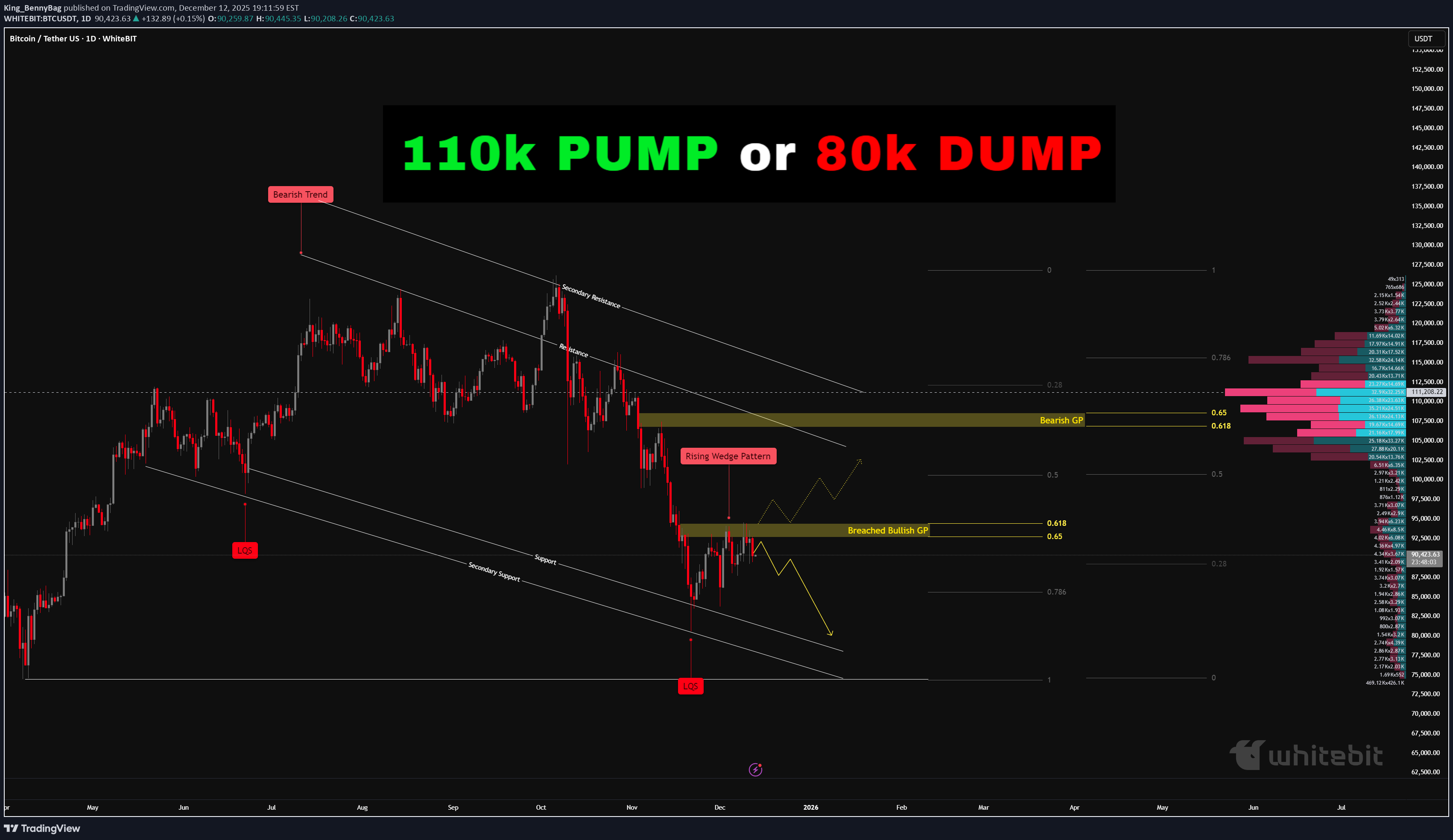
Bitcoin ارزیابی بازار - WhiteBit نمودار و مبادله (فریم زمانی روزانه) به همه خوش آمدید امروز ما Bitcoin را با استفاده از WhiteBit نمودار در بازه زمانی روزانه بررسی اجمالی بازار Bitcoin اخیراً به 126 هزار افزایش یافت و نقدینگی را در بالاترین حد خود قرار داد. مدت کوتاهی پس از آن، بازار تا حدی با اخبار تعرفه تقویت شد - که منطقه مقاومت بالایی را تقویت کرد و باعث شد قیمت به زیر آن بازگردد. قیمت به شدت به کاهش خود ادامه داد و به 80.3 هزار رسید، که در آن میلیون ها موقعیت منحل شدند. ساختار فنی فعلی 1. جیب طلایی صعودی شکسته قیمت به زیر جیب طلایی صعودی (0.618-0.65) رسیده است. هنگامی که این منطقه شکسته شد، معمولاً به مقاومت تبدیل می شود، چیزی که اکنون می بینیم. 2. Rising Wedge در 4H در نمودار 4 ساعته، قیمت در حال تشکیل یک گوه افزایشی است، الگویی که اغلب قبل از ادامه روند نزولی است. این گوه مستقیماً با جیب طلایی شکسته شده هماهنگ می شود و یک تلاقی قوی از مقاومت را تشکیل می دهد. 3. زمینه روند اقدام قیمت همچنان در یک روند نزولی در بازه زمانی بالا قرار دارد و به نظر می رسد فشار اخیر به سمت بالا به جای تغییر در ساختار، یک عقب نشینی نزولی استاندارد باشد. این عوامل ترکیبی احتمال فرورفتگی عمیقتر را نشان میدهند. سطوح نزولی از علاقه 0.786 فیبوناچی مجدد (~85.6k) منطقه تخفیف بعدی و هدف منطقی در صورت ادامه ساختار نزولی. سطح روانی 80k یک منطقه major با حجم بالا و روانی. اگر 85.6k شکسته شود، آزمایش مجدد 80k محتمل می شود. خرس ها به وضوح این منطقه را هدف قرار می دهند. حجم نمایه بینش با استفاده از ابزار ولوم لنگر، خوشه قابل توجهی از حجم در حدود 111k قرار دارد - درست بالاتر از سطح کلیدی 110k و بسیار نزدیک جیب طلایی نزولی (0.618-0.65). این منطقه هنوز مورد آزمایش مجدد قرار نگرفته است. در بازههای زمانی بالاتر، جیب طلایی نزولی اغلب بهعنوان منطقه اصلاح ایدهآل عمل میکند قبل از اینکه قیمت پایینتر بماند. اگر سناریوی نزولی باطل شود، این یک هدف صعودی قانع کننده ایجاد می کند. لحن بازار حرکت در سمت صعودی ضعیف باقی می ماند و فروشندگان کنترل خود را حفظ می کنند. تا زمانی که قیمت در زیر جیب طلایی شکسته باقی بماند، ساختار بازار به سمت نزولی ادامه میدهد. خلاصه سناریو سناریوی صعودی قیمت بالاتر از جیب طلایی صعودی شکسته شده (منطقه 0.618-0.65) شکسته می شود و بسته می شود. استحکام پایدار بالاتر از این سطح در را برای موارد زیر باز می کند: - آزمایش مجدد 110k، با حجم major در 111k تراز می شود - فتیله یا پسوند بالقوه به جیب طلایی نزولی این به طور موقت حرکت نزولی کوتاه مدت را باطل می کند. سناریوی نزولی (اولیه) جیب طلایی شکسته همچنان به عنوان مقاومت قوی عمل می کند. گوه بالارونده خراب می شود. اهداف قیمت: - 0.786 Fib در 85.6k - سطح روانی 80k در صورت شکست 85.6k - روند نزولی کلی دست نخورده باقی می ماند و گاوها حرکت ضعیفی را نشان می دهند. از همه شما برای خواندن بسیار سپاسگزارم. BTC واکنشهای زیادی را در سال جاری انجام داده است، از رکوردشکنی تا شکستن رکورد انحلال 19 میلیارد در تنها چند ساعت! مهم است که محتاط باشید، فقط آنچه را که می توانید از دست بدهید به خطر بیاندازید و اطمینان حاصل کنید که مدیریت صحیح ریسک را انجام می دهید. حتما دنبال کنید و نظر خود را در زیر نظر دهید! اگر مایلید هر راهنما یا ارزیابی ارزهای رمزنگاری خاص انجام شود، به من اطلاع دهید! در مورد گوه ها! راهنمای زیر را بررسی کنید که ویژگی "چگونه گوه ها را تجارت کنیم!" در 5 مرحله! همانطور که ما نمودار شد! قیمت رد شد و به روند نزولی خود ادامه می دهد.
King_BennyBag
آموزش ترید با گُوِهها: کسب سود در ۵ گام سریع و آسان!
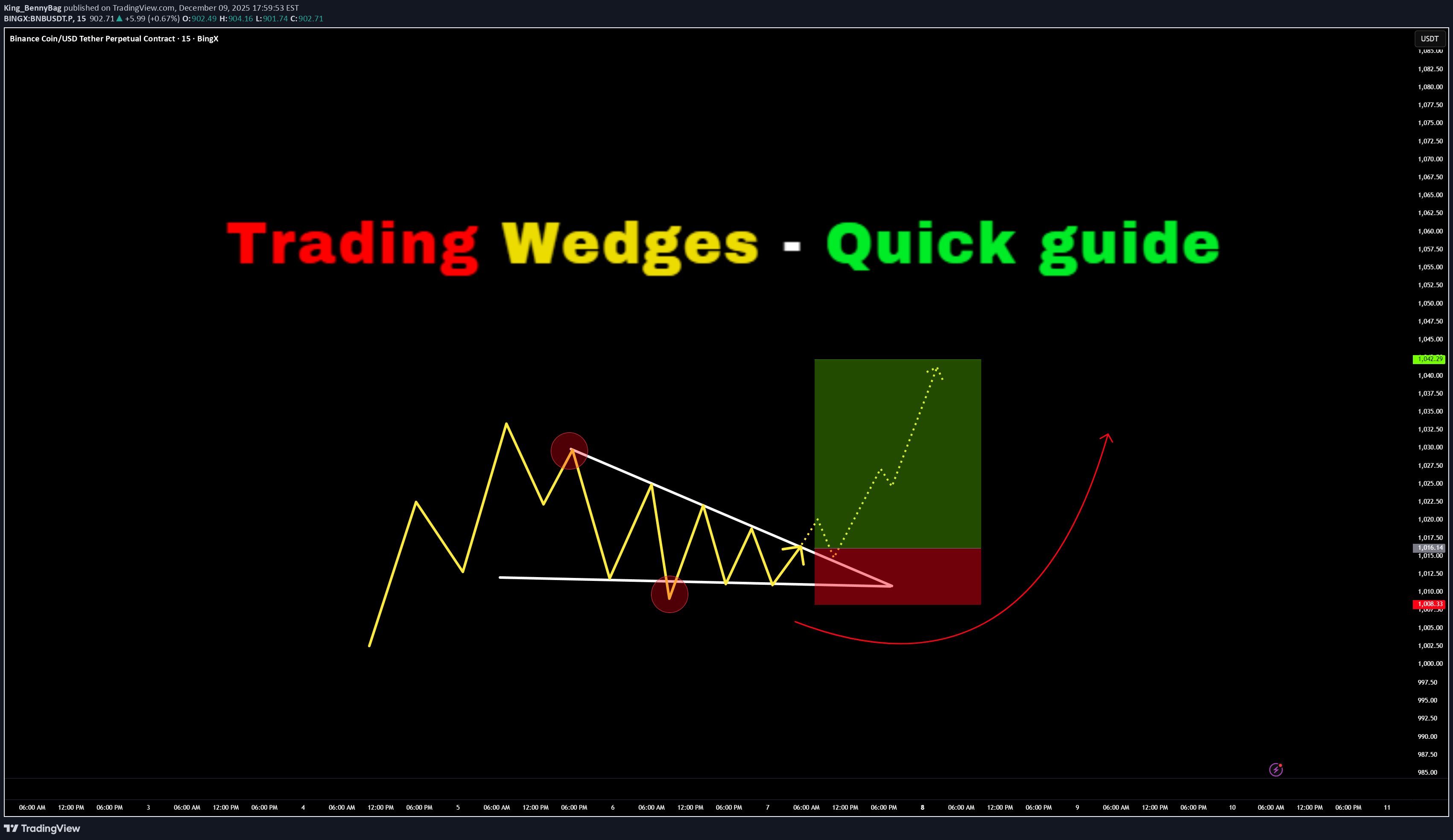
همه را به راهنمای دیگری خوش آمدید، امروز ما "Trading Wedges" را در یک راهنمای 5 مرحله ای سریع اجرا می کنیم. حتما لایک کنید، دنبال کنید و به انجمن بپیوندید! 1) گوه ها را شناسایی کنید: - افتادن گوه - گوه در حال افزایش - گوه متقارن (مثلث) 2) جهت شکست را شناسایی کنید: - سقوط گوه > شکست صعودی مورد انتظار - Rising Wedge > Breakout Bearish Expected - گوه متقارن (مثلث) > ادغام مورد انتظار Breakout باید نشان دهد که شمع در خارج از گوه بسته می شود. 3) منتظر بمانید تا تست مجدد در سطح کلید قبلی یا مقاومت (که اکنون پشتیبانی می شود) انجام شود. اگر آزمایش مجدد با یک شمع رد قوی یا تثبیت انجام شود - شروع به طولانی شدن کنید. 4) وارد تجارت شوید: تایید مجدد تست موفقیت آمیز را وارد کنید SL برای طولانی باید کمتر از پایین قبلی باشد SL برای شورت باید بالاتر از اوج های قبلی باشد. 5) سطوح TP: TP 1) اولین هدف بالا TP 2) دومین هدف بالا TP 3) سومین هدف بالا. نتایج: قیمت بالا رفته و به هر سه Take profit رسیده است. برای معاملهگری که سود بیشتری میخواهد، میتوانید به طور بالقوه پس از آن TP Trailing را فعال کنید - با این حال من این را توصیه نمیکنم زیرا باید احساسات خود را در مورد "GREED" در نظر بگیرید. از همه شما برای خواندن بسیار سپاسگزارم! امیدوارم این یک راهنمای مفید در آینده یا حال باشد! اگر میخواهید راهنماییهای سادهسازی کنم، در نظرات زیر به من اطلاع دهید یا از طریق نمای معاملاتی با من تماس بگیرید!
King_BennyBag
۵ نکته طلایی که هر تریدر مبتدی باید بداند!
Welcome back everyone to another post! In this article we will be explaining 5 key pointers (tips) for new individuals entering the trading space. When it comes to trading first there is “ understanding ” before we begin the 5 keys steps. Let me assist you in understanding what will happen when you take on trading. Trading is a challenge. Not a video game challenge, not a math test challenge – a * Challenge * One that will break you. Trading will break you mentally, physically, spiritually and financially. It is an eye-opening journey. Trading will teach you a lot about yourself, and it will teach you a lot about discipline, patience and how you can analyze markets. I saw a quote somewhere, it said trading: “ Trading is the hardest way, to make easy money ” and they are right. You will be learning how to manage risk, control your emotions, understand your own decision-making patterns. These are all invaluable lessons for life, as well as trading. Sounds great! But then there are the losses, what you lose to gain all this. Trading isn’t something that you can learn overnight – all those posts you see about a young 17-year-old “ cracking the code ” is rubbish. Why? Because they haven’t learnt life lessons. You can make money fast, but you will lose it faster if you don’t know how to manage it. Trading will drain every bit of energy out of you. You will feel like you’re falling behind, you will eventually collapse at every loss and become frustrated. The market will test you; the market doesn’t give a damn about you – you accept the risk when you take on trading and since you’re the one making the trades, it’s you VS you. You’re testing yourself. You agree to test your patience, your confidence, your mindset. Doing so will make progress feel nonexistent or slow. Every day, and every trade you will question yourself, wondering if “trading” is even for you. Sometimes it will feel like you’re going in circles. You will continue to make mistakes repeatedly. It will become exhausting but remember – only experience and your own strengths will allow you to succeed. Only those who can endure the grind without giving up will make it. So, let’s start off the 5 key pointers that will prepare you. 1) Prioritize Risk Management Over Profits: Most newbies focus first on “ making money ” rather than safeguarding capital. The reality is that surviving in the market is way more important than winning every trade you see or come across. Key Points: Determine risk per trade: A common rule is risking no more than 1-2% of your trading account on a single trade. This way even a string of losses will not wipe you out. Always use stoploss: A defined maximum loss per trade enforces discipline and emotions to stay in check. Position sizing: Your sizing should be proportional to what you’re willing to lose on each trade. Bigger trades amplify the losses, but they also amplify the profits. Why it matters: Without strong risk management, even a high win-rate strategy can fail. Protecting capital ensures you’re still in the game when opportunities arise. 2) Develop a trading plan and stick to it . Random reactive trading is the best way to lose money. Build your plan overtime. Key points: Define your strategy: Building your strategy is the longest part, constant back testing and forward testing, refining and rebuilding. You’re not “switching” your strategy if you’re adding something small to it, you’re changing it if you eliminate the whole thing. Identify your form of trades, short, mid, long term or swing trades. Set clear rules: Don’t leave anything to chance, for example “I only enter trades if price closes above the 50ema and RSI is above 50” Journalling trades: Ensure to journal all your trades, “How do I journal” Easy. Record the time, date, symbol, pair, what model/system you used, images, your entry, tp and exit, why and for how long you’ll have it open. Why it matters: Consistency is a key, it pairs with discipline, psychology and lingers with risk management. Traders who follow a disciplined system perform better than those to trade off an impulsive feeling. Other words “Gamble” 3) Master one market and one system first: Beginners usually spread themselves too thin, trying forex, crypto, stocks and commodities all at once – Unfortunately for me I made this mistake at the start which made it very difficult! – Don’t do this. Stick to one market. Key points: Pick one market: Each market has its own rhythm, volatility, and liquidity. Teaching one thoroughly allows you to understand everything about it. Focus on one system: Instead of trying every new system from you tubes or forums, master one approach and refine it onwards e.g. – you trade FVGs, Win rate is 50% once you add Fibonacci it might be e.g. 65% Avoid information overload: Social media and trading forums are filled with conflicting advice, stick to your chosen approach and refine it. People say you need to have 12-hour trading days. If you do this, you will FAIL. You will grind yourself into the ground and face burnout making it very difficult to get back up again. Limit yourself to how much trading and trading study you do a day. Eg 10 back test trades, 3 real trades, 3 journaled trades, 1 hour of studying and researching the market. Without strong risk management, even a high win-rate strategy can fail. Protecting capital ensures you’re still in the game when opportunities arise. Why it matters Depth beats breadth early on. Mastering a single market and system will allow you to build confidence and improve your edge. 4) Understand the Psychology of trading. Trading isn’t just numbers: as mentioned in “understanding” it’s a test of emotional control, fear, greed and impatience. Key points: Emotions vs logic: ensure you recognize emotional reactions like FOMO (Fear of missing out) or revenge trading. Pause before reacting to a trade that will go against you. Set realistic expectations : Markets move slowly. Sometimes for months, don’t expect huge gains overnight. Just like DCA focus on compounding. Compound your knowledge and skill set. Mindset training: Techniques like medication and journaling as well as visualization can help reduce stress and maintain discipline. Why it matters: Even a diamond system can still fail if emotions drive your actions. Psychology often determines long term success, more than technical skill. 5) Prioritize learning. Then earning. Beginners fall into the trap of trading being a “get rich quick” scheme. But the real investment is learning how the market works. Key points: Paper and demo trade first: Practice on demo accounts before you use real money – you will be surprised how many times you will fail. It’s better to fail with simulation money than your McDonalds weekly wage. Review every trade: Analyze your losing trades, but also your winning trades. Find patterns and areas to improve. Continuously educate yourself: Read books about the mind, about habits, watch market analysis but critically, apply what you learn and don’t just collect information and not use it. Why it matters: Earnings are just the byproduct trading. The faster you learn and adapt, the sooner your profits will appear. Treat early losses as tuition. Not failure. Thank you all so much for reading. I hope this benefits all those who are starting off their trading journey. If you have any questions, let me know in the comments below!
King_BennyBag
رمز موفقیت در ترید: ۳ کلید حیاتی نظم و انضباط معاملاتی که باید بدانید
Welcome back everyone to another post. In today’s article we will dive deeper into the 3 keys of Trading success! As attached below. Today we will be reviewing the Key “DISCIPLINE” Just like risk management and Psychology this is also a difficult skill to maintain. In the modern world it’s considered a skill now, because most of society doesn’t have any discipline in any field. Let’s get started. Definition: When it comes to Trading Discipline. Trading Discipline means one user has the mental ability ( strength ) to follow their system. Their Trading Plan, risk management and maintain their psychology regardless of what events happen. Trading Discipline separates profitable traders from the gamblers. (Below I have attached the article Trader or Gambler as it relates to this post, make sure to give it a read!) Discipline ensures that the user makes the right decisions based on strategy and logic instead of FOMO, ego and greed. It is not just about following rules though. Discipline relates to the outside world of cultivating habits, mindsets and self-control too. 1) Understanding Trading Discipline Firstly, you must truly grasp what it actually means. Most individual traders confuse it with stubbornness. They think it’s about holding on to trades or forcing a system. In reality, it’s only about consistency and self-control! Simple right? Example: Imagine, you have a system. A trading plan. It has the 1% rule where you don’t risk more than 1% of your account per trade. Understanding discipline means you must know why that rule is in place. It’s too protected your capital! Not breaking it after a few losses just to catch up. Real Life Analogy: A professional runner trains every day. They do it even when they are sad, tired, unhappy and unmotivated. This is discipline. Discipline drives long term results. Discipline is continuing it no matter what the current situation is. 2) Implementing Trading Discipline The process of implementation is nothing complicated. It’s only turning knowledge into action. Knowing about it won’t do anything, you must maintain the effort of consistently applying it to each step in your system. How to implement it: - Follow your plan: Before each trading day starts, read out your system and tell yourself you will follow it. Even if no set ups appear, you will still succeed because you followed your plan. - Set risk rules: Apply proper risk management and lot management so you don’t cave into fear. Apply the 1:3 Rule or 1:4 Rule. - JOURNAL your TRADES Damn it: Record every trade, your reasoning, and whether you actually followed your rules. Don’t just add a screen shot and nothing else. YOU won’t succeed if you don’t journal your trades properly. Example: A novice trader may plan to place an entry when price is at $50 and exit at $55 with a 2% risk per trade. Even if it dips to price $48, they hold to the stop loss accepting the loss instead of moving it and hoping it “recovers” Real Life analogy: Think of it as budgeting every day, or for a holiday, or your next maccas run. You set a weekly budget plan and stick to it. Even when tempted by special deals, sticking to your budget allows for long term financial health to take place. Just like risk management but with real life. 3) Maintaining Trading Discipline Discipline can’t act overnight, it’s the process of small steps working your way up to solid consistency over time. Even when feelings run high – discipline isn’t one time. It’s daily practice. Some strategies are: - Reviewing your previous trades daily or at the end of each week during a market close. Assess your wins and losses. - Build up emotional awareness, be aware of what fear, greed and overconfident emotions take place. - Reward yourself to the rules of your system, not just profitable outcomes. If you reward yourself for not trading in one day because not a single set up appeared, you were still successful because you didn’t “force” a set up and take a gamble. Example: A trader might experience 3 losses in the first hour of the day, even if they were all A++ set ups. Instead of revenge trading, he sticks to his plan, accepts the L and leaves the charts for the rest of the day to reset mentally and gain a win in another field, eg – Gym. Real-life analogy: By maintaining a healthy lifestyle, you must apply the same approach. You don’t stop exercising after a few days off. Discipline keeps you aligned even when your motivation and mental strength fades. 4) Adapting without breaking your Discipline Long story short, Markets move, Markets change, Markets can and WILL evolve. Traders must adapt. Not just allows their system to adapt, but their psychological mindset of discipline. Adapting can be confusing but it can be done by: - Don’t switch up new strategies, adjust your current system slightly then back test and forward test it on demo accounts. Eg Paper trading. - Update your trading system based on data and monthly results, not emotions. - Avoid making sudden changes right after losses. Example: Let’s say a forex strat no longer works due to low volume and volatility. A strict trader tests adjustments in their demo accounts, then incorporates them into the plan after they have received positive data from tests. Real-life analogy: A chef might change his recipe based on a specific ingredient availability but will not ignore the core cooking principles. It’s about adapting strategically, not impulsively. 5) Reinforcing Discipline Through mindset and daily life. Discipline in the trading field is just amplified by the discipline process outside of trading. It follows the exact same process. Daily habits and mindset directly impact one’s trading performance. To reinforce discipline, you can: - Maintain routines: Wake up at consistent times. Don’t wake up at 3:00am to “grind” if you do that, you’re stupid – you’ll burn yourself out and make the process harder. Plan your day and review goals. Eg do a brain dump every morning, write down or type out all ideas, thoughts and emotions and sort it out. - Practice mental training: People suggest doing personal journaling or meditation. Just go for a walk in the morning for 5 minutes. First thing in the morning, feel the fresh breeze, air, sunlight and nature. You simulate the mind and body in a natural way allowing for you to think clearly and train your mind. - Change your environment: surround yourself with work dogs, people who are strict on routines, self-improvement, self-development, individuals who don’t slack off. Example: Traders who can control their time well, exercise, eat healthy can maintain their stress in trading better than one who does not focus on outside habits. Real-life analogy: A school student who studies consistently every day and night rather than squishing it all in before exams perform better. Just like a trader who can maintain structured habits inside and outside of the market. Conclusion: Trading discipline is more than following rules, it’s a mindset and a lifestyle, it relates to the world outside of trading. Just like psychology, if you can’t master it outside, you won’t master it inside. It's about understanding your own weaknesses and adjusting the system to hold structured rules that will allow it to be more easily achievable for yourself. Remember, trading is not sunshine and rainbows. It’s about building a system and following it. It is the hardest way to make “ easy ” money. To find out what the other 2 keys are, review the 3 posts below where I explain the 3 keys to trading success, and go deeper into each of them!
King_BennyBag
مدیریت ریسک در ترید: راز حفظ سرمایه و موفقیت پایدار
بازگشت همه به مقاله نمای معاملاتی King_BennyBag را خوش آمدید. در پست امروز ما در مورد اینکه چگونه می توان مدیریت ریسک در تجارت را درک کرد و آن را عملی کرد بحث کرد. ما با تعریف مدیریت ریسک شروع کرد. تعریف مدیریت ریسک: مدیریت ریسک فرآیند شناسایی سرمایه فعلی شما و ارزیابی میزان سرمایه گذاری و از دست دادن آن است. دیگر هرگز نبینم. این شامل شناسایی ریسکها، پذیرفتن ریسکها و اطمینان از داشتن یک واکنش برنامهریزیشده برای قبل، حین و بعد از معامله است. سرمایه در مدیریت ریسک: در گذشته بیان کرده ام که هدف از تجارت این است که "حفاظت" اول سرمایه شما هنگامی که می دانید چگونه از آن محافظت کنید، سپس می توانید آن را ضرب کنید و ذره ذره ریسک کنید. برای مدیریت صحیح ریسک، باید تصمیم بگیرید که چه مبلغی را به سرمایه گذاری یا معاملات خود اختصاص دهید. به عنوان مثال - شما فقط 1٪ از سرمایه خود را در هر معامله به خطر می اندازید. آنچه را که می توانید از دست بدهید، سرمایه گذاری کنید: شما فقط باید با وجوهی که می توانید از دست دادن آن ها را بپردازید، معامله کنید، حتی در این صورت باید محتاط باشید و فرآیند بالا را برای همان سرمایه اعمال کنید. انجام این کار عامل فشار عاطفی را از بین می برد و از تصمیماتی که ناشی از ترس از دست دادن است اجتناب می کند. (FOMO) قبل از معامله، یک عدد واضح در مورد چیزهایی که می توانید از دست بدهید (هرگز دیگر نبینید) بدون اینکه روی زندگی شما تأثیر بگذارد، تعیین کنید. شناسایی خطرات: در رابطه با پست های قبلی من، شما باید یک برنامه تجاری / لبه تعریف شده داشته باشید. این طرح باید به شما امکان دهد نوسانات بازار، رویدادهای خبری، اشتباهات روانی یا نقاط بی اعتباری فنی را شناسایی کنید. اینها خطراتی هستند که باید قبل از معامله شناسایی شوند. دانستن این موارد به شما امکان می دهد اندازه موقعیت مناسب را به درستی اعمال کنید. قبول خطرات: وقتی نوبت به ریسکها میرسد، (بیشتر مردم این را در نظر نمیگیرند) به این معنی است که قبل از انجام معامله، سناریوی احتمالی باخت را بپذیرید. استاپ ضرر شما (همیشه از استاپ لاس استفاده کنید!) باید به گونه ای تعریف شود که شما را نقد نکنید. شما باید اندازه موقعیت مناسب را محاسبه کنید و یاد بگیرید که نتیجه معامله و تأثیرات ذهنی آن بر شما را بپذیرید. با انجام این کار، معاملات و فرآیند مکانیکی می شود. دیگر احساسی بود. اگر ضرر خیلی بزرگ است و به هر حال آن را می گیرید. شما نباید آن معامله را انجام دهید زیرا تجارت انتقامی را تشویق می کند. برنامه ریزی پاسخ های قبل، در طول و بعد از خطرات: با تجارت و مدیریت ریسک، باید یک پاسخ از پیش تعریف شده برای قبل، حین و بعد از معاملات داشته باشید. خطرات شما باید تنظیم شود. قبل از معامله، شما باید یک ورودی، SL و TP مجموعه داشته باشید. همراه با سطح ابطال (اگر قیمت به یک نقطه خاص رسید، معامله را قبول نکنید) و حداکثر ریسک، به عنوان مثال "حداکثر 5000 دلار در این معامله ریسک کرد" در طول تجارت، شما باید به برنامه پایبند باشید، SL یا TP خود را اگر بخشی از استراتژی شما نیست، تنظیم نکنید. پس از معامله، اگر بردید یا شکستید، دلیل آن را پیدا کنید. آیا این یک معامله معتبر بود، آیا از مزیت شما پیروی کرد؟ یا قمار کور کرده اید. اگر شکست خوردید، علت را دریابید، اگر برنده شدید، بفهمید که چگونه می توانستید آن را به سمت بالا افزایش دهید. به کارگیری این 3 عامل باعث می شود چرخه نظم و انضباط توسعه و رشد یابد. سپس تصمیم گیری تصادفی را حذف می کند. مدیریت ریسک یک کلید حیاتی در تجارت است. بدون آن - شما قبلاً از دست داده اید. من 3 کلید موفقیت در تجارت را در زیر پیوست کرده ام. در اینجا من به آنچه که یک فرد برای موفقیت در تجارت باید تسلط داشته باشد، به طور عمیق می پردازم. دیدن اینکه مردم از این پست لذت می برند و آن را مفید می دانند بسیار عالی است! اگر سوال یا درخواستی دارید، به من اطلاع دهید! دیدن اینکه همه از این پست لذت می برند بسیار عالی است! دوباره، اگر سؤالی دارید - لطفاً به من اطلاع دهید!
King_BennyBag
روانشناسی ترید: چرا ذهنیت سختترین مهارت برای تسلط است؟
Welcome all to another post. In this article we will dive into the process of Mastering Trading Psychology. 1) What is Trading Psychology: Trading Psychology, it is your mindset. It is what you think, how you feel, what you need to do, what you want to do. It is a mixture of thoughts, future actions, emotions and past, present or future behaviors that influences your present self in making good, or bad decisions in the market. It can be considered a “strategy” but leans more to a “skill” It’s about what your thought process is when you are under pressure. Everybody, investor, gambler, trader, swing trader, day trader, scalper and holders, bring their own personalities & habits into the trading space. Whether it’s impatience, or patience, fear or greed, confidence or impulsiveness, or discipline. These mental sets determine how frequently you can follow your edge and how well you can manage wins, losses and uncertainty. Trading psychology is the framework of the mind. It works for you or goes against you. Both are under your control to choose from. A strong, stable, clear mind keeps you going. A weak, broken, cluttered mind keeps you falling. Ultimately, to master trading in psychology, you need to master yourself. 2) Pros and Cons of Trading Psychology: Pros: The pros/benefits of Trading Psychology, once it is mastered, is simple. You understand the game. You understand the process. You understand why you lose, why you win, why manipulation takes place and why you trade it. It is a skill that is developed through patience and perseverance along with constant practice. Like every other skill, it demands TIME, ENERGY, and constant Trial and Error of failures, wins, adjustments and so on. It isn’t something that can be taught or learned once, except for those who learn to recognize and leverage their mental strengths & weaknesses can truly master it over time. Cons: Trying to master Trading Psychology means you need to LOSE. You need to experience loss after loss after loss after loss. You need to fail many times. Every time you fail, you understand how to take control of your emotions, you learn where things went wrong, you learn how to build your edge. But it’s not always about losses, it’s about gains (wins )too. You need to maintain a stable status of emotions whether you win or lose. You can’t show anger, you can’t show excitement. Because both will come back at you with another loss. This means you cannot allow yourself to be ruled by any emotion, positive or negative. It can be a long uncomfortable process that can take years to master. Sometimes even decades. What makes it more challenging is that trading psychology does not exist in isolation. Psychology outside of trading must be mastered too. How you think, act, live, every single day. - We will explore this topic further down the article. 3) Why it is important in the trading space: Psychology is an essential topic that must be taught and considered. Because without it, you will not succeed. Without self-control, or a strong mind, trading will become nothing more than just gambling like a slot machine. It's a skill that many overlook. With it, you are aware of what works and what fails. It allows you to step back and re-assess the next trade instead of forcing it. The end goal is to make money, but to even do that you first have to protect your capital. Only take A++ Set ups (High confluence/probability set ups) and avoid any traps involving emotions like: Fear of Missing Out (FOMO) or the “I just need 1 good pump” (One Big Win) Mindset. With it being in the trading space, it gives users the ability to pause, re-assess and question your decisions on the trade you are about to take. It helps to mention, “Is this an A++ Setup?” “Does it align with my strat, my edge, my goals?” If it does not and you decide not to take it, you save yourself a loss of capital and have made a win of improved trading psychology. It assists you in distinguishing the difference between good/bad trades. Not on the result but the process. It keeps you grounded. 4) How to Master Trading Psychology: Just because it is difficult & challenging, does not mean it is impossible. First step – building discipline through consistency and structure. Ensure you have a clear trading plan set up. One that defines your edge or can be adjusted to find your edge. Commit to following it no matter what the market is doing. Pumping, Dumping or consolidating. Consistency in action will build mental strength. Secondly, you must work on emotional control. Understand and be focused on how you feel when you experience fear, greed, or overconfidence. These emotions push you off your plan if you let them take over. Each time this happens, you must log it. That way you can accumulate data and self-awareness. With that, everyone says this. BackTEST or at least forward test you strategies extensively. Keep a detailed journal that has a good list of questions that you must answer after each trade. Be brutally honest with yourself. Don’t hide losses because you have already hit 10 in a row. Log them all down. This way you will then be able to recognize emotional triggers and recurring patterns appearing that are holding you back. Being able to recognise them is the first step to controlling them. OBSERVE YOURSELF. While this takes place, you must begin to build trust in your system (strategy) and in yourself. You will see how your actions and choices line up with your plan. That way your confidence will shift from emotions to process driven. Last one is patience. The hardest yet most critical psychological skills. Take ONLY A++ set ups, for example a set up that has 4 confluences or 5 lining up. Doing this trains your mind into avoiding impulsive behavior or falling into FOMO based environments. To see another deep dive into mastering trading psychology, review the post below to determine which mindset you currently have. Are you a trader? Or are you a gambler. 5) How Psychology in our daily lives affects our ability to trade: Trading Psychology is an interesting concept, but so is psychology in general. The human mind is weak and for it to be strengthened, it takes time & self-awareness. A weak mind won’t get you anywhere. Psychology is not a simple one sentence definition. It can mean many things, or many situations. It is a critical role in our life, it shapes our emotions, reactions and choices. It can lead us to self-sabotage or it can lead us to success. If you cannot control your psychology outside of trading, you won’t be able to control it inside of trading. By this I mean daily emotions. For example: Imagine an individual experiences a breakout, they are sad, they are angry, they are emotionally drained and hurt. Then they go off to trade. They will LOSE. This is because when the mind is in an uncomfortable state, it seeks a dopamine hit, and when they associate a win in trading = dopamine hit, they naturally turn towards trading. They want to feel that dopamine hit, so they can feel good again. But then they are no longer following their edge. This destroys discipline, objectivity and focus. This is not just tied to relationship breakups, but everything in our day to day lives. If you experience a bad day at work, failed an exam, argued with family, or facing a stressful time. If you bring unresolved emotions, thoughts and feelings into the trading space, trading just becomes a big emotional outlet. Psychology appears in every action we do, EVERY day. “I need to drink water” I will get water. I see soda, “I now want soda.” The mind now as switched completely from the main objective “Water” to soda. If you cannot control your mind to stick to what is right, then you will not master trading psychology. The better control you have over yourself, & your mind, the more consistent and rational your trading decisions will become. KEY POINTS: 1) What is Trading Psychology: - Trading psychology is the foundation of every mental action. You must master yourself before mastering the market. 2) Pros & Cons of Trading Psychology: - Trading Psychology cannot be mastered without failure, each loss has a lesson, that lesson is based around strengthening your mind with emotional control. 3) Why it is important in the Trading Space: - Without a strong mind, trading turns into gambling, you must become disciplined and maintain self-control. This splits pros from the gamblers. 4) How to Master Trading Psychology: - Right to the point: Consistency & discipline, emotional awareness, journaling, and most importantly, being patient. These are core aspects of mastering your mindset and obtaining the right psychological discipline. 5) How daily psychology affects trading: - The way you manage your everyday emotions outside of trading mirrors the way you will end up reacting to the markets. Control your life, then control your trades. Psychology is a great skill, but it’s only part of 3 keys that will lead you to success. Find out the 2 other keys below: Thank you all so much for reading - I hope this post brings a lesson into everyone's trading journey. I am aware that this is a big long article, however Trading psychology goes even deeper - I have summarized my knowledge and research that I have obtained over time and summarized it. Please let me know if any of you would like an a post on a specific topic. I'd love to provide more for the community!
King_BennyBag
سطوح روانی در ترید: کلید درک رفتار بازار و شکار نقدینگی
Definition: In Trading, Psychological levels are often called round numbers or psy levels. This is because the price ends in zeros and fives naturally attracting a trader’s attention. Examples: • Forex: 1.0000, 1.0500, 1.1000 • Stocks: $50, $100, $150, $200, $250 • Cryptocurrency: $10,000, $15,000, $20,000, $25,000 These levels are crucial as traders instinctively see targets in round numbers. (Or Incremental levels such as 5, 10, 15, 20, 25, 30 and so on... This causes many buy, sell, and stop orders to cluster around the same price zones, creating self-reinforcing areas of interest in the market. Again, price sits at 113.2k – Psychological level is 115k. ___________________________________________________________________________________ Why Psychological Levels Matter in Trading 1) Human Bias: Traders and investors often place orders at simple, rounded numbers. This makes their charts and order list “Clean.” 2) Institutional Targeting: Large groups, whales or organizations use these levels to find liquidity or trigger stops. (Eg, BTC swept 125k before dumping) 3) Market Memory: When a Psychological level reacts, traders remember it, and it often becomes relevant again in the future. (Turns into a prev liquidity sweep.) 5) Order Clustering: Stop losses, take profits, and pending orders frequently build up around these areas. (As above, it builds liquidity.) __________________________________________________________________________________ How to Identify Psychological Levels Begin with marking clean, round (or quarterly) numbers on your chart. These are often major levels such as 4.0000, 5.0000, or 6.0000. See the example below: Then identify the midpoints/quarter points between them, like 4.5, 5.5, 6.5, 7.5, 8.5 See the example below: For stronger assessments, look for psychological levels that align with other forms & tools of technical confluence—such as previous S & R, Supply/Demand, Highs & Lows, Fibonacci retracements, trendlines, or volume clusters. See the example below: When multiple forms of technical evidence converge near a round number, the level tends to have greater impact. __________________________________________________________________________________ Trading Around Psychological Levels When price approaches a psychological level, three common behaviors can occur: 1) Rejection: Price touches the level and reverses quickly, suggesting strong defense by buyers or sellers. (Liquidity Sweep) 2) Break and Retest: Price breaks through the level, then revisits it to confirm it as new support or resistance. 3) Compression or Grind: Price consolidates near the level before a breakout as liquidity builds up. Practical Application: Enable alerts slightly before major psychological levels to observe reactions in real time (for example, 4.45 instead of 4.5 ). Wait for confirmation using price action such as a clear rejection wick, an engulfing candle, or a BOS (Break of Structure). Combine this analysis with liquidity or other forms of technical tools for a stronger assessment. __________________________________________________________________________________ Trader Behavior at These Levels Market reactions at psychological levels are largely directed by emotion and herd (Group) behavior. Fear of missing out can push price through a round number with momentum & speed while profit-taking can trigger short-term reversals & rejections. Stop hunts are also common, where smart money briefly pushes prices beyond a round level to collect liquidity before reversing. (From 4.0 up to 4.25 then down again) Because many traders watch these same levels, reactions often repeat, reinforcing their significance. __________________________________________________________________________________ Example: BTC/USD for $125k When Bitcoin approaches $125k, many retail traders view it as a significant threshold. They might place short orders just below it or stop just above. Institutions recognize this and may intentionally push prices above $125k (sweeping $126k) to trigger those stops and fill large positions. Once that liquidity is collected, price can reverse, and the $125k area may later serve as a new resistance zone. This type of liquidity hunt and reversal pattern occurs frequently across all markets. __________________________________________________________________________________ Practical Tips 1) Never trade purely based on a round number. Always wait for confirmation through structure or price action. (Retests, MSS, BOS, candle patterns etc) 2) Use alerts & alarms rather than fixed lines; prices often wick slightly above or below the exact level. 3) On higher timeframes, psychological levels often act as major turning zones. On lower timeframes, they tend to attract short-term reactions. (Lower the time frame, the more reactions = constant noise) 4) Combine psychological levels with liquidity, order flow, or volume analysis for a more complete view. __________________________________________________________________________________ Summary Psychological levels are where human reactions and liquidity meet. They represent areas of emotional and institutional/organizational interest rather than fixed points of reversal. By understanding how traders behave around these zones and observing how price reacts to them, you can determine key movements with greater confidence.
King_BennyBag
۳ کلید طلایی موفقیت در ترید: روانشناسی، مدیریت ریسک و تداوم
امروز در مورد 3 کلیدی که معتقدم برای موفقیت در تجارت لازم است صحبت کرد. وقتی وارد میدان معاملاتی میشوید، به سرعت متوجه میشوید که این فقط در مورد نمودارها و تنظیمات نیست، بلکه در مورد تسلط ذهنی بر خود 3 کلید وجود دارد که آنهایی را که ماندگار هستند از کسانی که در معامله نیستند جدا می کند: (1) روانشناسی (2) مدیریت ریسک (3) سازگاری هر یک از آنها به یک اندازه مهم هستند، اما نحوه متعادل کردن آنها نتیجه بلندمدت شما را هنگام معامله تعیین می کند. 1) روانشناسی - قبل از اینکه بر بازار مسلط شوید، بر ذهن خود مسلط شوید تجارت، بازی ذهنی مبدل به عنوان یک مالی یکی نمایش 1s و 0s برنده و بازنده. بازار، نمودارها، ارز، برای آنها مهم نیست که شما چه کسی هستید، چه فکری می کنید، یا چقدر می win. این به سادگی شما را افشا می کند نقاط قوت و نقاط ضعف در جهان از روانشناسی . بیشتر معاملهگران ضرر میکنند، این به این دلیل نیست که دانش ندارند، بلکه به این دلیل است که نمیتوانند احساسات، احساسات خود را کنترل کنند - ترس از دست دادن، ترس از دست دادن، طمع پس از یک برد، تردید پس از باخت، اضطراب، ناامیدی، بیصبری. هر طغیان عاطفی منجر به تصمیمگیری ضعیف میشود: بستن زودهنگام، معامله انتقامجویانه، اهرم بیش از حد، یا نادیده گرفتن برنامهتان، درست بعد از اینکه به خودتان گفتید می در را قفل کنید و 100 دلار را به 1000000 دلار تبدیل کنید. برای تسلط بر روانشناسی: (1) از نتایج/نتیجه نهایی جدا شوید. روی اجرای خوب تمرکز کنید، نه اینکه یک معامله برنده شود یا ببازد. برنامه خود را دنبال کنید. (2) به احتمال فکر کنید هر راه اندازی، هر معامله ای باید یک مزیت داشته باشد - نه تضمین. (3) ضرر را به عنوان بخشی از فرآیند بپذیرید. ضرر و زیان شهریه در این تجارت است. هر باختی یک برد است، زیرا درسی برای آموختن وجود دارد. (4) روی زمین بمانید روزنامه نگاری، تمرکز حواس، و بازتاب پس از تجارت راه طولانی را طی می کند. معاملات را پیگیری کنید و آنها را در زمان توقف بررسی کنید. وقتی طرز فکر شما تثبیت می شود، وقتی افکارتان آرام هستند، مهارت های معاملاتی شما ثابت می شود. نمودارها تغییر نمی کنند - شما تغییر می کنید. از نظر آموزش ذهنیت شما، پست قبلی من را در زیر ببینید که تفاوت بین یک معامله گر و قمارباز را توضیح می دهد. این یک مقاله عالی برای کسانی است که می یک معامله گر شوند. 2. مدیریت ریسک - قبل از کسب سود از آن محافظت کنید اگر روانشناسی آرامش شما را حفظ می کند، مدیریت ریسک شما را زنده نگه می دارد. این بخشی است که اکثر معامله گران از آن صرف نظر می کنند - تا زمانی که روش hard را یاد بگیرند و سرمایه خود یا 10 سرمایه متوالی را به باد دهند. شغل شماره یک شما به عنوان یک معامله گر کسب درآمد نیست. این است که حفاظت از سرمایه بنابراین می توانید روی ماندن در بازی به اندازه کافی تمرکز کنید تا استراتژی و مزیت شما به خوبی بازی کند. قوانین عملی ریسک: (1) هرگز بیش از 1 تا 2 درصد از سرمایه خود را در یک معامله ریسک نکنید. (اگر این کار را انجام دهید، احساسات طمع را افزایش می دهید) (2) همیشه حداکثر ضرر خود را قبل از ورود بدانید - حدس نمی زنید، اگر نمی دانید؟ باخت تو، تقصیر تو (3) از استاپ ضررها به صورت منطقی استفاده کنید نه احساسی. آنها را روی مقاومت ها یا تکیه گاه ها تنظیم کنید. سطوح کلیدی (4) از اهرم بیش از حد خودداری کنید. اهرم هم بردها و هم اشتباهات را بزرگ می کند. هر چه اهرم بالاتر باشد، ریسک بالاتر است. (5) تعقیب نکن معاملات از دست رفته بهتر از حساب های دمیده شده است. آنها را یادداشت کنید و احساسات را ثبت کنید. مدیریت ریسک خوب شما را یک شبه ثروتمند نمی کند - اما مدیریت ریسک ضعیف باعث شکست شما می شود فورا . برای رشد نیازی به بردهای بزرگ ندارید. شما فقط به زیان های کوچک و کنترل شده و اجرای مداوم در طول سفر تجاری خود نیاز دارید. 3. ثبات - نظم و انضباط بر نمایش سازگاری چسبی است که همه چیز را در کنار هم نگه می دارد، مدیریت ریسک به روانشناسی. پایبندی به برنامه خود برای یک هفته آسان است. اما انجام آن برای ماهها بدون انحراف و رانش hard است. اما این دقیقاً همان چیزی است که معاملهگرانی را که میسازند را از کسانی که میسوزند جدا میکند. سازگاری یعنی: (1) حضور روزانه، پایبندی به یک برنامه ثابت مطالعه، آزمایش مجدد، ارزیابی. (2) برنامه معاملاتی خود را با انضباط دنبال کنید. (3) معاملات خود را صادقانه بررسی کنید - هم برد و هم باخت. (آیا این کار را انجام می دهید؟) (4) اجتناب از تغییرات تکانشی فقط به خاطر یک روز بد. اگر از دست دادن بر شما تأثیر بدی گذاشت، استراحت کنید. پیشرفت در معاملات آهسته و اغلب نامرئی است. ممکن است هفته به هفته متوجه بهبودی نشوید، اما پس از شش ماه ثبات متمرکز به گذشته نگاه کنید - و متوجه شد که چقدر پیشرفت کرده اید. به یاد داشته باشید، آهسته و پیوسته برنده مسابقه است. این یک بازی لاک پشت در مقابل خرگوش است. سریع فشار دهید و hard و اشتباه کرد - آهسته و پیوسته باشید و win مسابقه را داشت. برای مشاهده تصویر بزرگتر به عقب برگردید موفقیت در معاملات شانس نیست - نتیجه انضباط compound، معاملات محاسبه شده و زمان بندی است. (1) روانشناسی به شما کنترل می دهد. (2) مدیریت ریسک به شما طول عمر می دهد. (3) سازگاری به شما نتیجه می دهد. وقتی هر سه را تراز میکنید، همه چیز شروع به کلیک کردن میکند. شما نیازی به تسلط بر بازار ندارید - فقط بر طرز فکر، ریسک و روال خود مسلط شوید . سود به طور طبیعی دنبال می شود. از همه شما برای خواندن بسیار سپاسگزارم. امیدوارم این پست برای شما مفید واقع شود!
King_BennyBag
آیا بیت کوین به ۱۲۵ هزار دلار میرسد؟ راز تداوم صعود و سطح کلیدی شکست!
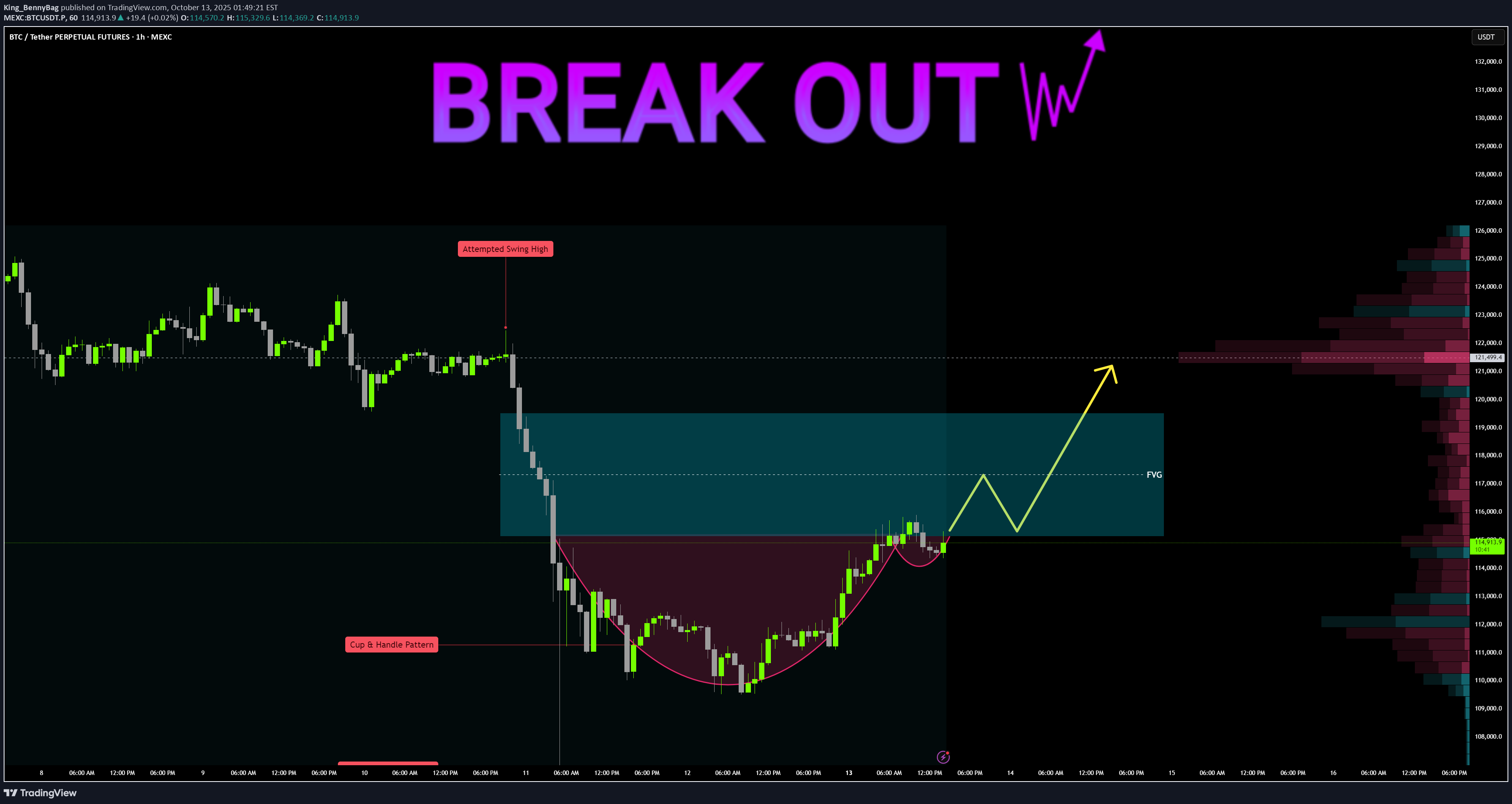
BTC/USDT 1H - راه اندازی استراحت تشکیل جام و دسته درست در زیر منطقه FVG ، هدف اولیه صعودی را نشان می دهد. تصادف تعرفه اخیر باعث ایجاد منطقه پایین و احتمالی مجدد نوسان می شود. POC: 121K - اگر قیمت بیشتر می شود ، آهنربای قوی. سطح کلیدی: 🔹 115k → سطح تأیید شکست 🔹 120k → میانی FVG / مقاومت 🔹 121k → هدف POC 🔹 125k → منطقه نقدینگی بعدی 🔹 110k / 105k / 100k → پشتیبانی نزولی مورد صعودی: بالای 115K = Breakout → هدف 121k -125k (FVG Fill + Craption Craption). مورد نزولی: عدم نگه داشتن 115k → افت به 110k → 105k → 100k ممکن است. خلاصه: فنجان و دسته تحت FVG + Crash Low = منطقه برگشت احتمالی صعودی. 115K را تماشا کنید - این عامل اصلی جهت جهت است.
سلب مسئولیت
هر محتوا و مطالب مندرج در سایت و کانالهای رسمی ارتباطی سهمتو، جمعبندی نظرات و تحلیلهای شخصی و غیر تعهد آور بوده و هیچگونه توصیهای مبنی بر خرید، فروش، ورود و یا خروج از بازارهای مالی نمی باشد. همچنین کلیه اخبار و تحلیلهای مندرج در سایت و کانالها، صرفا بازنشر اطلاعات از منابع رسمی و غیر رسمی داخلی و خارجی است و بدیهی است استفاده کنندگان محتوای مذکور، مسئول پیگیری و حصول اطمینان از اصالت و درستی مطالب هستند. از این رو ضمن سلب مسئولیت اعلام میدارد مسئولیت هرنوع تصمیم گیری و اقدام و سود و زیان احتمالی در بازار سرمایه و ارز دیجیتال، با شخص معامله گر است.