تحلیل تکنیکال Buranku درباره نماد PAXG در تاریخ 2 ساعت پیش

Buranku
Report 19/12/25
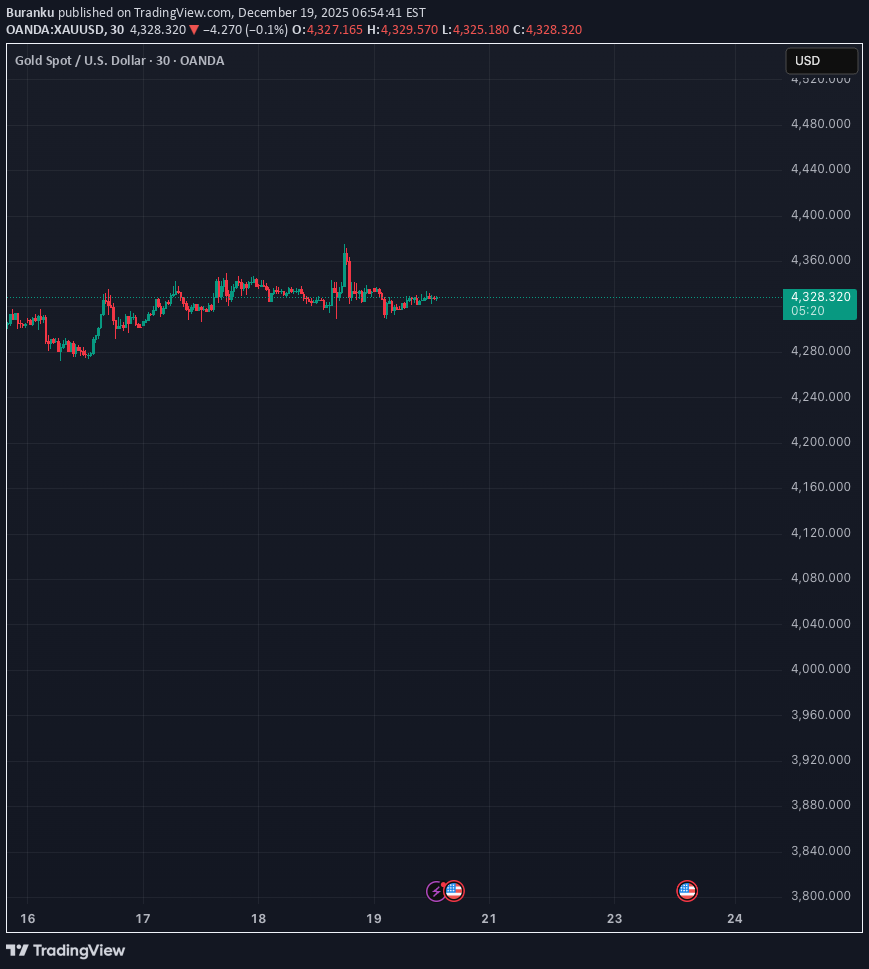
Report Summary The December 19 WSJ set of developments is best read as a two-front geopolitical risk story with a late-cycle policy backdrop: (1) Washington is escalating coercive pressure on Venezuela by ordering what officials describe more as a “quarantine” than a formal blockade—targeting sanctioned tankers and demanding the return/compensation for expropriated U.S.-linked oil assets, while leaving the ultimate political endgame intentionally ambiguous. (2) Europe, meanwhile, is still struggling to convert frozen Russian assets into a clean financing instrument for Ukraine, settling instead on a large EU-backed loan package that avoids immediate confiscation risks but keeps the legal-fiscal debate alive. This is landing into markets that (per WSJ’s own market pages that day) were still broadly risk-constructive in U.S. equities—the S&P 500 closed at 6774.76 (+0.79%) and the Dow at 47951.85 (+0.14%)—while the WSJ Dollar Index sat around 96.15 (roughly flat on the day, down ~6.4% YTD), consistent with an easing-cycle dollar that is no longer the automatic “risk-off” bid it was earlier in the tightening era. At the same time, the Fed policy corridor in WSJ’s rate tables is 3.50%–3.75% with prime at 6.75% and SOFR around 3.69%, i.e., financial conditions are not restrictive enough to choke risk-taking outright, but they are restrictive enough that geopolitics can still punch through via oil, shipping and inflation expectations. What the “Venezuela squeeze” actually changes The key market-relevant shift is not “Venezuela the producer” in isolation; it’s Venezuela as a precedent for enforcement intensity. WSJ reporting describes the move as the most extraordinary use of U.S. military power to enforce Venezuela oil sanctions, with administration language oscillating between “total blockade” rhetoric and a narrower “quarantine” framing aimed at illegal shipping traffic. That ambiguity matters because it deliberately keeps multiple policy branches priced: a targeted interdiction campaign against sanctioned tankers, an expansion into broader maritime exclusion, or even kinetic escalation if the White House decides it needs coercive credibility. The WSJ notes senior Republicans themselves characterize the endgame as unclear after briefings by the Secretary of State and Defense Secretary. From an oil-flow perspective, the baseline is that Venezuelan volumes are meaningful at the margin, not systemically dominant, but enforcement can still matter because it hits the “plumbing” (tankers, insurers, transponders, ship-to-ship transfers). WSJ describes a large “shadow fleet” ecosystem and cites that Venezuela pumps about 900,000 bpd, far below late-1990s peaks, and leans on sanction-dodging logistics while Chevron retains a narrow exemption for some exports. Reuters reporting around the same episode reinforces the point that Venezuela’s exports had risen above 900,000 bpd into November, and that sanctions enforcement changes behavior at the vessel level. Market reactions observed in the tape Oil’s immediate reaction has been a modest risk premium rather than a supply shock, which is exactly what you’d expect given weak global demand optics and ample floating storage in parts of the system. WSJ’s prior day coverage around the blockade headlines shows crude bouncing off multi-year lows: WTI around $55.94 (+1.2%) and Brent also higher (after briefly clearing $60), with commentary that disruptions could affect exports on the order of ~590,000 bpd and that enforcement risks can strand vessels. Even that framing is consistent with a market that is pricing “headline volatility” rather than “structural scarcity.” U.S. equities in the Dec 19 WSJ market snapshot were not behaving like a panic regime (S&P up, Dow up). That tells you the dominant equity narrative remains “policy easing + growth resilience,” with geopolitics treated as a sectoral shock (energy, defense, shipping) rather than a macro shock—unless oil breaks out decisively. Strategic forecast: three paths and what would flip pricing Over the next 2–8 weeks, markets will likely trade this as a probability-weighted enforcement story. The base case is a selective interdiction campaign that focuses on sanctioned hulls and intermediaries, raising frictions and insurance/charter costs but not fully halting flows. Under that base case, crude tends to remain range-bound with higher intraday volatility (thin holiday liquidity makes this worse), while inflation expectations remain contained unless Brent pushes materially higher. The upside-risk case for crude is a credible move from quarantine → de facto blockade, or a kinetic incident at sea that forces insurers and shipowners to step back. WSJ reporting makes clear that the White House is deliberately not clarifying “how far” it is willing to go, which is exactly how you keep that tail priced. In that scenario, the market doesn’t need Venezuela to be “big”; it needs enforcement to become a template that increases perceived risk around any sanctioned barrel logistics. The downside-risk case for crude is that the world treats this as more noise than signal because demand is soft and alternative supply is ample, so rallies get sold, and the only durable effect is a higher geopolitical-volatility premium in options. Fiscal and political implications For the U.S., this policy is politically double-edged. WSJ notes concerns inside the Republican coalition about defending any open-ended foreign intervention ahead of midterms, because it conflicts with Trump’s historical anti-intervention posture. At the same time, Venezuela is being used as a single theater that can satisfy multiple domestic priorities—migration, narcotics, hemispheric power projection, and energy nationalism—without needing a coherent public doctrine. The practical fiscal implication is less about direct spend and more about sanctions enforcement capacity (naval assets, legal actions, interagency bandwidth) and the risk that escalation eventually forces real appropriations. For Europe, the frozen-assets debate is a slow-burning macro risk because it touches rule-of-law credibility, reserve-currency confidence, and sovereign borrowing spreads. WSJ highlights Belgium’s legal concerns and the risk that a workaround could lift borrowing costs and undermine confidence in the euro as a reserve currency, while Euroclear’s liability exposure and Russian retaliation risk complicate execution. Reuters’ reporting that the EU instead agreed a roughly €90bn ($105bn) loan for Ukraine, while postponing a direct frozen-asset solution, reduces near-term tail risk but doesn’t remove the structural question: how far Europe will go in weaponizing “immobilized” assets without triggering broader financial-law blowback. Key global assets: what to watch and why Crude Oil (Brent/WTI). Near term, the risk is option-implied volatility and upside skew rather than a straight-line rally—unless interdictions start visibly stranding flows or triggering insurer retreats. WSJ’s own price reaction shows the market can lift on headlines from depressed levels. The tell will be shipping data, insurance/charter rates, and whether enforcement broadens beyond clearly sanctioned hulls. XAUUSD (Gold). Gold’s function here is as a geopolitical hedge competing with a softer-dollar environment. With the Dollar Index down materially YTD, geopolitics can support gold on dips even if real yields aren’t collapsing. The biggest gold-positive impulse would be a crude-led inflation scare that forces the market to question the pace of easing. S&P 500 and Dow Jones. The equity tape in the WSJ snapshot is still risk-on at the index level. The way this turns equity-negative is not “Venezuela” per se; it’s oil → inflation expectations → rates backup, or a broader perception that maritime enforcement is slipping toward conflict. Otherwise, the more likely equity expression is sector rotation (energy/defense up relative to consumer/transport) rather than a deep index drawdown. DXY / WSJ Dollar Index. A softer dollar baseline can persist if markets remain confident that easing continues and U.S. growth doesn’t re-accelerate into inflation. A Venezuela-driven oil spike would be a two-step for the dollar: initial risk-off bid, then (if inflation rises) a hawkish repricing that could extend dollar strength further. Without that inflation impulse, the dollar is more likely to fade on rallies. USDJPY. The yen leg will be dominated by the global rates channel: geopolitical risk can strengthen JPY if U.S. yields fall on risk-off, but an oil-led inflation shock that pushes U.S. yields higher can do the opposite. The regime matters more than the headline. Risks and opportunities The central risk is policy slippage: when leaders keep the endgame ambiguous, the probability of miscalculation rises. WSJ reporting makes clear both allies and domestic stakeholders are unsure what “next” looks like. That uncertainty is exactly what feeds higher energy vol and episodic risk-off. The cleaner opportunities are in relative value rather than directional hero trades: owning volatility where it is still cheap versus realized moves, positioning for rotation into energy/security beneficiaries while hedging broad market beta, and treating the EU’s Ukraine-financing compromise as a near-term stabilizer for European risk assets while keeping a medium-term eye on the legal/fiscal tail risk of any eventual frozen-asset escalation.