Technical analysis by GabrielAmadeusLau about Symbol HYPE on 9/12/2025

Elliot Wave
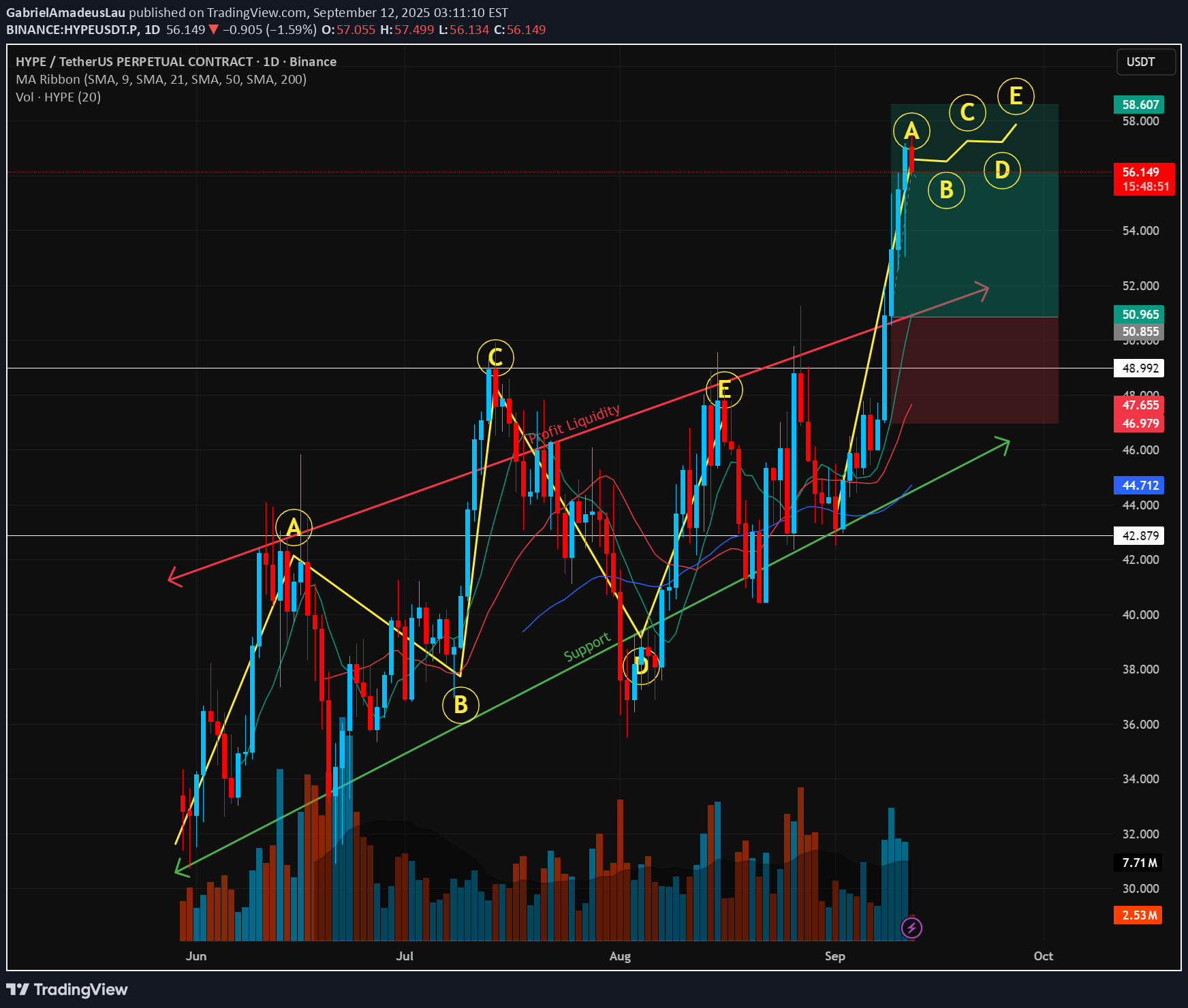
📚 Elliott Wave Trading Strategy — Education Framework 1. Origins & Philosophy Ralph Nelson Elliott (1920s–1930s): Found that markets, while seeming chaotic, often move in repeating wave structures. Core Belief: Market psychology cycles between optimism and pessimism in a fractal pattern. Purpose: Provides a roadmap of where the market could be within a cycle (not a certainty). 2. The Two Types of Waves Impulse (Motive) Waves (1–5): Move in the direction of the main trend. Rules: Wave 2 never retraces >100% of Wave 1. Wave 3 is never the shortest. Wave 4 doesn’t overlap Wave 1. Net result = trend continuation. Corrective Waves (A–B–C): Move against the main trend. Three-wave structure: down (A), up (B), down (C) in a bull market. Typically retraces a Fibonacci % of the prior impulse. 3. Key Components Fractals: Small waves make up bigger ones, across timeframes. Degrees of Waves: From Grand Supercycle (multi-century) to Subminuette (intraday). Fibonacci Ratios: Common retracement levels (38.2%, 50%, 61.8%) and extensions (161.8%) guide targets. 4. Practical Trading Strategy Elliott Wave by itself is subjective. The edge comes when combined with confirming indicators. Example Workflow for Swing Trading Identify Trend Direction: Use 50-day/200-day MA, Ichimoku, or ADX. Wave Counting: Label impulse waves 1–5. Wait for a corrective wave A–B–C. Entry: Many Enter end of Wave 2 or Wave 4 (buy dips in uptrend). Try entering a wave earlier, so that you lock in better Risk to Reward. Use momentum oscillators (RSI/Stochastics) to confirm end of correction. Exit/Profit Target: Project Wave 3 or 5 using Fibonacci extensions (often 161.8% of Wave 1). Stop Loss: Below Wave 1 start (if long). Above Wave 1 start (if short in a bear sequence). 5. Who Uses Elliott Wave? Day Traders / Swing Traders: To catch impulse waves. Long-term Investors: To avoid topping markets (useful in bubbles). Cross-Market Traders: Applies in stocks, forex, commodities, crypto. 6. Advantages ✅ Provides forward-looking framework (not just lagging). ✅ Works across asset classes and timeframes. ✅ Helps identify where we are in a market cycle. ✅ Blends well with Fibonacci, RSI, and trend filters. 7. Disadvantages ❌ Highly subjective (two traders may count waves differently). ❌ No guarantee — probabilities, not certainties. ❌ Developed in the 1930s, critics argue it hasn’t adapted well to algorithmic/modern markets. 8. Famous Elliott Wave Calls Dow 2002–03 Crash: Prechter predicted drop from 11,000 → 7,000. Gold 2011 Peak: Predicted ~$1,900 top. Bitcoin 2017: Analysts called $20K top → $3K. 9. Common Mistakes Forcing wave counts (bias confirmation). Ignoring other indicators. Trading every wave → instead, focus on the big impulses. No patience (wave structures can take weeks or months). ✅ Summary Strategy (Simple Version) Use MAs or trendlines → determine main trend. Count impulse waves → focus on Wave 3 and Wave 5 (strongest). Wait for corrective pullback (Wave 2 or 4). Enter with oscillator confirmation + Fibonacci retracement. Exit at Fibonacci extension or trend exhaustion.