
King_BennyBag
@t_King_BennyBag

ما هو الشيء الذي ننصحك بشراءه من المواد الغذائية؟
سابق في الشراء
پیام های تریدر
مرشح
King_BennyBag
رمز موفقیت در ترید: چرا ثبات از استعداد مهمتر است؟
مرحبا بکم جمیعا فی وظیفة أخرى! فی مقال الیوم سوف نقوم بمراجعة الفرق بین التداول الموهوب والتداول المتسق. لماذا یتفوق الاتساق على الموهبة فی التداول عادةً ما یدخل العدید من المتداولین الجدد إلى التداول معتقدین أن النجاح یعود إلى الأفراد الأکثر ذکاءً، أو الأکثر تحلیلاً، أو الأکثر "موهبة بالفطرة". فی أی مجال. فی حین أن السوق فی الواقع لا یکافئ إلا شیئًا أقل بریقًا بکثیر، وهو.. الاتساق. یمکن أن تساعدک الموهبة على فهم الرسوم البیانیة بشکل أسرع و/أو فهم المفاهیم بشکل أسرع بکثیر، ولکنها کذلک الاتساق الذی یحدد ویظهر ما إذا کنت ستنجو لفترة کافیة لتحقیق الربح وتحقیق عائد إیجابی. الموهبة تخلق الإمکانات | الاتساق یخلق النتائج تظهر الموهبة فی وقت مبکر، کما هو الحال فی الأسبوع الأول أو الأسبوعین الأولین. قد تکتشف الأنماط على الفور، أو win بعض الصفقات، أو تشعر أن التداول "أمر منطقی" بالنسبة لک. الاتساق یظهر لاحقًا وهو نادر جدًا. السوق لا یهتم بمدى ذکائک. لا یرد إلا على: - عدد المرات التی تتبع فیها القواعد والنظام الخاص بک. - مدى إدارتک للمخاطر ( أو المقامرة بها. ) - مدى انضباطک تحت الضغط والتوتر - المتداول الموهوب الذی یتداول بشکل عاطفی سوف یخسر فی النهایة، ( یخسر دائما. ) - یمکن للمتداول المتسق ذو المهارات المتوسطة أن compound یتقنها بشکل ثابت مع مرور الوقت. لماذا یعانی التجار الموهوبون فی کثیر من الأحیان ومن المفارقات أن الموهبة یمکن أن تکون عیبًا ( استمر فی القراءة ) التجار الموهوبین فی کثیر من الأحیان: - الاعتماد على الحدس بدلاً من القواعد الخاصة بهم أو قواعد الألعاب ( أو الفطرة السلیمة. ) - اتخاذ الصفقات خارج خطتهم ( کما هو مذکور أعلاه، وعدم اتباع قواعدهم. ) - زیادة المخاطر بعد بضعة انتصارات ( مرة أخرى، عدم اتباع قواعد RM. ) - تجاهل data لأن " یشعرون بالثقة " وهذا یؤدی إلى تحقیق مکاسب کبیرة غیر متسقة تلیها خسائر أکبر. ( القمار ) فی نهایة المطاف، یعاقب السوق أی شخص یتعامل مع الاحتمالیة على أنها یقین. الاتساق یحول الاحتمالیة إلى حافة لا یعنی التداول أن تکون على صواب، بل یتعلق ببدء العملیة نفسها مرارًا وتکرارًا. الاتساق یعنی: - أخذ الإعدادات التی حددتها فقط. (تم تحدید ما هو A+) - المخاطرة بنفس المبلغ فی التجارة. (إدارة المخاطر) - قبول الخسائر دون انحراف. (الرحیل بعد الخسارة) - اتباع خطتک حتى بعد خسارة الشرائط. (الحفاظ على الاتساق) تجارة واحدة لا تعنی شیئا. مائة صفقة یتم تنفیذها بنفس الطریقة تکشف عن تفوقک. الاتساق یسمح للاحتمالیة بالعمل لصالحک، ولیس ضدک. السوق یکافئ الانضباط، ولیس التألق أفضل المتداولین فی العالم لا یحاولون باستمرار التفوق على السوق. هم: - تداول عدد أقل من الاجهزة - حافظ على نهجهم بسیطا - حمایة رأس المال أولاً - دع الوقت والتکرار یقومان بالعمل - یفهمون أن البقاء هو الهدف الأول. - لا یمکنک compound حساب قمت بتفجیره. الاتساق ممل وهذه هی النقطة الاتساق یفتقر إلى الإثارة. لا توجد اندفاعات للأدرینالین، ولا صفقات بطولیة، ولا لحظات شاملة. فقط التکرار والصبر وضبط النفس. وهذا هو السبب فی فشل معظم الناس. یقوم السوق بتصفیة أولئک الذین یطاردون الإثارة ویکافئ أولئک الذین یتعاملون مع التداول کعمل تجاری، ولیس کترفیه. الموهبة دون الاتساق مؤقتة یواجه العدید من المتداولین نجاحًا مبکرًا. قلیلون هم من یحافظون علیه. غالبًا ما یأتی النجاح على المدى القصیر من: - ظروف السوق المواتیة - الحظ العشوائی - الثقة الزائدة النجاح على المدى الطویل یأتی من: - العملیة - التحکم بالمخاطر - الانضباط العاطفی الاتساق هو ما یحول الشهر الجید إلى مهنة مستدامة. کیفیة بناء الاتساق کمتداول الاتساق هو مهارة ولیس سمة شخصیة. یمکنک بناءه عن طریق: - تحدید قواعد تداول واضحة - استخدام المخاطر الثابتة فی التجارة - یومیات کل التجارة بأمانة -مراجعة الأداء بانتظام - تداول أقل، ولیس أکثر هدفک لیس أن تکون مثیرًا للإعجاب. هدفک هو أن تکون قابلة للتکرار. الأفکار النهائیة قد تجعلک الموهبة مهتمًا بالتداول. الاتساق یبقیک فی اللعبة. فی مهنة یقودها عدم الیقین، فإن المتداول الذی یظهر بنفس الطریقة کل یوم سوف یتفوق دائمًا على المتداول الذی یطارد التألق. فی التداول، لا یقتصر الاتساق على التغلب على الموهبة فحسب، بل یحل محلها. شکرا جزیلا لکم جمیعا على القراءة، وآمل أن یستمتع الجمیع بها وأن تستفیدوا جمیعا! اسمحوا لی أن أعرف فی التعلیقات أدناه إذا کان لدیک أی أسئلة أو طلبات.
King_BennyBag
بیت کوین به 110 هزار دلار میرسد یا سقوط میکند؟ تحلیل تکنیکال و سطوح کلیدی پیش رو
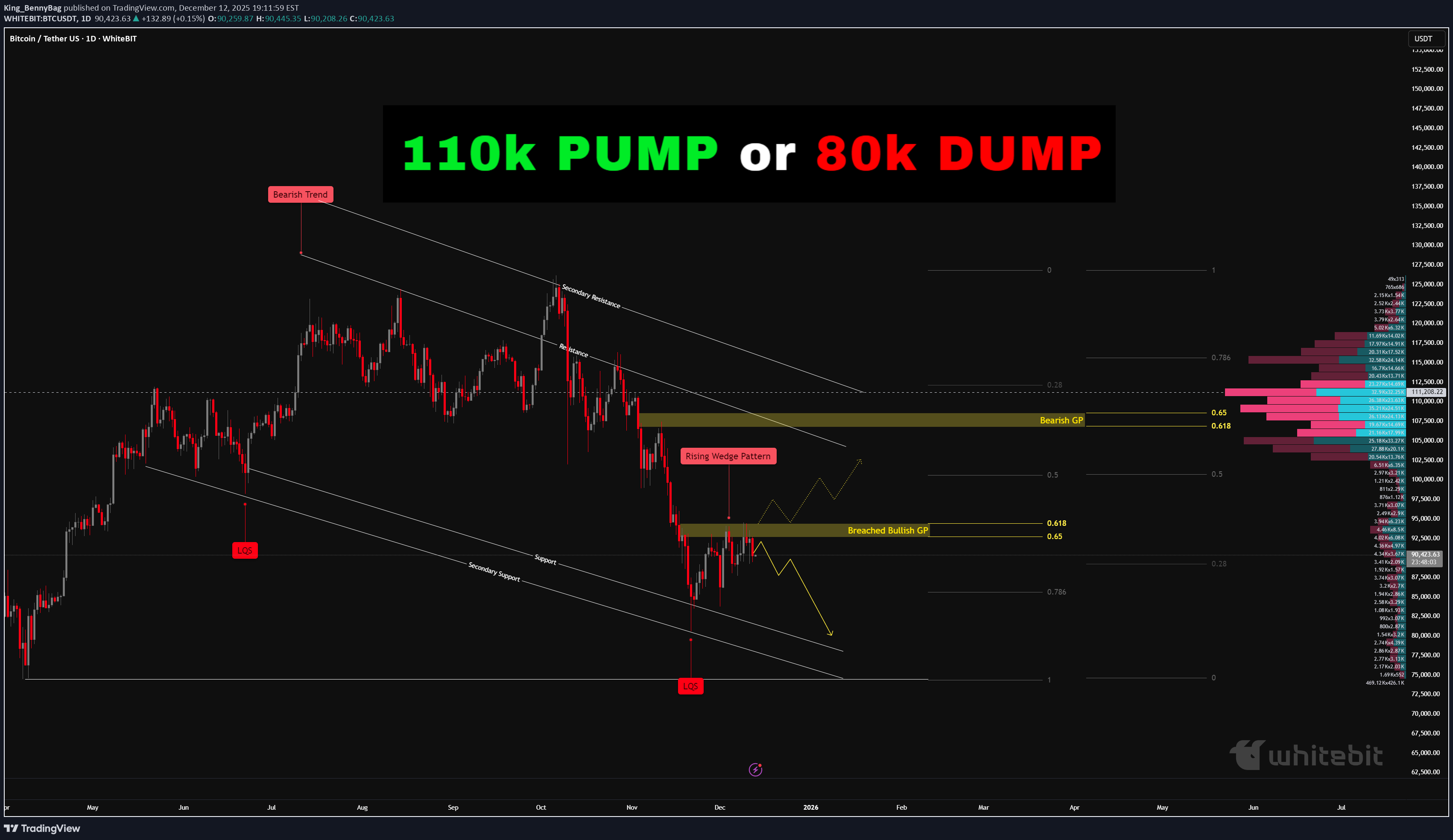
Bitcoin تقییم السوق – وایت بت الرسم البیانی والتبادل (الإطار الزمنی الیومی) مرحبًا بکم مرة أخرى بالجمیع. الیوم سنقوم بتقییم Bitcoin باستخدام وایت بت الرسم البیانی على الإطار الزمنی الیومی. نظرة عامة على السوق Bitcoin ارتفع مؤخرًا إلى 126 ألفًا، مما أدى إلى ارتفاع السیولة إلى أعلى مستویاتها. وبعد فترة وجیزة، شهدت السوق عملیات بیع قویة، تضخمت جزئیًا بسبب أخبار التعریفات الجمرکیة - مما عزز منطقة المقاومة العلیا وتسبب فی تراجع السعر إلى ما دونها. استمر السعر فی الانخفاض بشکل حاد، حیث وصل إلى 80.3 ألفًا، حیث تمت تصفیة الملایین من المراکز. الهیکل الفنی الحالی 1. اختراق الجیب الذهبی الصاعد اخترق السعر ما دون الجیب الذهبی الصاعد (0.618-0.65). وبمجرد اختراقها، تتحول هذه المنطقة عادة إلى منطقة مقاومة، وهو ما نشهده الآن. 2. الوتد الصاعد على الساعة 4 على الرسم البیانی لمدة 4 ساعات، یشکل السعر وتدًا صاعدًا، وهو النمط الذی غالبًا ما یسبق الاستمرار فی الاتجاه الهبوطی. یصطف هذا الوتد مباشرة مع الجیب الذهبی المخترق، مما یشکل ملتقى قوی للمقاومة. 3. سیاق الاتجاه لا تزال حرکة السعر ضمن اتجاه هبوطی على أعلى مستوى زمنی، ویبدو أن الارتفاع الأخیر هو تراجع هبوطی قیاسی ولیس تحولًا فی الهیکل. وتشیر هذه العوامل مجتمعة إلى احتمال حدوث انخفاض أعمق move. مستویات الفائدة السلبیة 0.786 تصحیح فیبوناتشی (~85.6 ألف) منطقة الخصم التالیة والهدف المنطقی إذا استمر الهیکل الهبوطی. 80 ألف المستوى النفسی major منطقة ذات حجم کبیر ونفسیة. إذا تم کسر 85.6 ألف، یصبح من المحتمل إعادة اختبار 80 ألف. من الواضح أن الدببة تستهدف هذه المنطقة. نظرة ثاقبة لملف تعریف الحجم باستخدام أداة الحجم الثابت، توجد مجموعة کبیرة من أحجام التداول حول 111 ألفًا - أعلى بقلیل من المستوى الرئیسی 110 ألفًا وبالقرب جدًا من Golden Pocket الهبوطی (0.618-0.65). لم یتم إعادة اختبار هذه المنطقة بعد. على الأطر الزمنیة الأعلى، غالبًا ما یعمل منطقة Golden Pocket الهبوطیة کمنطقة تصحیح مثالیة قبل أن یستمر السعر فی الانخفاض. یؤدی هذا إلى إنشاء هدف صعودی مقنع إذا تم إبطال السیناریو الهبوطی. نغمة السوق لا یزال الزخم ضعیفًا على الجانب الصعودی، مع احتفاظ البائعین بالسیطرة. وطالما بقی السعر أدنى مستوى الجیب الذهبی المخترق، فإن هیکل السوق یستمر فی تفضیل الاتجاه الهبوطی. ملخص السیناریو السیناریو الصاعد یکسر السعر ویغلق فوق الجیب الذهبی الصاعد المخترق (منطقة 0.618-0.65). القوة المستمرة فوق هذا المستوى تفتح الباب أمام: - إعادة اختبار 110 کیلو، محاذاة مع حجم major عند 111 کیلو - فتیل محتمل أو امتداد إلى الجیب الذهبی الهابط وهذا من شأنه أن یبطل مؤقتًا الزخم الهبوطی على المدى القصیر. السیناریو الهبوطی (الابتدائی) یستمر اختراق Golden Pocket فی العمل کمقاومة قویة. الوتد الصاعد ینهار. أهداف السعر: - 0.786 فیب عند 85.6 ألف - المستوى النفسی 80 ألف إذا فشل 85.6 ألف - لا یزال الاتجاه الهبوطی العام قائمًا، مع إظهار الزخم المتصاعد للارتفاع. شکرا جزیلا لکم جمیعا على القراءة. BTC أحدثت الکثیر من ردود الفعل هذا العام، بدءًا من أعلى المستویات القیاسیة وحتى عملیات التصفیة المحطمة للأرقام القیاسیة البالغة 19 ملیارًا فی ساعات قلیلة فقط! من المهم توخی الحذر، والمخاطرة فقط بما یمکنک تحمل خسارته والتأکد من إدارة المخاطر بشکل سلیم. تأکد من المتابعة والتعلیق أدناه على ما تعتقده! إذا کنت ترغب فی الحصول على أی أدلة أو تقییمات لعملات مشفرة محددة، فأخبرنی بذلک!
King_BennyBag
آموزش ترید با گُوِهها: کسب سود در ۵ گام سریع و آسان!
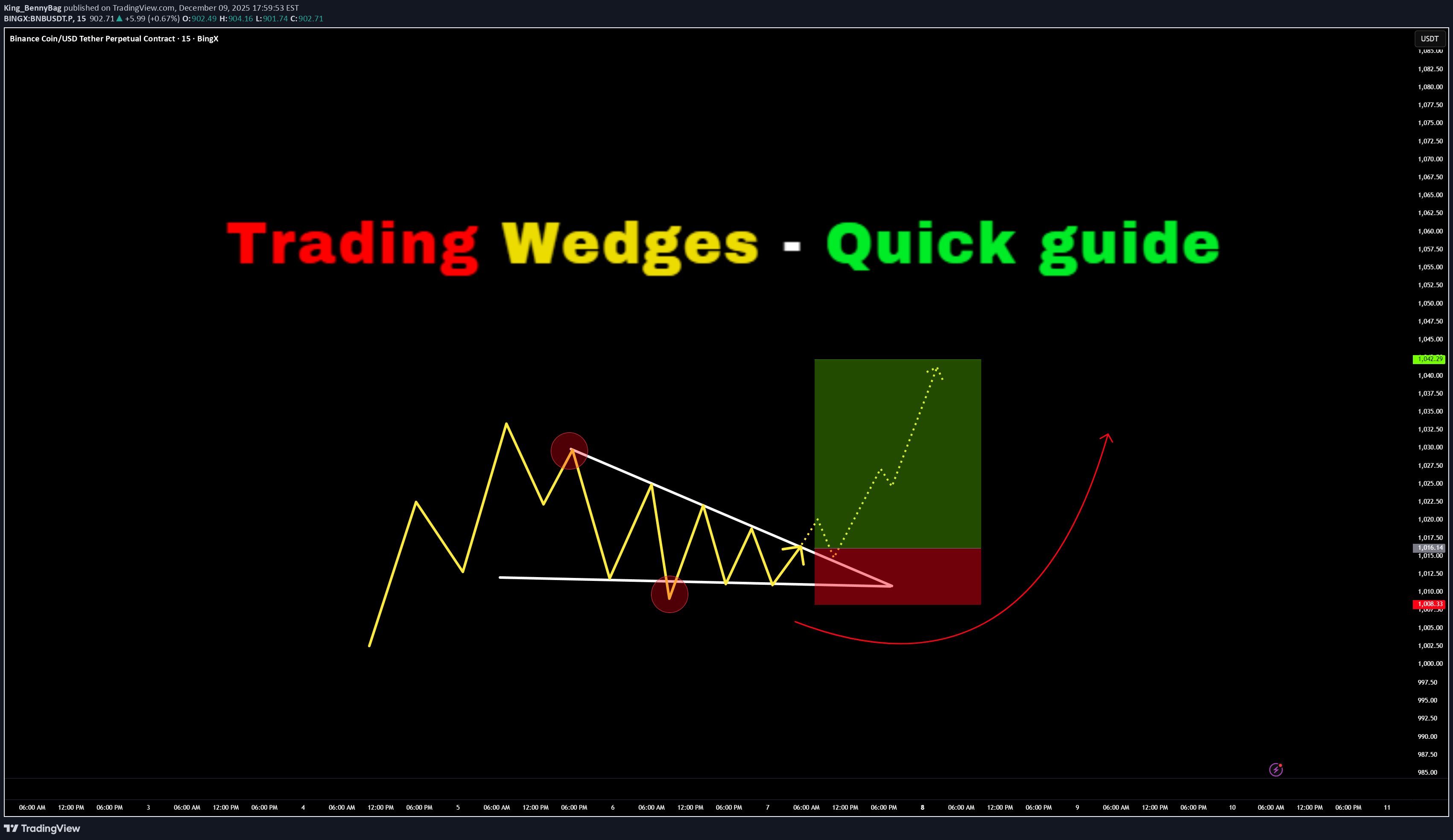
مرحبًا بکم مرة أخرى بالجمیع فی دلیل آخر، الیوم سنقوم بتسریع تشغیل "أسافین التداول" فی دلیل سریع مکون من 5 خطوات. تأکد من الإعجاب والمتابعة والانضمام إلى المجتمع! 1) تحدید الأوتاد: - الوتد السقوط - الوتد الصاعد - إسفین متماثل (مثلث) 2) تحدید اتجاه الاختراق: - الوتد الهابط > من المتوقع حدوث اختراق صعودی - الوتد الصاعد > من المتوقع حدوث اختراق هبوطی - الوتد المتماثل (المثلث) > التماسک المتوقع یجب أن یظهر الاختراق شمعة تغلق خارج الوتد. 3) انتظر حتى تتم إعادة الاختبار على المستوى الرئیسی السابق أو المقاومة (والتی ستکون الآن دعمًا) إذا صمد الاختبار بشمعة رفض قویة أو تماسک - فابدأ بالشراء. 4) أدخل التجارة: أدخل على تأکید إعادة الاختبار الناجح یجب أن یکون مستوى وقف الخسارة (SL) للصفقات أقل من المستویات المنخفضة السابقة یجب أن یکون مستوى إیقاف الخسارة للسراویل أعلى من المستویات المرتفعة السابقة. 5) مستویات TP: TP 1) الهدف العالی الأول TP 2) الهدف العالی الثانی TP 3) الهدف العالی الثالث. النتائج: ارتفع السعر عالیًا ووصل إلى جنی الأرباح الثلاثة. بالنسبة للمتداول الذی یرید المزید من الأرباح، یمکنک تمکین تتبع TP بعد ذلک - لکننی لا أوصی بهذا لأنک تحتاج إلى مراعاة مشاعر "الجشع" الخاصة بک. شکرا جزیلا لکم جمیعا على القراءة! نأمل أن یکون هذا دلیلاً مفیدًا فی المستقبل أو الحاضر! إذا کنت ترید منی تقدیم أی أدلة مبسطة، فأخبرنی بذلک فی التعلیقات أدناه أو اتصل بی من خلال عرض التداول!
King_BennyBag
۵ نکته طلایی که هر تریدر مبتدی باید بداند!
Welcome back everyone to another post! In this article we will be explaining 5 key pointers (tips) for new individuals entering the trading space. When it comes to trading first there is “ understanding ” before we begin the 5 keys steps. Let me assist you in understanding what will happen when you take on trading. Trading is a challenge. Not a video game challenge, not a math test challenge – a * Challenge * One that will break you. Trading will break you mentally, physically, spiritually and financially. It is an eye-opening journey. Trading will teach you a lot about yourself, and it will teach you a lot about discipline, patience and how you can analyze markets. I saw a quote somewhere, it said trading: “ Trading is the hardest way, to make easy money ” and they are right. You will be learning how to manage risk, control your emotions, understand your own decision-making patterns. These are all invaluable lessons for life, as well as trading. Sounds great! But then there are the losses, what you lose to gain all this. Trading isn’t something that you can learn overnight – all those posts you see about a young 17-year-old “ cracking the code ” is rubbish. Why? Because they haven’t learnt life lessons. You can make money fast, but you will lose it faster if you don’t know how to manage it. Trading will drain every bit of energy out of you. You will feel like you’re falling behind, you will eventually collapse at every loss and become frustrated. The market will test you; the market doesn’t give a damn about you – you accept the risk when you take on trading and since you’re the one making the trades, it’s you VS you. You’re testing yourself. You agree to test your patience, your confidence, your mindset. Doing so will make progress feel nonexistent or slow. Every day, and every trade you will question yourself, wondering if “trading” is even for you. Sometimes it will feel like you’re going in circles. You will continue to make mistakes repeatedly. It will become exhausting but remember – only experience and your own strengths will allow you to succeed. Only those who can endure the grind without giving up will make it. So, let’s start off the 5 key pointers that will prepare you. 1) Prioritize Risk Management Over Profits: Most newbies focus first on “ making money ” rather than safeguarding capital. The reality is that surviving in the market is way more important than winning every trade you see or come across. Key Points: Determine risk per trade: A common rule is risking no more than 1-2% of your trading account on a single trade. This way even a string of losses will not wipe you out. Always use stoploss: A defined maximum loss per trade enforces discipline and emotions to stay in check. Position sizing: Your sizing should be proportional to what you’re willing to lose on each trade. Bigger trades amplify the losses, but they also amplify the profits. Why it matters: Without strong risk management, even a high win-rate strategy can fail. Protecting capital ensures you’re still in the game when opportunities arise. 2) Develop a trading plan and stick to it . Random reactive trading is the best way to lose money. Build your plan overtime. Key points: Define your strategy: Building your strategy is the longest part, constant back testing and forward testing, refining and rebuilding. You’re not “switching” your strategy if you’re adding something small to it, you’re changing it if you eliminate the whole thing. Identify your form of trades, short, mid, long term or swing trades. Set clear rules: Don’t leave anything to chance, for example “I only enter trades if price closes above the 50ema and RSI is above 50” Journalling trades: Ensure to journal all your trades, “How do I journal” Easy. Record the time, date, symbol, pair, what model/system you used, images, your entry, tp and exit, why and for how long you’ll have it open. Why it matters: Consistency is a key, it pairs with discipline, psychology and lingers with risk management. Traders who follow a disciplined system perform better than those to trade off an impulsive feeling. Other words “Gamble” 3) Master one market and one system first: Beginners usually spread themselves too thin, trying forex, crypto, stocks and commodities all at once – Unfortunately for me I made this mistake at the start which made it very difficult! – Don’t do this. Stick to one market. Key points: Pick one market: Each market has its own rhythm, volatility, and liquidity. Teaching one thoroughly allows you to understand everything about it. Focus on one system: Instead of trying every new system from you tubes or forums, master one approach and refine it onwards e.g. – you trade FVGs, Win rate is 50% once you add Fibonacci it might be e.g. 65% Avoid information overload: Social media and trading forums are filled with conflicting advice, stick to your chosen approach and refine it. People say you need to have 12-hour trading days. If you do this, you will FAIL. You will grind yourself into the ground and face burnout making it very difficult to get back up again. Limit yourself to how much trading and trading study you do a day. Eg 10 back test trades, 3 real trades, 3 journaled trades, 1 hour of studying and researching the market. Without strong risk management, even a high win-rate strategy can fail. Protecting capital ensures you’re still in the game when opportunities arise. Why it matters Depth beats breadth early on. Mastering a single market and system will allow you to build confidence and improve your edge. 4) Understand the Psychology of trading. Trading isn’t just numbers: as mentioned in “understanding” it’s a test of emotional control, fear, greed and impatience. Key points: Emotions vs logic: ensure you recognize emotional reactions like FOMO (Fear of missing out) or revenge trading. Pause before reacting to a trade that will go against you. Set realistic expectations : Markets move slowly. Sometimes for months, don’t expect huge gains overnight. Just like DCA focus on compounding. Compound your knowledge and skill set. Mindset training: Techniques like medication and journaling as well as visualization can help reduce stress and maintain discipline. Why it matters: Even a diamond system can still fail if emotions drive your actions. Psychology often determines long term success, more than technical skill. 5) Prioritize learning. Then earning. Beginners fall into the trap of trading being a “get rich quick” scheme. But the real investment is learning how the market works. Key points: Paper and demo trade first: Practice on demo accounts before you use real money – you will be surprised how many times you will fail. It’s better to fail with simulation money than your McDonalds weekly wage. Review every trade: Analyze your losing trades, but also your winning trades. Find patterns and areas to improve. Continuously educate yourself: Read books about the mind, about habits, watch market analysis but critically, apply what you learn and don’t just collect information and not use it. Why it matters: Earnings are just the byproduct trading. The faster you learn and adapt, the sooner your profits will appear. Treat early losses as tuition. Not failure. Thank you all so much for reading. I hope this benefits all those who are starting off their trading journey. If you have any questions, let me know in the comments below!
King_BennyBag
رمز موفقیت در ترید: ۳ کلید حیاتی نظم و انضباط معاملاتی که باید بدانید
Welcome back everyone to another post. In today’s article we will dive deeper into the 3 keys of Trading success! As attached below. Today we will be reviewing the Key “DISCIPLINE” Just like risk management and Psychology this is also a difficult skill to maintain. In the modern world it’s considered a skill now, because most of society doesn’t have any discipline in any field. Let’s get started. Definition: When it comes to Trading Discipline. Trading Discipline means one user has the mental ability ( strength ) to follow their system. Their Trading Plan, risk management and maintain their psychology regardless of what events happen. Trading Discipline separates profitable traders from the gamblers. (Below I have attached the article Trader or Gambler as it relates to this post, make sure to give it a read!) Discipline ensures that the user makes the right decisions based on strategy and logic instead of FOMO, ego and greed. It is not just about following rules though. Discipline relates to the outside world of cultivating habits, mindsets and self-control too. 1) Understanding Trading Discipline Firstly, you must truly grasp what it actually means. Most individual traders confuse it with stubbornness. They think it’s about holding on to trades or forcing a system. In reality, it’s only about consistency and self-control! Simple right? Example: Imagine, you have a system. A trading plan. It has the 1% rule where you don’t risk more than 1% of your account per trade. Understanding discipline means you must know why that rule is in place. It’s too protected your capital! Not breaking it after a few losses just to catch up. Real Life Analogy: A professional runner trains every day. They do it even when they are sad, tired, unhappy and unmotivated. This is discipline. Discipline drives long term results. Discipline is continuing it no matter what the current situation is. 2) Implementing Trading Discipline The process of implementation is nothing complicated. It’s only turning knowledge into action. Knowing about it won’t do anything, you must maintain the effort of consistently applying it to each step in your system. How to implement it: - Follow your plan: Before each trading day starts, read out your system and tell yourself you will follow it. Even if no set ups appear, you will still succeed because you followed your plan. - Set risk rules: Apply proper risk management and lot management so you don’t cave into fear. Apply the 1:3 Rule or 1:4 Rule. - JOURNAL your TRADES Damn it: Record every trade, your reasoning, and whether you actually followed your rules. Don’t just add a screen shot and nothing else. YOU won’t succeed if you don’t journal your trades properly. Example: A novice trader may plan to place an entry when price is at $50 and exit at $55 with a 2% risk per trade. Even if it dips to price $48, they hold to the stop loss accepting the loss instead of moving it and hoping it “recovers” Real Life analogy: Think of it as budgeting every day, or for a holiday, or your next maccas run. You set a weekly budget plan and stick to it. Even when tempted by special deals, sticking to your budget allows for long term financial health to take place. Just like risk management but with real life. 3) Maintaining Trading Discipline Discipline can’t act overnight, it’s the process of small steps working your way up to solid consistency over time. Even when feelings run high – discipline isn’t one time. It’s daily practice. Some strategies are: - Reviewing your previous trades daily or at the end of each week during a market close. Assess your wins and losses. - Build up emotional awareness, be aware of what fear, greed and overconfident emotions take place. - Reward yourself to the rules of your system, not just profitable outcomes. If you reward yourself for not trading in one day because not a single set up appeared, you were still successful because you didn’t “force” a set up and take a gamble. Example: A trader might experience 3 losses in the first hour of the day, even if they were all A++ set ups. Instead of revenge trading, he sticks to his plan, accepts the L and leaves the charts for the rest of the day to reset mentally and gain a win in another field, eg – Gym. Real-life analogy: By maintaining a healthy lifestyle, you must apply the same approach. You don’t stop exercising after a few days off. Discipline keeps you aligned even when your motivation and mental strength fades. 4) Adapting without breaking your Discipline Long story short, Markets move, Markets change, Markets can and WILL evolve. Traders must adapt. Not just allows their system to adapt, but their psychological mindset of discipline. Adapting can be confusing but it can be done by: - Don’t switch up new strategies, adjust your current system slightly then back test and forward test it on demo accounts. Eg Paper trading. - Update your trading system based on data and monthly results, not emotions. - Avoid making sudden changes right after losses. Example: Let’s say a forex strat no longer works due to low volume and volatility. A strict trader tests adjustments in their demo accounts, then incorporates them into the plan after they have received positive data from tests. Real-life analogy: A chef might change his recipe based on a specific ingredient availability but will not ignore the core cooking principles. It’s about adapting strategically, not impulsively. 5) Reinforcing Discipline Through mindset and daily life. Discipline in the trading field is just amplified by the discipline process outside of trading. It follows the exact same process. Daily habits and mindset directly impact one’s trading performance. To reinforce discipline, you can: - Maintain routines: Wake up at consistent times. Don’t wake up at 3:00am to “grind” if you do that, you’re stupid – you’ll burn yourself out and make the process harder. Plan your day and review goals. Eg do a brain dump every morning, write down or type out all ideas, thoughts and emotions and sort it out. - Practice mental training: People suggest doing personal journaling or meditation. Just go for a walk in the morning for 5 minutes. First thing in the morning, feel the fresh breeze, air, sunlight and nature. You simulate the mind and body in a natural way allowing for you to think clearly and train your mind. - Change your environment: surround yourself with work dogs, people who are strict on routines, self-improvement, self-development, individuals who don’t slack off. Example: Traders who can control their time well, exercise, eat healthy can maintain their stress in trading better than one who does not focus on outside habits. Real-life analogy: A school student who studies consistently every day and night rather than squishing it all in before exams perform better. Just like a trader who can maintain structured habits inside and outside of the market. Conclusion: Trading discipline is more than following rules, it’s a mindset and a lifestyle, it relates to the world outside of trading. Just like psychology, if you can’t master it outside, you won’t master it inside. It's about understanding your own weaknesses and adjusting the system to hold structured rules that will allow it to be more easily achievable for yourself. Remember, trading is not sunshine and rainbows. It’s about building a system and following it. It is the hardest way to make “ easy ” money. To find out what the other 2 keys are, review the 3 posts below where I explain the 3 keys to trading success, and go deeper into each of them!
King_BennyBag
مدیریت ریسک در ترید: راز حفظ سرمایه و موفقیت پایدار
مرحبًا بالجمیع مرة أخرى إلى مقال عرض التداول بقلم King_BennyBag. سنناقش فی مقال الیوم کیف یمکن للمرء فهم إدارة المخاطر فی التداول، والعمل بها. سنبدأ بتعریف ما هی إدارة المخاطر. تعریف إدارة المخاطر: إدارة المخاطر هی عملیة تحدید رأس المال الحالی الخاص بک وتقییم ما یمکنک تحمله للاستثمار وخسارة. لن ترى مرة أخرى. وهو یتضمن تحدید المخاطر، وتحمل المخاطر، والتأکد من أن لدیک استجابة مخططة قبل وأثناء وبعد التداول. رأس المال فی إدارة المخاطر: لقد ذکرت فی الماضی أن الهدف من التداول هو "الحمایة" رأس المال الخاص بک أولا. بمجرد أن تعرف کیفیة حمایتها، یمکنک بعد ذلک مضاعفتها والمخاطرة شیئًا فشیئًا. لتولی إدارة المخاطر بشکل سلیم، یجب علیک أن تقرر المبلغ الذی ستخصصه لاستثماراتک أو صفقاتک. على سبیل المثال – أنت تخاطر بنسبة 1% فقط من رأس مالک فی کل عملیة تداول. استثمر ما یمکنک تحمل خسارته: یجب علیک فقط التداول بالأموال التی یمکنک تحمل خسارتها، وحتى ذلک الحین یجب علیک توخی الحذر وتطبیق العملیة المذکورة أعلاه على نفس رأس المال. إن القیام بذلک یزیل عامل الضغط العاطفی ویتجنب القرارات التی یقودها الخوف من تفویت الفرصة. (فومو) قبل التداول، حدد رقمًا واضحًا لما یمکن أن تخسره (لن تراه مرة أخرى أبدًا) دون أن یؤثر ذلک على حیاتک. تحدید المخاطر: فیما یتعلق بمشارکاتی السابقة، یجب أن یکون لدیک خطة/میزة تداول محددة. یجب أن تسمح لک هذه الخطة بتحدید تقلبات السوق أو الأحداث الإخباریة أو الأخطاء النفسیة أو نقاط الإبطال الفنیة. هذه هی المخاطر التی یجب تحدیدها قبل التداول. إن معرفة ذلک سیسمح لک بتطبیق حجم المرکز الصحیح بشکل صحیح. افتراض المخاطر: عندما یتعلق الأمر بافتراض المخاطر، (معظم الناس لا یأخذون ذلک فی الاعتبار)، فهذا یعنی قبول السیناریو المحتمل لخسارتک، قبل بدء التداول. یجب تحدید وقف الخسارة الخاص بک (استخدم دائمًا وقف الخسارة!) بطریقة لن تؤدی إلى تصفیة نفسک. یجب علیک حساب حجم المرکز الصحیح وتعلم کیفیة قبول نتائج التداول والتأثیرات العقلیة التی تحدثها علیک. عند القیام بذلک، تصبح الصفقات والعملیة میکانیکیة. لن یکون الأمر عاطفیًا بعد الآن. إذا کانت الخسارة کبیرة جدًا وتأخذها على أی حال. لا یجب أن تقوم بهذه التجارة لأنها ستشجع على التداول الانتقامی. تخطیط الاستجابات قبل وأثناء وبعد المخاطر: مع التداول وإدارة المخاطر، یجب أن یکون لدیک استجابة محددة مسبقًا قبل وأثناء وبعد عملیات التداول. یجب تحدید المخاطر الخاصة بک. قبل التجارة، یجب أن یکون لدیک مجموعة إدخال وSL وTP. جنبًا إلى جنب مع مستوى الإبطال (إذا وصل السعر إلى نقطة معینة، فلا تقم بالتداول) والحد الأقصى للمخاطرة، على سبیل المثال "سوف أخاطر بحد أقصى 5000 دولار فی هذه الصفقة" أثناء التجارة، یجب علیک الالتزام بالخطة، ولا تقم بتعدیل SL أو TP إذا لم یکن ذلک جزءًا من استراتیجیتک. بعد التجارة، إذا فزت، أو خسرت، اکتشف السبب. هل کانت تجارة صحیحة، وهل اتبعت میزتک؟ أو هل اتخذت مقامرة عمیاء. إذا خسرت، اکتشف السبب، وإذا فزت، اکتشف کیف یمکنک الارتقاء بالمستوى إلى أعلى. إن تطبیق هذه العوامل الثلاثة یسمح لدورة الانضباط بالتطور والنمو. ومن ثم یزیل عملیة صنع القرار العشوائیة. إدارة المخاطر هی مفتاح حاسم فی التداول. بدونها – لقد خسرت بالفعل. لقد أرفقت المفاتیح الثلاثة لنجاح التداول أدناه. سأتناول هنا بالتفصیل ما یجب على الفرد إتقانه لیکون ناجحًا فی التداول. إنه لأمر رائع أن ترى الناس یستمتعون بهذا المنشور ویجدونه مفیدًا! إذا کان لدیک أی أسئلة أو طلبات، اسمحوا لی أن أعرف!
King_BennyBag
روانشناسی ترید: چرا ذهنیت سختترین مهارت برای تسلط است؟
Welcome all to another post. In this article we will dive into the process of Mastering Trading Psychology. 1) What is Trading Psychology: Trading Psychology, it is your mindset. It is what you think, how you feel, what you need to do, what you want to do. It is a mixture of thoughts, future actions, emotions and past, present or future behaviors that influences your present self in making good, or bad decisions in the market. It can be considered a “strategy” but leans more to a “skill” It’s about what your thought process is when you are under pressure. Everybody, investor, gambler, trader, swing trader, day trader, scalper and holders, bring their own personalities & habits into the trading space. Whether it’s impatience, or patience, fear or greed, confidence or impulsiveness, or discipline. These mental sets determine how frequently you can follow your edge and how well you can manage wins, losses and uncertainty. Trading psychology is the framework of the mind. It works for you or goes against you. Both are under your control to choose from. A strong, stable, clear mind keeps you going. A weak, broken, cluttered mind keeps you falling. Ultimately, to master trading in psychology, you need to master yourself. 2) Pros and Cons of Trading Psychology: Pros: The pros/benefits of Trading Psychology, once it is mastered, is simple. You understand the game. You understand the process. You understand why you lose, why you win, why manipulation takes place and why you trade it. It is a skill that is developed through patience and perseverance along with constant practice. Like every other skill, it demands TIME, ENERGY, and constant Trial and Error of failures, wins, adjustments and so on. It isn’t something that can be taught or learned once, except for those who learn to recognize and leverage their mental strengths & weaknesses can truly master it over time. Cons: Trying to master Trading Psychology means you need to LOSE. You need to experience loss after loss after loss after loss. You need to fail many times. Every time you fail, you understand how to take control of your emotions, you learn where things went wrong, you learn how to build your edge. But it’s not always about losses, it’s about gains (wins )too. You need to maintain a stable status of emotions whether you win or lose. You can’t show anger, you can’t show excitement. Because both will come back at you with another loss. This means you cannot allow yourself to be ruled by any emotion, positive or negative. It can be a long uncomfortable process that can take years to master. Sometimes even decades. What makes it more challenging is that trading psychology does not exist in isolation. Psychology outside of trading must be mastered too. How you think, act, live, every single day. - We will explore this topic further down the article. 3) Why it is important in the trading space: Psychology is an essential topic that must be taught and considered. Because without it, you will not succeed. Without self-control, or a strong mind, trading will become nothing more than just gambling like a slot machine. It's a skill that many overlook. With it, you are aware of what works and what fails. It allows you to step back and re-assess the next trade instead of forcing it. The end goal is to make money, but to even do that you first have to protect your capital. Only take A++ Set ups (High confluence/probability set ups) and avoid any traps involving emotions like: Fear of Missing Out (FOMO) or the “I just need 1 good pump” (One Big Win) Mindset. With it being in the trading space, it gives users the ability to pause, re-assess and question your decisions on the trade you are about to take. It helps to mention, “Is this an A++ Setup?” “Does it align with my strat, my edge, my goals?” If it does not and you decide not to take it, you save yourself a loss of capital and have made a win of improved trading psychology. It assists you in distinguishing the difference between good/bad trades. Not on the result but the process. It keeps you grounded. 4) How to Master Trading Psychology: Just because it is difficult & challenging, does not mean it is impossible. First step – building discipline through consistency and structure. Ensure you have a clear trading plan set up. One that defines your edge or can be adjusted to find your edge. Commit to following it no matter what the market is doing. Pumping, Dumping or consolidating. Consistency in action will build mental strength. Secondly, you must work on emotional control. Understand and be focused on how you feel when you experience fear, greed, or overconfidence. These emotions push you off your plan if you let them take over. Each time this happens, you must log it. That way you can accumulate data and self-awareness. With that, everyone says this. BackTEST or at least forward test you strategies extensively. Keep a detailed journal that has a good list of questions that you must answer after each trade. Be brutally honest with yourself. Don’t hide losses because you have already hit 10 in a row. Log them all down. This way you will then be able to recognize emotional triggers and recurring patterns appearing that are holding you back. Being able to recognise them is the first step to controlling them. OBSERVE YOURSELF. While this takes place, you must begin to build trust in your system (strategy) and in yourself. You will see how your actions and choices line up with your plan. That way your confidence will shift from emotions to process driven. Last one is patience. The hardest yet most critical psychological skills. Take ONLY A++ set ups, for example a set up that has 4 confluences or 5 lining up. Doing this trains your mind into avoiding impulsive behavior or falling into FOMO based environments. To see another deep dive into mastering trading psychology, review the post below to determine which mindset you currently have. Are you a trader? Or are you a gambler. 5) How Psychology in our daily lives affects our ability to trade: Trading Psychology is an interesting concept, but so is psychology in general. The human mind is weak and for it to be strengthened, it takes time & self-awareness. A weak mind won’t get you anywhere. Psychology is not a simple one sentence definition. It can mean many things, or many situations. It is a critical role in our life, it shapes our emotions, reactions and choices. It can lead us to self-sabotage or it can lead us to success. If you cannot control your psychology outside of trading, you won’t be able to control it inside of trading. By this I mean daily emotions. For example: Imagine an individual experiences a breakout, they are sad, they are angry, they are emotionally drained and hurt. Then they go off to trade. They will LOSE. This is because when the mind is in an uncomfortable state, it seeks a dopamine hit, and when they associate a win in trading = dopamine hit, they naturally turn towards trading. They want to feel that dopamine hit, so they can feel good again. But then they are no longer following their edge. This destroys discipline, objectivity and focus. This is not just tied to relationship breakups, but everything in our day to day lives. If you experience a bad day at work, failed an exam, argued with family, or facing a stressful time. If you bring unresolved emotions, thoughts and feelings into the trading space, trading just becomes a big emotional outlet. Psychology appears in every action we do, EVERY day. “I need to drink water” I will get water. I see soda, “I now want soda.” The mind now as switched completely from the main objective “Water” to soda. If you cannot control your mind to stick to what is right, then you will not master trading psychology. The better control you have over yourself, & your mind, the more consistent and rational your trading decisions will become. KEY POINTS: 1) What is Trading Psychology: - Trading psychology is the foundation of every mental action. You must master yourself before mastering the market. 2) Pros & Cons of Trading Psychology: - Trading Psychology cannot be mastered without failure, each loss has a lesson, that lesson is based around strengthening your mind with emotional control. 3) Why it is important in the Trading Space: - Without a strong mind, trading turns into gambling, you must become disciplined and maintain self-control. This splits pros from the gamblers. 4) How to Master Trading Psychology: - Right to the point: Consistency & discipline, emotional awareness, journaling, and most importantly, being patient. These are core aspects of mastering your mindset and obtaining the right psychological discipline. 5) How daily psychology affects trading: - The way you manage your everyday emotions outside of trading mirrors the way you will end up reacting to the markets. Control your life, then control your trades. Psychology is a great skill, but it’s only part of 3 keys that will lead you to success. Find out the 2 other keys below: Thank you all so much for reading - I hope this post brings a lesson into everyone's trading journey. I am aware that this is a big long article, however Trading psychology goes even deeper - I have summarized my knowledge and research that I have obtained over time and summarized it. Please let me know if any of you would like an a post on a specific topic. I'd love to provide more for the community!
King_BennyBag
سطوح روانی در ترید: کلید درک رفتار بازار و شکار نقدینگی
Definition: In Trading, Psychological levels are often called round numbers or psy levels. This is because the price ends in zeros and fives naturally attracting a trader’s attention. Examples: • Forex: 1.0000, 1.0500, 1.1000 • Stocks: $50, $100, $150, $200, $250 • Cryptocurrency: $10,000, $15,000, $20,000, $25,000 These levels are crucial as traders instinctively see targets in round numbers. (Or Incremental levels such as 5, 10, 15, 20, 25, 30 and so on... This causes many buy, sell, and stop orders to cluster around the same price zones, creating self-reinforcing areas of interest in the market. Again, price sits at 113.2k – Psychological level is 115k. ___________________________________________________________________________________ Why Psychological Levels Matter in Trading 1) Human Bias: Traders and investors often place orders at simple, rounded numbers. This makes their charts and order list “Clean.” 2) Institutional Targeting: Large groups, whales or organizations use these levels to find liquidity or trigger stops. (Eg, BTC swept 125k before dumping) 3) Market Memory: When a Psychological level reacts, traders remember it, and it often becomes relevant again in the future. (Turns into a prev liquidity sweep.) 5) Order Clustering: Stop losses, take profits, and pending orders frequently build up around these areas. (As above, it builds liquidity.) __________________________________________________________________________________ How to Identify Psychological Levels Begin with marking clean, round (or quarterly) numbers on your chart. These are often major levels such as 4.0000, 5.0000, or 6.0000. See the example below: Then identify the midpoints/quarter points between them, like 4.5, 5.5, 6.5, 7.5, 8.5 See the example below: For stronger assessments, look for psychological levels that align with other forms & tools of technical confluence—such as previous S & R, Supply/Demand, Highs & Lows, Fibonacci retracements, trendlines, or volume clusters. See the example below: When multiple forms of technical evidence converge near a round number, the level tends to have greater impact. __________________________________________________________________________________ Trading Around Psychological Levels When price approaches a psychological level, three common behaviors can occur: 1) Rejection: Price touches the level and reverses quickly, suggesting strong defense by buyers or sellers. (Liquidity Sweep) 2) Break and Retest: Price breaks through the level, then revisits it to confirm it as new support or resistance. 3) Compression or Grind: Price consolidates near the level before a breakout as liquidity builds up. Practical Application: Enable alerts slightly before major psychological levels to observe reactions in real time (for example, 4.45 instead of 4.5 ). Wait for confirmation using price action such as a clear rejection wick, an engulfing candle, or a BOS (Break of Structure). Combine this analysis with liquidity or other forms of technical tools for a stronger assessment. __________________________________________________________________________________ Trader Behavior at These Levels Market reactions at psychological levels are largely directed by emotion and herd (Group) behavior. Fear of missing out can push price through a round number with momentum & speed while profit-taking can trigger short-term reversals & rejections. Stop hunts are also common, where smart money briefly pushes prices beyond a round level to collect liquidity before reversing. (From 4.0 up to 4.25 then down again) Because many traders watch these same levels, reactions often repeat, reinforcing their significance. __________________________________________________________________________________ Example: BTC/USD for $125k When Bitcoin approaches $125k, many retail traders view it as a significant threshold. They might place short orders just below it or stop just above. Institutions recognize this and may intentionally push prices above $125k (sweeping $126k) to trigger those stops and fill large positions. Once that liquidity is collected, price can reverse, and the $125k area may later serve as a new resistance zone. This type of liquidity hunt and reversal pattern occurs frequently across all markets. __________________________________________________________________________________ Practical Tips 1) Never trade purely based on a round number. Always wait for confirmation through structure or price action. (Retests, MSS, BOS, candle patterns etc) 2) Use alerts & alarms rather than fixed lines; prices often wick slightly above or below the exact level. 3) On higher timeframes, psychological levels often act as major turning zones. On lower timeframes, they tend to attract short-term reactions. (Lower the time frame, the more reactions = constant noise) 4) Combine psychological levels with liquidity, order flow, or volume analysis for a more complete view. __________________________________________________________________________________ Summary Psychological levels are where human reactions and liquidity meet. They represent areas of emotional and institutional/organizational interest rather than fixed points of reversal. By understanding how traders behave around these zones and observing how price reacts to them, you can determine key movements with greater confidence.
King_BennyBag
۳ کلید طلایی موفقیت در ترید: روانشناسی، مدیریت ریسک و تداوم
سنناقش الیوم المفاتیح الثلاثة التی أعتقد أنها ضروریة للنجاح فی التداول. عندما تدخل فی مجال التداول، ستدرک بسرعة أن الأمر لا یتعلق فقط بالرسوم البیانیة والإعدادات - بل یتعلق أیضًا إتقان نفسک عقلیا. هناک 3 مفاتیح تفصل بین أولئک الذین یستمرون فی التداول والذین لا یستمرون فی التداول: ( 1 ) علم النفس ( 2 ) إدارة المخاطر ( 3 ) تناسق کل واحدة منها لها نفس القدر من الأهمیة، ولکن کیفیة تحقیق التوازن بینها تحدد نتائجک على المدى الطویل عند التداول. 1) علم النفس — أتقن عقلک قبل أن تتقن السوق التداول، لعبة عقلیة متنکرا فی زی أ مالی واحد یعرض الفائزین والخاسرین 1 و 0. السوق، الرسوم البیانیة، العملة، إنهم لا یهتمون بمن أنت، أو ما هو رأیک، أو مدى رغبتک فی ذلک win. إنه ببساطة یعرضک نقاط القوة و نقاط الضعف فی عالم علم النفس . یخسر معظم المتداولین، لیس بسبب افتقارهم إلى المعرفة، ولکن لأنهم لا یستطیعون التحکم فی عواطفهم ومشاعرهم - الخوف من الخسارة، والخوف من فقدان الفرصة، والجشع بعد الفوز، والتردد بعد الخسارة، والقلق، والإحباط، ونفاد الصبر. کل فورة عاطفیة یؤدی إلى اتخاذ قرارات سیئة: الإغلاق مبکرًا، أو التداول الانتقامی، أو الإفراط فی الرافعة المالیة، أو تجاهل خطتک، مباشرة بعد أن أخبرت نفسک أنک ستقفل وتحول 100 دولار إلى 1000000 دولار. لإتقان علم النفس: ( 1 ) انفصل عن النتائج/النتیجة النهائیة. رکز على التنفیذ الجید، ولیس على ما إذا کانت التجارة رابحة أم خاسرة. اتبع خطتک. ( 2 ) فکر فی الاحتمال. کل إعداد، کل تجارة یجب أن یکون لها میزة - ولیس ضمانا. ( 3 ) قبول الخسائر کجزء من العملیة. الخسائر هی الرسوم الدراسیة فی هذا العمل. کل خسارة هی فوز، لأن هناک درسا یجب تعلمه. ( 4 ) ابقَ على الأرض. إن تدوین الیومیات والیقظة الذهنیة والتفکیر فی مرحلة ما بعد التجارة یقطع شوطا طویلا. تتبع الصفقات ومراجعتها خلال فترة التوقف. عندما تستقر عقلیتک، وعندما تکون أفکارک هادئة، تصبح مهاراتک فی التداول ثابتة. المخططات لا تتغیر - أنت تفعل ذلک. فیما یتعلق بتدریب عقلیتک، راجع مقالتی السابقة أدناه والتی توضح الفرق بین المتداول والمقامر. هذه مقالة ممتازة لأولئک الذین یریدون أن یصبحوا متداولین. 2. إدارة المخاطر – الحمایة قبل الربح إذا کان علم النفس یحافظ على هدوئک، فإن إدارة المخاطر تبقیک على قید الحیاة. هذا هو الجزء الذی یتخطاه معظم المتداولین - حتى یتعلموا طریقة hard ویخسروا رؤوس أموالهم، أو 10 أموال على التوالی. مهمتک الأولى کمتداول لیست کسب المال. انها ل حمایة رأس المال حتى تتمکن من الترکیز على البقاء فی اللعبة لفترة کافیة لتلعب إستراتیجیتک ومیزتک بشکل جید. قواعد المخاطر العملیة: ( 1 ) لا تخاطر أبدًا بأکثر من 1-2% من رأس مالک فی صفقة واحدة. (إذا فعلت ذلک فإنک تزید من مشاعر الجشع) ( 2 ) اعرف دائمًا الحد الأقصى لخسارتک قبل الدخول — لا داعی للتخمین، إذا لم تقم بذلک؟ خسارتک، خطأک. ( 3 ) استخدم وقف الخسائر بشکل منطقی، ولیس عاطفیا. اضبطها على المقاومة أو الدعم. المستویات الرئیسیة. ( 4 ) تجنب الإفراط فی الرافعة المالیة. الرافعة المالیة تعمل على تضخیم المکاسب والأخطاء. کلما زادت الرافعة المالیة، زادت المخاطر. ( 5 ) لا تطارد. الصفقات المفقودة أفضل من الحسابات المنفوخة. قم بتسجیلها وتسجیل المشاعر. الإدارة الجیدة للمخاطر لا تجعلک ثریًا بین عشیة وضحاها - ولکن الإدارة السیئة للمخاطر ستجعلک مفلسًا فورا . لا تحتاج إلى انتصارات ضخمة لتنمو؛ کل ما تحتاجه هو خسائر صغیرة ومضبوطة وتنفیذ متسق طوال رحلة التداول الخاصة بک. 3. الاتساق – الانضباط على الدراما الاتساق هو الغراء الذی یجمع کل شیء معًا، إدارة المخاطر فی علم النفس. من السهل الالتزام بخطتک لمدة أسبوع؛ ولکن hard أن یفعل ذلک أشهراً دون انحراف وانجراف. ولکن هذا هو بالضبط ما یفصل بین المتداولین الذین ینجحون فی تحقیق النجاح وأولئک الذین یستنفدون طاقتهم. الاتساق یعنی: ( 1 ) الحضور یومیًا، والالتزام بخطة ثابتة للدراسة، والاختبار الخلفی، والتقییم. ( 2 ) اتباع خطة التداول الخاصة بک مع الانضباط. ( 3 ) مراجعة تداولاتک بأمانة - المکاسب والخسائر على حد سواء. (هل تفعل هذا؟) ( 4 ) تجنب التغییرات المتهورة لمجرد یوم واحد سیء. خذ قسطًا من الراحة إذا أثرت الخسارة علیک بشدة. التقدم فی التداول بطیء وغالباً ما یکون غیر مرئی. قد لا تلاحظ تحسنًا من أسبوع لآخر، لکن انظر إلى الوراء بعد ستة أشهر من الاتساق المرکّز - وستدرک إلى أی مدى وصلت. تذکر أن البطء والثبات یفوز بالسباق. هذه هی لعبة السلحفاة ضد الأرنب. ادفع بسرعة وhard وسوف ترتکب الأخطاء - کن بطیئًا وثابتًا وسوف win تخوض السباق. العودة إلى الوراء لرؤیة الصورة الأکبر نجاح التداول لیس حظًا - إنه نتیجة الانضباط compound والصفقات المحسوبة والتوقیت. ( 1 ) علم النفس یمنحک السیطرة. ( 2 ) إدارة المخاطر تمنحک طول العمر. ( 3 ) الاتساق یعطیک النتائج. عند محاذاة الثلاثة، یبدأ کل شیء فی النقر. لا تحتاج إلى السیطرة على السوق – فقط السیطرة على عقلیتک، والمخاطر الخاصة بک، والروتین الخاص بک . الأرباح تتبع بشکل طبیعی. شکرا جزیلا لکم جمیعا على القراءة. أتمنى أن تصبح هذه التدوینة مفیدة لک!
King_BennyBag
آیا بیت کوین به ۱۲۵ هزار دلار میرسد؟ راز تداوم صعود و سطح کلیدی شکست!
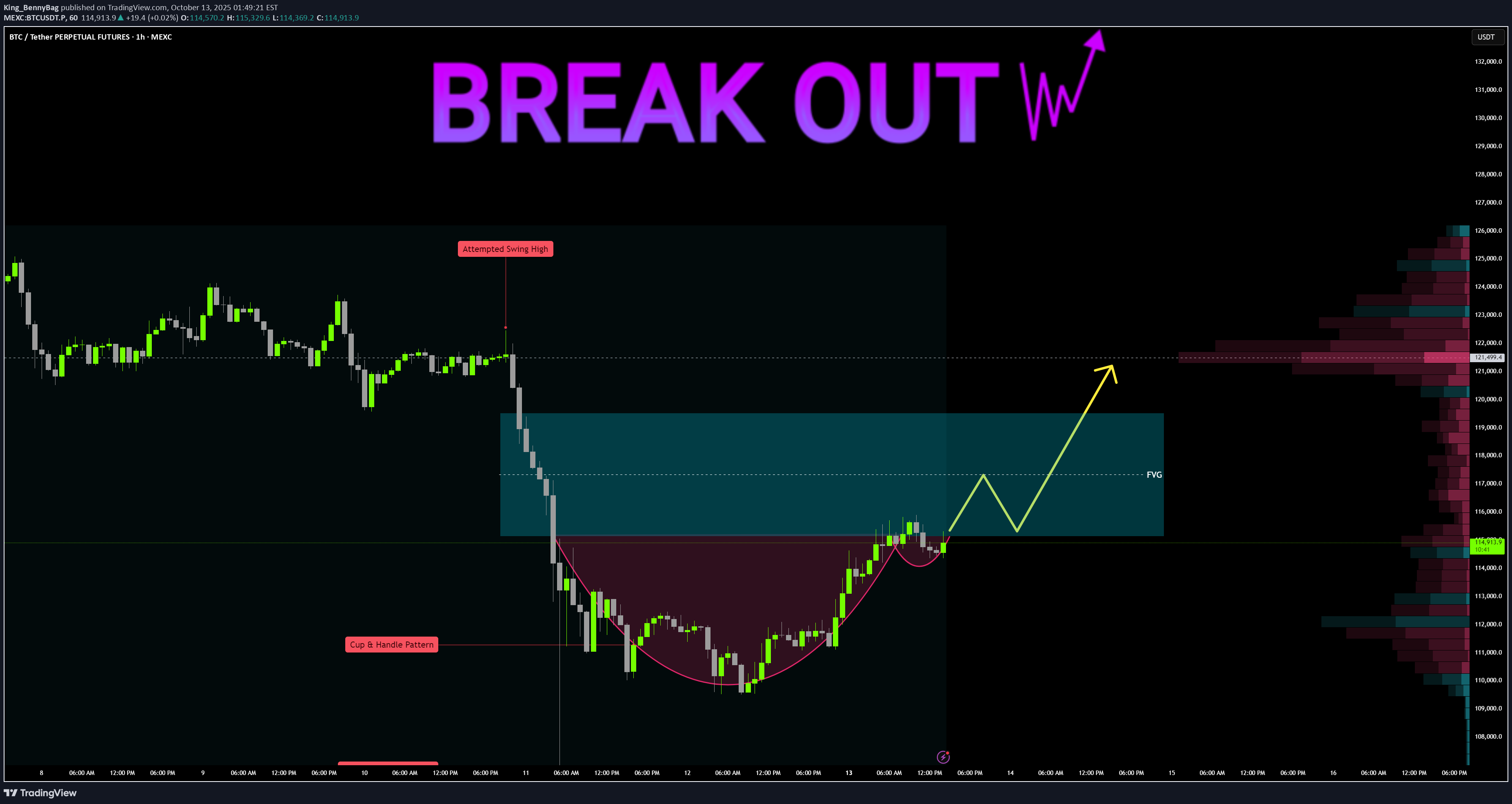
BTC/USDT ساعة واحدة – إعداد الاختراق یتشکل الکأس والمقبض مباشرة تحت منطقة FVG، مما یظهر نیة صعودیة مبکرة. وقد أدى انهیار التعریفات الأخیرة إلى خلق منطقة التأرجح المنخفضة وإعادة التراکم المحتملة. POC: 121K — مغناطیس قوی إذا ارتفع السعر. المستویات الرئیسیة: 🔹 115 ألف → مستوى تأکید الاختراق 🔹120K → منتصف FVG / المقاومة 🔹 121 ألف → هدف POC 🔹 125 ألف → منطقة السیولة التالیة 🔹110K / 105K / 100K → یدعم الجانب السلبی حالة صعودیة: الإغلاق فوق 115 ألف = الاختراق ← الهدف 121 ألف – 125 ألف (ملء FVG + الاستیلاء على السیولة). حالة هبوطیة: فشل فی الاحتفاظ بـ 115 ألف → انخفاض إلى 110 ألف → 105 ألف → 100 ألف ممکن. ملخص: الکأس والمقبض تحت FVG + انخفاض انهیار التعریفة الجمرکیة = منطقة انعکاس صعودیة محتملة. شاهد 115K – هذا هو المحفز الرئیسی للاتجاه.
إخلاء المسؤولية
أي محتوى ومواد مدرجة في موقع Sahmeto وقنوات الاتصال الرسمية هي عبارة عن تجميع للآراء والتحليلات الشخصية وغير ملزمة. لا تشكل أي توصية للشراء أو البيع أو الدخول أو الخروج من سوق الأوراق المالية وسوق العملات المشفرة. كما أن جميع الأخبار والتحليلات المدرجة في الموقع والقنوات هي مجرد معلومات منشورة من مصادر رسمية وغير رسمية محلية وأجنبية، ومن الواضح أن مستخدمي المحتوى المذكور مسؤولون عن متابعة وضمان أصالة ودقة المواد. لذلك، مع إخلاء المسؤولية، يُعلن أن المسؤولية عن أي اتخاذ قرار وإجراء وأي ربح وخسارة محتملة في سوق رأس المال وسوق العملات المشفرة تقع على عاتق المتداول.