تحليل التحليل الفني Buranku حول PAXG في رمز في 14/12/2025

Buranku
Report 14/12/25
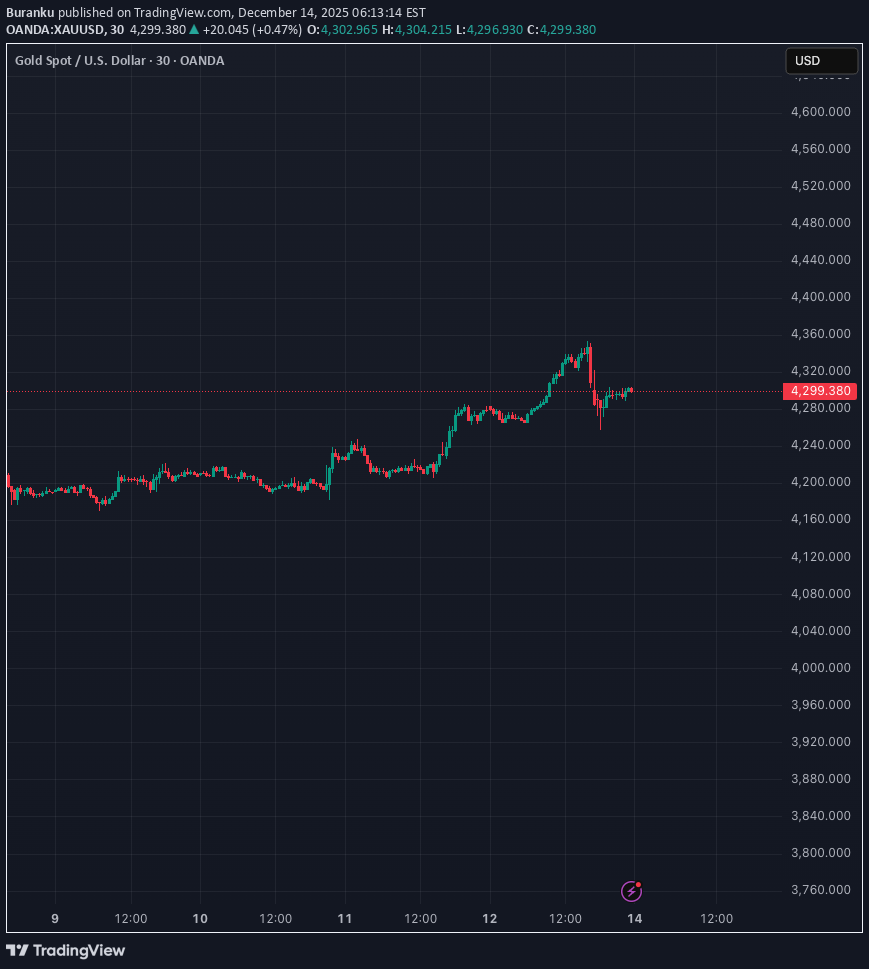
Report summary Markets are weighing a dovish-leaning Federal Reserve against rising geopolitical risk in the Americas and persistent war risk in Eastern Europe. The Fed cut rates by 25bp to 3.50%–3.75% with three dissents—the most since 2019—while President Trump publicly floated Kevin Warsh and Kevin Hassett for Fed chair and said the next chair “should consult” him on rates, even musing about “1% and maybe lower,” which injects an unusual degree of political risk into the rates path (WSJ A1–A2). On the geo side, the U.S. surged assets into the Caribbean and discussed options that include land strikes and tighter oil-embargo enforcement on Venezuela; local ports/airfields braced and commercial traffic began reversing, implying near-term oil/logistics risk premia (WSJ A1, A8). The U.S. also interdicted China-sourced dual-use cargo bound for Iran—a rare at-sea seizure—signaling stepped-up pressure on Tehran’s rearmament channels (WSJ A7). In Ukraine, Kyiv’s front remains under strain but stable; Zelensky staged a visit on Kupyansk’s edge to signal resilience while NATO officials framed Russian advances as “marginal,” keeping attrition the core dynamic (WSJ A7). Market reactions & near-term setup U.S. rates markets priced the Fed’s cut as insurance against labor-market slippage, but public splits among voters and Trump’s rate commentary keep term-premium volatility alive into year-end. The calendar is dense: BoE and ECB decisions arrive with a broadly steady-to-easier bias, while analysts are split but “on balance” expect the BoJ to hike 25bp, a non-consensus tail that matters for USDJPY and JGB/UST spillovers (WSJ A2 sidebar, “Central Banks’ Big Week Ahead”). In equities, AI-capex leadership has softened at the margin, and the file flags a “potential delay” in hundreds of billions of AI spend as a pressure point for the tech-led rally (WSJ Page One news digest). Energy and defense cohorts have a firmer bid on Venezuela/Iran headlines and on evidence of accelerated U.S. doctrinal and procurement shifts toward drones/HIMARS in the Pacific (WSJ A6). Strategic forecasts Policy. The Fed’s public division—two “no-cut” dissenters versus a larger dovish-insurance bloc—argues for meeting-by-meeting optionality through Q1. Any perception of political influence over chair selection or over rate-setting raises the risk of a steeper curve as investors demand compensation for policy uncertainty. Expect terminal-rate path marked down modestly but with fatter tails (both ways) around growth and inflation shocks (WSJ A2). Geopolitics. The U.S. posture toward Venezuela points to more aggressive maritime/financial enforcement; the report notes tankers aborting approaches and airlines canceling flights as local authorities ready air defenses—real-economy frictions already visible (WSJ A8). Base case: a rolling, sanction-enforcement squeeze rather than immediate strikes, but the probability of discrete precision strikes is higher than it was a week ago. The Iran seizure hints at a broader campaign against procurement routes; pair that with any Israel–Iran flashpoint and you get intermittent MENA risk premia (WSJ A7). Ukraine remains attritional; neither side has near-term breakthrough capacity, implying a long tail of demand for air defense, counter-UAS, artillery shells, and ISR, with Europe and the U.S. as the supply anchors (WSJ A7). Fiscal & political implications Lower policy rates relieve Treasury funding costs at the margin, but explicit political rhetoric around pushing rates “to 1%” to finance ~$30T debt elevates the optics risk and may widen term premia if investors infer diminished Fed independence (WSJ A2). In the U.S. domestic lane, the ACA subsidy fight and rail-labor bonus optics are reminders that 2026’s fiscal priorities will stay contested; none of this is immediate market-moving, but it constrains ambitious deficit-reduction timelines and sustains supply overhang in UST issuance (WSJ A5). Key asset impacts XAUUSD (gold). Blend of Fed insurance cuts, chair-selection noise, and rising sanctions/kinetic risk in the Caribbean and Persian Gulf is gold-positive on dips. A BoJ hike that dents the dollar would add support. Near-term elasticities: + on Venezuela/Iran enforcement or Ukraine escalations; modest – if U.S. disinflation accelerates and real yields back up (WSJ A1–A2, A7–A8). S&P 500 / Dow Jones. Broader indices prefer an orderly Fed glide-path and soft-landing data, but tech leadership is vulnerable if AI-capex timing slips, as flagged in the file; cyclicals and defensives could rotate leadership on any energy bid and defense outperformance (WSJ Page One digest; A6). Dow components with energy/industrial exposure gain from higher crude and capex; banks stay sensitive to curve-steepening and Fed governance optics (WSJ A2). USDJPY & DXY. A BoJ hike would lean JPY-supportive and DXY-negative at the margin. However, if U.S. term premia rise on Fed-independence fears or hotter U.S. data, the dollar bounce can overwhelm BoJ effects. Watch the policy mix: BoJ lift-off plus benign U.S. inflation is the cleanest path to sub-150 USDJPY; the converse keeps carry intact (WSJ A2). Crude oil. Venezuela headlines are the biggest incremental driver in this report. Even without immediate strikes, the piece describes tangible shipping reversals and airport disruptions, consistent with rising operational risk and a higher probability of tighter enforcement on sanctioned barrels. Layer in the Iran cargo seizure and you have a sturdier risk premium under crude near-term (WSJ A7–A8). Risks to the outlook Policy risk includes a more fractured FOMC path that confuses guidance, or a chair appointment that markets read as politically captive (steeper curve, risk-off). Geopolitical risk includes an accident-escalation in Venezuelan airspace or at sea, or an Iran–U.S. maritime clash following interdictions. Macro risk includes an earlier-than-priced BoJ shift that jolts JPY and global fixed income, and an AI-capex slowdown that undermines equity multiple support (WSJ A2; Page One digest; A7–A8). Opportunities & positioning ideas (tactical/strategic) Defense and dual-use tech look underpinned by U.S. Pacific doctrine changes and European/NATO replenishment demand. Energy names and tanker owners benefit from wider crack spreads and freight premia if Caribbean/MENA enforcement tightens. On FX, fading extreme USDJPY strength on a BoJ-hike headline risk makes sense, but keep stops tight given Fed term-premium uncertainty (WSJ A6; A2). Gold remains a buy-the-dip hedge into year-end as long as real yields don’t lurch higher.