تحليل التحليل الفني Buranku حول PAXG في رمز في 16/11/2025

Buranku
سیاستهای جدید آمریکا: کاهش تعرفهها، توافق با سوئیس و بازگشت دادههای اقتصادی کلیدی
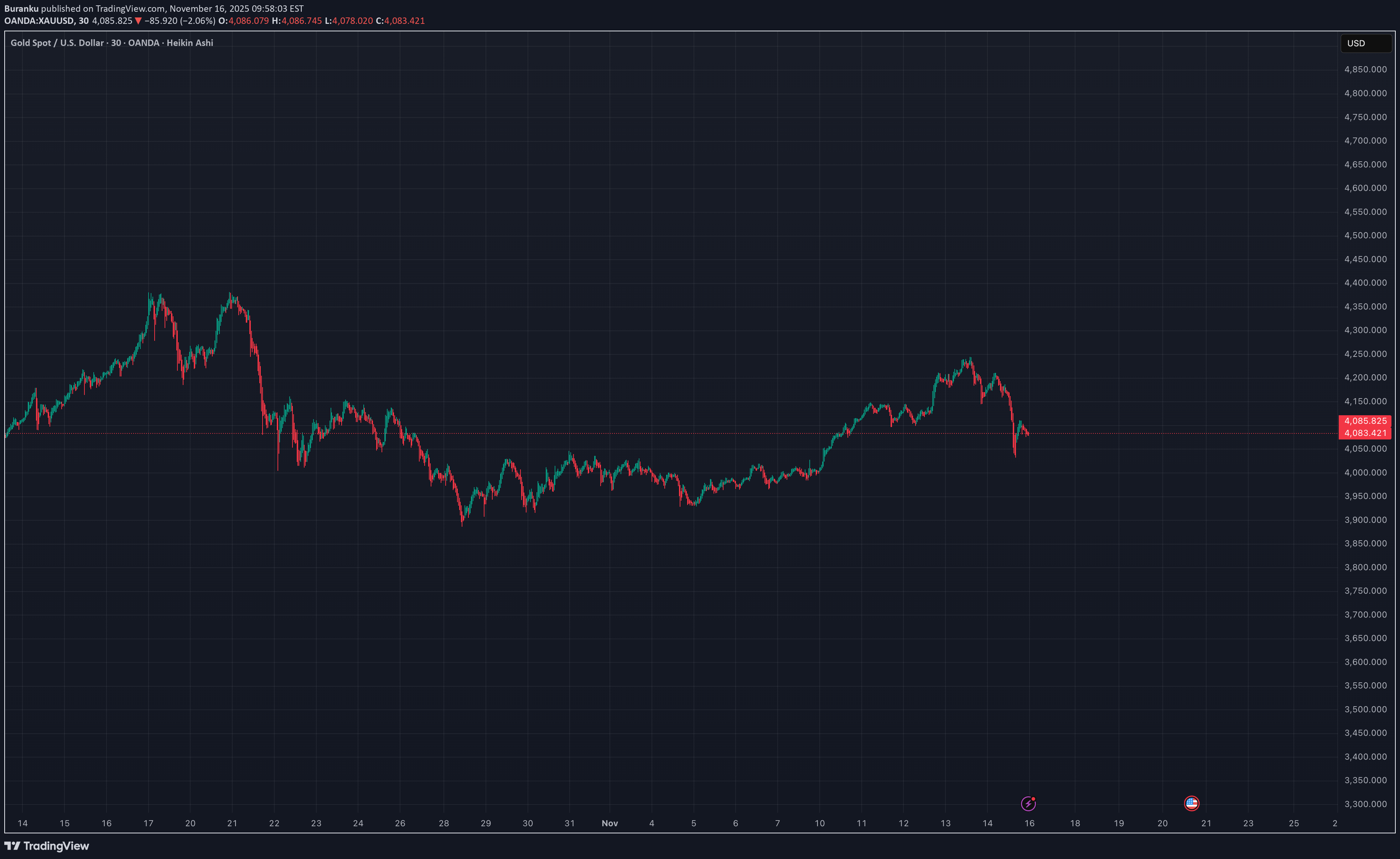
Macro & Geopolitical Risk Report The week delivered a meaningful policy pivot on tariffs, a tentative trade détente with Europe and Switzerland, and a muddled, but resilient, risk backdrop. U.S. equities were choppy yet finished essentially unchanged, rescued mid-week by dip-buyers; the Dow gained about 0.3%, the S&P 500 edged up 0.1%, and the Nasdaq slipped 0.5%. Ten-year Treasury yields and gold firmed, while a jump in U.S. natural-gas futures complicated the near-term disinflation narrative. The government re-opened and set Nov. 20 for the first backlogged jobs report, restoring a macro data anchor ahead of the December FOMC. Policy: The U.S. Walks Back Tariffs, Switzerland Deal Lands, EU Trade Recovers President Trump ordered tariff cuts on beef, coffee, and dozens of food items, an explicit walk-back of the broad “reciprocal” levies that had lifted consumer prices. The reductions are retroactive to 12:01 a.m. Thursday, Nov. 13. The shift reflects legal risk (recent Supreme Court skepticism of tariff authorities) and political pressure to blunt cost-of-living stresses. Separately, Washington and Bern clinched a deal cutting U.S. tariffs on Swiss goods to 15% from 39%, a dramatic de-escalation that came alongside Swiss pledges to invest roughly $200 billion in U.S. manufacturing (pharma, gold smelting and more) by 2028. The campaign to unlock the deal involved a sustained Swiss corporate push after tariffs hit in August. Across the Atlantic, EU exports to the U.S. rebounded in September to €53.1 billion (up 61% m/m; 15.4% y/y), consistent with a summer agreement around a 15% tariff on most U.S. imports that reduced uncertainty and stabilized flows. The U.K., by contrast, saw U.S. exports fall to a post-2022 low, highlighting the asymmetric gains from the EU-U.S. framework. Finally, the White House floated a “tariff dividend” of at least $2,000 for most Americans, underscoring how central tariff proceeds have become to the fiscal narrative during the shutdown. Markets rightly view this as highly uncertain given legal headwinds and congressional prerogatives over tax-and-spend. Strategic Take: Inflation Mix Improves on Goods, But Energy & Services Complicate The tariff roll-back should bleed into lower goods inflation over the next one to two quarters, easing food-at-home CPI components and input-cost pressures for manufacturers. That said, parallel forces pull in the other direction. Natural-gas futures hit their highest levels since the early-2022 shock, with knock-ons to electricity and data-center costs; Kansas City Fed’s Schmid flagged that price pressures are increasingly embedded outside tariff-sensitive goods. With the data blackout ending Nov. 20 (September jobs first), the Fed regains visibility, but officials have already nudged markets away from assuming imminent cuts. Netting it out, the rate path is still “modestly restrictive,” but a clean, linear disinflation is less likely than a bumpy glide. Trade & Tech: Supply-Chain Easing Offset by Strategic Screening Trade frictions are easing at the headline level, yet national-security screening is deepening. Beijing plans a “validated end-user” system to expedite rare-earth and critical-material exports to U.S. buyers while filtering out defense-linked end users, potentially smoothing civilian supply chains without loosening controls where they matter most. Parallel skirmishes around critical minerals (e.g., antimony) keep defense-industrial vulnerabilities in focus. Expect a world of narrower, rule-bound trade rather than broad liberalization. Market Reactions Equities absorbed early-week AI/tech weakness and a shutdown hangover but were cushioned by reopening momentum and buy-the-dip flows. Notably, OPEC+ paused output-increase plans, helping put a floor under energy even as the growth-inflation mix stayed noisy. Bond markets finished the week wary: term premia remained sticky and the bar for rapid Fed cuts rose. Asset-By-Asset Outlook XAUUSD (Gold). Real-rate sensitivity still dominates. The tariff walk-back marginally helps the disinflation case, which is gold-negative at the margin, but the rise in natural-gas prices, fiscal experimentation (e.g., “tariff dividend” chatter), and legal uncertainty around tariff authorities add a tail of macro volatility that supports strategic gold allocations. Near term, gold tracks the 10-year TIPS move and the Nov. 20 jobs print; soft labor data with sticky energy would be gold-constructive into December. S&P 500 / Dow Jones. Lower food/input costs and a calmer transatlantic trade setting are constructive for U.S. cyclicals and staples, while policy clarity should compress risk premiums in rate-sensitive defensives. The Dow’s relative resilience versus the Nasdaq aligns with a market that is re-rating profit stability over capex-heavy AI stories, at least tactically. Use drawdowns linked to the data backlog catch-up as opportunities in cash-generative, domestic-tilted names; fade spikes in depreciation-heavy mega-cap AI spends until free-cash-flow inflections prove durable. DXY / USDJPY. Goods disinflation from tariff relief is dollar-negative on the margins via a softer expected Fed path, but services/energy stickiness tempers that. For USDJPY, the path of least resistance is range-bound drift rather than trend reversal until Japanese policy tightens more meaningfully; watch U.S. jobs and the November PCE for any repricing of 2026 cut timing. A narrowly weaker DXY into year-end is plausible if U.S. data re-soften and the EU-U.S. trade thaw sustains EUR-positive flows. Crude Oil. OPEC+’s decision to pause planned output increases stabilizes the back of the curve, while the Swiss deal and EU-U.S. détente reduce tail risks to European demand. Offsetting that, sanctions frictions and shipping security still inject episodic volatility. Base case is a sideways-to-firming bias into winter on inventory draws and power-sector gas-to-oil switching under extreme weather. Fiscal and Political Implications Tariffs have been performing double duty: as negotiating leverage abroad and as a fiscal plug at home. The Supreme Court’s skepticism introduces a non-trivial risk that the revenue tap narrows, complicating claims of a deficit downshift and rendering any “tariff dividend” politically appealing but operationally fragile without congressional buy-in. Markets will parse the post-shutdown data for signs the fiscal impulse is fading before any 2026 rate-cut cycle is fully priced. Risks The biggest near-term macro risk is legal: an adverse ruling on tariff authorities would force a redesign of the administration’s trade architecture and shrink near-term revenue. Geopolitically, the materials “VEU” channel is promising but untested; any breakdown would revive supply-chain tightness in magnets, chips and defense inputs. Energy-price spikes tied to weather or logistics could re-accelerate headline inflation just as goods disinflation arrives, re-widening the policy-error window. Opportunities In multi-asset portfolios, lean into beneficiaries of easing goods inflation and steadier trade, U.S. staples, select industrials with U.S. cost bases, and EU exporters tied to the U.S. cycle, funded against depreciation-heavy AI stories still in the “show me” phase. Maintain strategic gold for tail-risk hedging and keep a tactical long bias in high-quality energy on OPEC+ discipline and winter demand hedging. For FX, express a modestly weaker dollar via EURUSD on improved EU-U.S. trade optics, but keep USDJPY hedged given asymmetric BoJ timing risk. Asset playbook, catalysts, and Europe-centric positioning (continuation) The tape is now swinging between AI-capex euphoria and depreciation math, with policy and energy acting as the macro governors. Two near-term facts anchor the next leg: first, the return of official U.S. data prints after the shutdown, including September nonfarm payrolls scheduled for release on Nov. 20 and a Fed communication cadence that has already cooled the probability of a December rate cut; second, an oil complex that just lost an expected OPEC+ supply increase for this week, even as China’s policy and trade signals selectively ease cross-border frictions. The odds of a December trim fell below one-half as multiple Fed officials tamped down expectations, a shift that has tended to support the dollar at the margin and raise the bar for an equity multiple expansion that is already rich by historical standards. On the commodity side, OPEC+’s pause on output hikes keeps the market tighter into year-end than many desks had penciled in, giving crude an upside skew on supply surprises. For equities, I would treat the next 2–4 weeks as a volatility-harvesting window rather than a trend-chasing one. The S&P 500’s advance/decline and breadth indicators remain fragile, and “AI build-out” leadership is more rate-sensitive than the marketing decks imply because capex is now colliding with credit. Incoming work from both the Journal and Barron’s shows the AI data-center program is constrained by transformer and power bottlenecks and is being financed with a growing mix of public bonds, private loans, and securitized structures. That mix has already pushed credit-default protection on prominent hyperscaler-adjacent borrowers sharply wider since September, and sell-side houses are openly discussing hundreds of billions in AI-linked IG issuance over the coming year. In plain English: the cash flow to service this build arrives later than the funding, so the carry cost matters; when the market doubts that bridge, equity volatility rises and credit leads. Within that context, the S&P 500 and Dow Jones remain buys on disorder, not on green candles. The tactical equity trade is to fade spikes in real yields that are not backed by fresh “hot” data and to sell strength into hawkish repricings that are not corroborated by the incoming labor prints. The near-term policy setup is explicitly data-dependent, with the Fed signaling that every meeting is “live” while emphasizing that the bar for easing isn’t met simply by forward-looking narratives around AI productivity. Odds for a December move have already reset lower, and that alone limits the multiple expansion argument unless we get a clean growth-without-inflation surprise in the resumed releases. For gold (XAUUSD), the near-term playbook is constructive on dips. The metal has been rising alongside, not opposite, parts of the rates complex, classic late-cycle behavior when investors want both duration-light hedges and convexity against “fat-tail” policy mistakes. Weekly market color shows gold advancing even as 10-year yields ticked up, which is consistent with demand for balance-sheet insurance into a bumpy capex-and-credit regime and with lingering geopolitical risk premia. As long as the Fed is jawboning optionality rather than locking in a rapid cutting cycle, the dollar can stay firm while gold still works as a crash-hedge, producing the counterintuitive positive correlation witnessed in recent weeks. For the dollar (DXY) and USDJPY, the skew remains to modest dollar strength into the Nov. 20 jobs data and the December FOMC, for the same reason equity multiples face resistance: the market has walked back the certainty of a near-term cut. With front-end U.S. rates repriced a touch higher and Japanese policy still characterized by gradualism, USDJPY dips are likely to be shallow unless we see an explicit shift in BoJ guidance or an outsized U.S. labor miss. The policy-news asymmetry is simple: a soft U.S. payrolls resumption that drags down cut odds is dollar-positive; an upside surprise in unemployment or downside surprise in earnings would break that. I would pair any USDJPY longs with tight risk to a sustained drop in U.S. rate-cut odds and watch DXY’s reaction around the Fed-sensitive headlines. On crude, the path of least resistance is sideways-to-higher volatility with a mild upward bias into year-end. The OPEC+ decision to pause planned hikes arrived just as positioning had been leaning to surplus narratives, delivering a supply-side floor without guaranteeing a trend. A prudent stance is to buy front-month weakness that originates in growth-fear headlines but is not validated by inventory data, and to lighten up when the move turns into a blanket “risk-off” dollar surge. Importantly, the AI-build energy bottlenecks and transformer shortages are not just capex trivia; they micro-transmit into the gas-power-oil complex via higher peaking-plant utilization and slower time-to-power for new capacity, which reinforces the idea that near-term dips in fossil-energy can be transitory if demand surprises. For “Big Tech vs. the tape,” respect the two-sidedness. Investors are plainly anxious: depreciation schedules have been lengthened to five-to-six years for data-center gear, which flatters near-term EPS but loads future expense, while vendor hiccups can derail ramp schedules and spark sharp de-ratings in the “neoclouds.” At the same time, the aggregate capex and balance-sheet strength of the incumbents, plus their access to cheap credit, argues against a 2000-style cascade, more like a digestion phase with higher day-to-day beta. Until the first clean tranche of AI revenue scale arrives outside advertising and developer tools, the market will treat capex beats as “show me” and sell any sign of financing complexity. That’s a trading environment, not an allocation one: sell rips in crowded AI-plumbing names into credit-spread widening, and add on disorder when spreads tighten. Politically and fiscally, keep one eye on trade and one on the “tariff dividend” discourse. A partial U.S.–China de-escalation has already knocked worst-case scenarios off the table for markets by trimming reciprocal tariff rates and shelving some blacklist expansions; the mechanical effect is to lift sentiment for exporters and relieve margin anxiety along exposed supply chains. In parallel, Washington’s discussion of recycling tariff revenue into household checks (“tariff dividends”) remains an explicit policy variable that can backstop consumption optics if needed. The first narrows left-tail geopolitical risk; the second cushions growth optics if the data disappoint in Q4-Q1. For cross-asset risk, both reduce the probability that a growth wobble turns into an equity-credit spiral. For your Warsaw-based book, the European addendum is straightforward. A measured thaw in U.S.–China tensions plus stronger U.S. data releases is a tailwind to Europe’s external demand and to Germany-centric value chains in CEE. EU exports to the U.S. already showed a powerful rebound into late summer, with autos, industrial equipment, and electronics driving the bounce; that favors Poland’s manufacturing corridor via order-book pass-through and supports PLN on current-account optics, all else equal. Against that, European growth remains uneven and rate-cut timing is less market-convincing than headlines imply, so I would express the European risk as relative value rather than outright beta: e.g., long DAX vs. a U.S. cyclicals basket on tariff-relief headlines, long EURPLN on strong German PMI prints, and selectively long WIG20 components with U.S. end-demand exposure. Putting it all together for the named assets: XAUUSD is a buy-the-dip convexity hedge while policy remains “optionality-first” and credit jitters percolate; S&P 500 and Dow Jones are range-bound trades with a bias to add on data-induced drawdowns and to trim on rate-repricing rallies; USDJPY and DXY hold a mild long skew into Nov. 20 with tight stops tied to the labor print and any dovish Fed-speak surprise; crude oil is a volatility-premium long on supply-side support and infrastructure bottlenecks; and European cyclicals tied to trans-Atlantic trade deserve a measured bid as long as the détente holds. If the resumed U.S. labor release undershoots sharply or if credit spreads lurch wider on AI-deal complexity, flip the book: take down equity exposure, keep gold, stay long dollar, and press crude only if the move is inventory-validated. Position-management annex Between now and the first full slate of delayed U.S. data on Thursday, Nov. 20, I want the book staged light, liquid, and event-optional. The core stance remains: buy disorder, not euphoria, and express policy uncertainty with convex hedges rather than oversized directional bets. I split the playbook into three micro-windows, pre-event (now–Nov. 19), event day (Nov. 20), and follow-through (Nov. 21–Dec policy meetings), and anchor triggers to how the labor print shifts front-end rate expectations and real yields. For U.S. equities (S&P 500 and Dow), I will only add on weakness that comes with a “cooling but not collapsing” labor mix. If the print shows payrolls in roughly the 50–125k band, unemployment edging up 0.1–0.2pp and average hourly earnings at or below 0.2% m/m, that combination eases near-term cut odds without flashing recession. I buy into the first −0.8% to −1.5% impulse lower on SPX/DJIA, but I scale in over the second hour after the release, not the first five minutes, and I insist on fading any intraday bounce in real yields before committing size. The stop is a daily close below the prior swing low on cash indices; the first profit gate is the fill of the event gap and an implied-vol reversion of roughly 3–4 points from the post-print spike. If instead the print is “hot”, payrolls north of ~200k or wages ≥0.4% m/m, I sell strength into the knee-jerk rally that sometimes follows the headline because the rate path will reprice hawkishly; I cut cyclicals, tighten tech, and immediately layer 1–2-week SPX put spreads (about 3–5% out-of-the-money) sized at ~50 bps of NAV, financed in part by trimming covered calls I keep on high-beta winners. In the genuinely “bad” tail (payrolls <25k and unemployment up ≥0.3pp), I assume a credit-led equity draw: I slash gross, keep only defensive exposure, and pivot to my hedges (see below) rather than trying to catch the first knife. For gold (XAUUSD), the directive is buy-the-dip convexity while policy remains “optionality-first.” Into Nov. 20 I maintain a core long sized at ~50–60 bps of NAV with room to add another ~40 bps if the dollar pops and real yields jump on a hot print, producing a reflex dip. My add trigger is a retrace toward the 20-day trend anchor or the prior breakout zone (use your platform levels), and I protect the augmented position with a two-to-three-week call-spread overlay (strikes staggered ~1.5–3.0% above spot) so that gold’s “risk-off” upside pays for drawdowns elsewhere without over-spending theta. If we get the “bad labor” tail and real yields sink, I let the core run and harvest half once we’ve reclaimed the event-day high. For the dollar complex (DXY) and USDJPY, I keep a mild pre-event long-USD skew and make the position event-optional with options. Spot, I prefer to be long USDJPY in small with a stop under last week’s swing low because the asymmetric policy signaling still favors the dollar if the market walks back near-term cut odds. Into the release, I layer inexpensive yen calls (USDJPY puts) one to two weeks out, about 1.5–2.0% out-of-the-money, sized to cover roughly two-thirds of the spot notional; that seagull-like shape caps my topside but pays if the print is soft and the pair slides. If the labor data is “Goldilocks” (cooling wages, okay payrolls), I expect DXY to hold a bid without a trend; I keep the light long and roll protection down a strike. If it’s hot, I add to USDJPY on the first pullback that coincides with U.S. front-end yields re-widening and I trail the stop daily. If it’s bad, I flip: the options do the initial work; I close spot longs and will only re-engage once the curve has bull-steepened and credit is stable for a session. For crude oil (WTI), I treat the event as volatility, not a regime break. The supply side is intact into year-end, so my bias is to buy weakness that is macro-headline driven but not inventory-validated. Practically, that means I set alerts to add on a fast −2% to −3% flush that coincides with equity and dollar shocks, then I confirm that the move isn’t accompanied by a bearish inventory surprise before scaling. I prefer calendar-month exposure with a slight long-gamma profile; where options liquidity is ample, I run a collar (own the underlying or delta via futures, buy a 2–3-week 4–5% OTM put, finance with a 5–6% OTM call) sized at ~75 bps of NAV. If the labor data is hot and the dollar surges, I expect an initial oil wobble; I add only once the dollar impulse fades intraday. If the data is bad, I fade the first oil rally unless inventories corroborate genuine tightening or geopolitical headlines do the lifting. On position sizing and aggregate risk, I cap single-asset directional risk at 60 bps of NAV pre-event and 100 bps post-print only after spreads and realized vol normalize. Net equity beta stays ≤0.35 into the release, rising toward ~0.55–0.60 if we get a “cooling but not collapsing” outcome and credit is calm; if it’s hot, beta drops toward ~0.20 and I let the dollar and gold hedges carry. I monitor the 2s/10s and 5y real yield as my macro governors; a persistent post-event rise in real yields alongside wider credit spreads is my cue to cut beta irrespective of index level. I define “wider” as a sustained two-day move that breaches the prior month’s wides on your preferred IG/HY benchmarks, no heroics against credit. Hedge architecture is simple and deliberate. I keep a “gamma umbrella” worth roughly 1.0–1.2% of NAV spread across weekly SPX 3–5% OTM puts through the data window, refreshed on green closes and harvested into vol spikes. I pair it with a gold call-spread ladder so that part of the umbrella is funded by metal convexity. In FX, I maintain the USDJPY seagull described above; for broader USD risk I prefer EURUSD 1-week strangles when pricing is benign, sized tiny, because they catch both “hot” and “bad” tails when DXY jolts. In crude, the collars serve as both discipline and carry buffer; if the market runs, the foregone topside is a trade-off I accept for balance-sheet stability. If the event turns into a disorderly credit day, I add a short-dated HYG or LQD put spread as a fast hedge rather than dumping core equity at the lows. Execution discipline matters more than the macro take. I will not buy the first spike lower in equities; I wait for the second test once the first round of systematic flows have fired. I scale in thirds and accept that missing the exact low is cheaper than catching the wrong trend. I never average down in options on event day; I roll or cut. Intraday, my triggers are time-based as well as price-based: I only add risk after both the headline and the key revisions/details (labor force participation, average weekly hours) have crossed and been digested for at least 15 minutes. I do not carry new, sizeable positions unhedged into the weekend while the policy calendar is dense. For the Europe-centric sleeve you run out of Warsaw, I keep the relative-value tilt that benefits from a modest U.S.–China thaw and stronger U.S. demand without paying full U.S. multiple risk. I am long DAX versus a U.S. cyclicals basket only on tariff-relief-friendly days and only after the labor print has not tightened U.S. financial conditions; the stop is a daily close where DAX underperforms by ~150 bps versus the basket from the event open. In FX, I like EURPLN on any upside surprise in German PMIs that follows the U.S. data week; I enter small with a stop under the most recent local low and I take half off at the first +0.8% move because PLN’s beta to global risk can turn quickly. On the WIG20, I express it through exporters with U.S. end-demand and I cap single-name risk at 40 bps until we clear the December central-bank communications. Putting it into a single action sequence: I keep gross exposure modest into Wednesday; I widen hedges on green closes; I let the first post-print hour play out; I buy equities and oil only if the mix is “cooling but not collapsing,” and I do it in thirds with stops on daily closes; I hold or add to gold on any rates-induced dip and lock in half on a retest of highs; I keep a small USDJPY long but let the options do the heavy lifting if the dollar breaks; and I reassess beta through the lens of credit and real yields, not just index points. If the data surprises hot, I shift the book quickly toward dollar-positive, equity-light, duration-neutral with fresh SPX protection; if it is bad, I cut gross, keep convexity on, and wait for credit to settle before redeploying.