تحليل التحليل الفني Buranku حول PAXG في رمز في 11/11/2025

Buranku
تحلیل بازار: شوکهای سیاسی، نظر دیوان عالی و آینده تسلا در بازارهای سرمایه
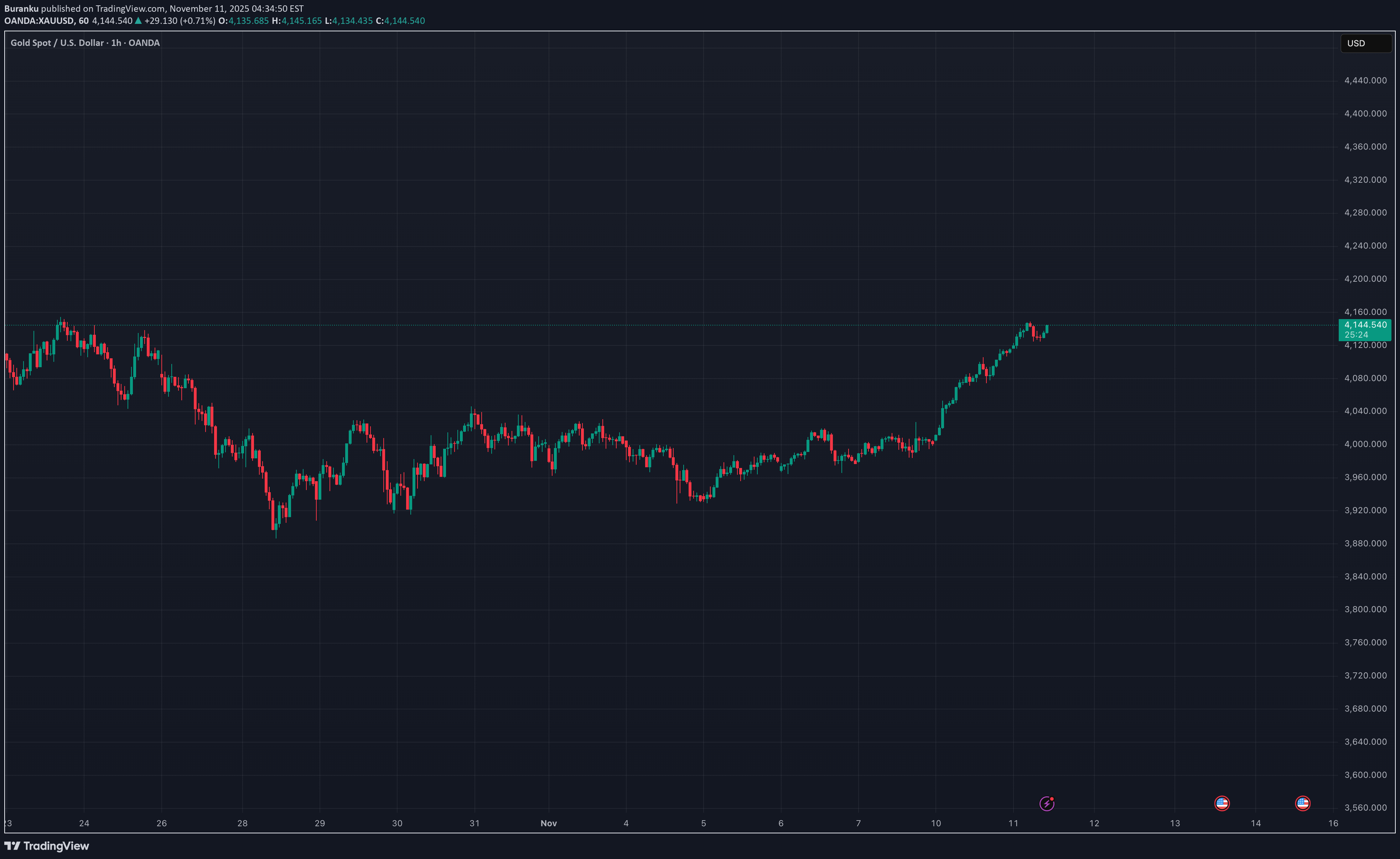
Report summery Markets just got a two-handed shove: politically, the election results plus a Supreme Court that sounded wary about the legal basis for most of the administration’s tariffs; corporately, Tesla shareholders rewarding the “robotaxi + Optimus” optionality with a record package that anchors the market’s physical-AI story. In the very near term, that mix argues for lower equity risk appetite at the index level when policy uncertainty flares, stickier rate-cut expectations if the Court crimps tariff revenue, a range-bound to firmer USD on growth and rate differentials, and a supported crude tape as OPEC+ keeps output expansion on pause. Barron’s summed the weekly tape: Dow −1.2%, S&P −1.6%, Nasdaq −3.0% into the election/Court week, with oil buoyed as OPEC+ paused planned increases and the shutdown dragged on; AI positioning was a headwind for some names. On Nov. 11, the Dollar Index printed ~96.9 and U.S. equities bounced from the week’s slump, underscoring that this is a path dependency story, each headline toggles the balance between “tariff revenue supports fiscal and dovish Fed” versus “legal curbs force policy workarounds and wider deficits.” Yields have been skittish for precisely this reason. What just changed and why it’s material Voters swung blue in key off-year races (NYC, NJ, VA, CA), a symbolic check on the White House, while conservative justices questioned whether tariffs belong with Congress rather than the presidency under the emergency-powers rubric. That combination narrows the unilateral policy lane that markets had grown used to, even if near-term asset prices still lean on AI enthusiasm and hopes of Fed cuts. At the same time, the shutdown’s persistence and data blackouts (CPI/PPI delayed) reduce near-term macro visibility; the FAA even trimmed air traffic by ~10% due to staffing constraints. This keeps volatility in play around each incremental political headline. Finally, shareholders approved a $1T incentive for Musk, a shot of confidence in Tesla’s “physical AI” thesis even as today’s revenue mix remains car-heavy, locking in a market narrative where robotaxis and humanoid robots carry an outsized share of implied valuation. Policy mechanics and the market’s decision tree Tariffs & the Court. If the Court ultimately limits the current legal basis, the administration can try to pivot to other authorities to keep levies flowing, but there will likely be a gap risk: refunds on existing levies or slower collections would widen near-term funding needs, affect Treasury supply expectations, and complicate the deficit path that officials have been using to justify rate-cut rhetoric. Even some market participants who think the strategy will be re-patched concede it would put the White House on the back foot and chill counterparties’ willingness to concede in trade talks. Shutdown & fiscal optics. The Senate moved a package to end the shutdown, but intraparty backlash shows how fragile the coalition is; until resolution, the absence of data and incremental operational frictions (SNAP/payment delays risk, FAA constraints) raise the odds of episodic growth scares without giving the Fed clean data. Oil policy backdrop. OPEC+ pausing planned output increases props up crude into year-end, interacting with any tariff- or shutdown-driven supply chain noise. That’s important for breakevens and for the “Fed-cuts-soon” narrative. Asset-by-asset implications XAUUSD (gold). In the near term, gold remains a buy-the-dips hedge on policy volatility: Court-driven tariff uncertainty and shutdown-driven data gaps nudge rate-cut odds around the edges and keep real-yield volatility elevated, a classic recipe for tactical gold bids on risk-off days. If the Court curtails tariff revenue and the market leans to earlier cuts, that supports gold through lower real rates; if the administration swiftly re-routes tariffs and the dollar firms, gold consolidates in a broad range. The recent bond-market “yips” around tariff prospects are the tell. S&P 500 / Dow Jones. Index-level path is choppy: earnings leadership is narrowing again and AI-capex “asset-heavy” pivots create P&L drag in some megacaps, while the shutdown and tariff newsflow toggle multiples. Tesla’s vote is bullish for the AI/automation complex beta but doesn’t change aggregates if rates wobble. Near term, I favor quality large-cap growth with cash-flow resilience plus defensives until shutdown clarity and the Court’s posture firm up. Barron’s captured last week’s risk-off and the OPEC+ oil tailwind; Monday’s equity bounce illustrates the headline-sensitivity regime we’re in. USDJPY & DXY. The dollar stays two-way but supported on growth/rate differentials while U.S. policy is seen as net-stimulative and the Fed isn’t firmly committed to a December cut. If tariffs are curtailed and deficit optics worsen, the market could fade the USD on lower real yields, but the move likely waits for clean data once the shutdown ends. The Dollar Index hovering near the high-90s underscores that this isn’t a collapse scenario; it’s a chop. Crude Oil. With OPEC+ pausing increases, balances tighten modestly into year-end. China’s reserve behavior and sanction dynamics provide an underlying floor. In a risk-off tape on U.S. politics, crude may dip on growth fears, but policy-put supply argues for buying weakness unless global demand data sharply deteriorate. Strategic forecasts Base case (55%). Shutdown is resolved with a thin deal; the Court issues an opinion that narrows but does not nuke tariff usage, prompting legal workarounds that preserve most revenue with a lag. Equities grind with factor rotations; the dollar ranges; crude stays supported; gold holds a high-beta hedge role. Fed communication turns a bit more data-dependent into year-end given the data blackout. Bullish risk (25%). Quick shutdown end plus an opinion that validates sufficient tariff authority to keep revenue intact; Treasury supply relief + OPEC+ discipline + ongoing AI enthusiasm push the Dow back toward highs and compress IG/HY spreads; DXY firms and gold ranges. Bearish risk (20%). Prolonged shutdown + opinion that forces refunds and delays replacements; Treasury supply fears lift term premia; equities de-rate; DXY softens with yields, gold rallies, crude chops but holds better than cyclicals thanks to OPEC+. The recent recounting of bond market swings on tariff odds shows you the path dependency. Fiscal and political implications investors can’t ignore Three items drive the medium-term P/L: (1) tariff-linked revenue math and Treasury issuance; (2) the durability of OPEC+ discipline against a soft global cycle; (3) the political learning curve, Democrats adopting more muscular tactics, Republicans facing internal constraints, which together implies higher policy volatility even if the average path for growth is fine. Barron’s flagged both the Court’s fiscal wild card and the way Tuesday’s results may restrain unilateralism; that mix lifts the premium investors demand for U.S. policy stability, even if risk assets still love AI. Risks and opportunities The principal left-tail is a messy ruling that triggers refunds and months of tariff uncertainty just as shutdown distortions bite, an ugly cocktail for rates and cyclicals. The principal right-tail is a clean shutdown resolution + Court clarity that stabilizes fiscal math, letting the market refocus on productivity/AI and re-rate quality growth. Within that, Tesla’s package cements capital availability for physical-AI narratives, spilling over to industrial robotics, auto-ADAS, edge compute and power gear, even as the index tape stays headline-driven. Positioning ideas For XAUUSD, I like staggered entries on pullbacks during USD firmness or yield pops, with exits into Court/shutdown risk-off spikes. For S&P 500/Dow, stay barbell: cash-rich compounders and resilient defensives against a small sleeve of physical-AI and industrial automation beta that benefits from the Tesla imprimatur. For USDJPY/DXY, keep trades short-leash, fading extremes rather than chasing, until we have a shutdown end date and tariff jurisprudence in hand. For crude, own dips while OPEC+ maintains discipline; rotate to producers with strong balance sheets and low breakevens rather than pure beta. Executive context and current market state Into Tuesday, Nov. 11 (Warsaw), U.S. equities are trading near record territory after a constructive start to the week: the S&P 500 closed at 6,832.43 (+1.54% on Monday), the Dow at 47,368.63 (+0.81%), and the Nasdaq Composite at 23,527.17 (+2.27%). The Dollar Index sits at 96.87 (down ~5.7% YTD), spot gold rallied to about $4,112/oz, and front-month crude is hovering near $60/bbl. The broad Bloomberg U.S. Treasury index yield is ~3.92%, with the long Treasury index near 4.69%. This is the asset-mix backdrop for the week’s catalysts. What the “$1T robo ransom” vote really does (Tesla) The central equity narrative is shifting from EV unit economics to “physical-AI” optionality. The shareholder vote to award Elon Musk an unprecedented performance package is, functionally, a vote to concentrate control around a Robotaxi/Optimus roadmap that currently contributes almost nothing to revenue but most of the equity value embedded in the stock, per the Barron’s analysis you shared. The bull frame is speed: Tesla’s ability to iterate hardware, software, and data centers quickly, plus its experience “touching the physical world”, positions it to attack logistics and labor-substitution profit pools. The bear/neutral frame is time-to-cash: Robotaxi economics require regulatory throughput, urban deployment, and sustained FSD reliability; humanoids require customer acceptance, cost curves, and safety frameworks. On the numbers cited: BofA’s value apportionment implies that the “auto today” piece is a minority of the price, while Robotaxis and Optimus together dominate. If the plan passes, as betting markets and high-profile holders suggest in the column—Tesla leans even harder into the AI platform identity. If it fails, governance overhang grows, and the equity would likely re-rate toward cash-producing businesses (auto + energy storage + FSD subscriptions), a meaningfully lower outcome than “open-ended” robo upside. For portfolio construction, that bifurcation matters because a “pass” increases the path-dependence of Tesla within mega-cap indices: more sensitivity to AI-infrastructure cycles, to city-level regulation, and to headline risk around automation accidents. Near term, the mechanical index impact is supportive while the broader EV tape remains mixed; medium term, you should assume higher left-tail volatility around regulatory events and demo failures (a la past autonomy setbacks), paired with right-tail upside on any credible Robotaxi monetization pilot. Big Tech’s AI capex super-cycle and cash-flow math Across Big Tech, a maturing AI capex super-cycle is compressing near-term margins at firms that lack offsetting external cloud revenue, while advantaging platforms that can rent out capacity. The piece you provided highlights Meta’s capex and depreciation bulge and the risk that “show-me” cash-flows lag the spend. Alphabet’s higher capex guide is backstopped by stronger cash generation and Cloud profitability; Microsoft and AWS remain cushioned by cloud operating leverage even as depreciation ramps. For alpha, the implication is straightforward: reward owners of AI-capex that monetize externally, and be choosier where AI is largely an internal cost center. At the second-derivative level, this also pulls forward demand for power, grid upgrades, copper and electrical equipment, and specialized construction, supporting industrials with data-center exposure, while creating pressure on utilities and regional power markets in the form of capacity and pricing debates. Tariffs: macro effect smaller than feared, but the legal risk rises The tariff shock of April didn’t deliver “doomsday.” The data in your packet point to an effective average rate materially below headline levies (via exemptions, supply-chain rerouting, bonded-warehouse usage, and inventory timing), with companies eating a notable share of costs as margins remain structurally fatter than pre-pandemic. That’s why realized inflation impulse looks muted so far, even as some sectors creep prices higher over time. The legal front is now a separate, market-moving variable: the Supreme Court signaled skepticism on key tariff authorities; a forced refund of previously collected levies is estimated at roughly $195 billion, which would weigh on the dollar if enacted. In markets last week, the ICE DXY slipped, and the Dollar Index has been trending lower YTD, consistent with anticipation of Fed easing and, at the margin, legal risk to tariff revenue. U.S.–China: a fragile detente and what it removes and doesn’t The Trump and Xi summit in South Korea took some tail-risk off: a one-year delay on China’s new rare-earths curbs, U.S. suspension of the “affiliates rule” expansion, partial tariff relief, and resumed commodity purchases provide breathing room. This is commercial de-escalation, not strategic rapprochement, and core issues (advanced chips, dual-use tech, export controls) are unresolved. For positioning, the immediate effect is lower equity risk premia across Asia and semis with China exposure, plus a softer safe-haven bid into the dollar; medium term, watch whether Nvidia’s engagement yields any sanctioned-product pathway and whether enforcement on rerouting via third countries tightens. Path dependency remains high: a single export-control or maritime incident can unwind the calm. Labor market erosion vs. foundation: why the Fed still leans to cuts The labor theme in your packet, stable initial claims around ~220k amid headline layoffs, supports the “erosion, not cliff” view. Small-business hiring intent is trying to turn; hospitality and transport showed monthly payroll gains; education/healthcare still add jobs. It’s a tepid recovery pulse, but it keeps the U.S. growth mix alive alongside easing goods inflation. Fed Governor Lisa Cook framed the trade-off cleanly: policy remains “modestly restrictive,” with downside jobs risk outweighing the risk of reinflation at the margin, and every meeting staying live. That stance is consistent with a 2026-leaning cuts path and a softer dollar baseline absent fresh supply shocks. Gold’s resilience with real yields off the highs is consistent with that combination and with continued geopolitical hedging. Fiscal frictions: SNAP partial payments and shutdown scarring SNAP’s partial-benefit plan during the shutdown introduces near-term drag for the lowest-income cohorts with the highest marginal propensity to consume, alongside state-level administrative delays. The macro effect is small at the national level but not trivial for retail comps sensitive to the EBT calendar. If prolonged, it slightly dents Q4/Q1 discretionary and reinforces the case for easier Fed policy relative to a world where fiscal flows were unimpeded. Energy: China’s strategic stockpiling cushions crude’s downside China has been importing >11 mb/d this year, stashing an estimated 1.0–1.2 mb/d into reserves, while Brent and WTI trade in the low-$60s. Stockpiling, capacity additions, and yuan-settled Russian flows put a floor under prices; conversely, any pause in those reserve builds exposes crude to the low-$50s scenario given the still-loose global balance. The U.S., by contrast, has been slow to rebuild the SPR. For portfolio risk, that mix argues for maintaining convexity via call spreads rather than outright long barrels, given macro growth uncertainty. The current tape, crude near $60, gold >$4k, dollar softer, is exactly the profile that tends to favor duration and quality equities over high-beta cyclicals unless or until an upside demand surprise materializes. Banks: BofA’s bid to close the ROTCE gap Bank of America’s investor day intends to shift the narrative from “responsible growth” to “more growth,” with a targeted ROTCE lift toward 16–18% from ~14% YTD, and capital returns combining ~2% yield with robust buybacks for a ~7% total shareholder yield. The drag from the low-coupon MBS book should abate as reinvestment runs at higher yields into 2026, while credit costs remain benign relative to history. Versus JPMorgan’s still-superior returns, BofA’s upside rests on delivering loan growth (notably cards, where it’s been conservative), re-energizing Merrill’s margins, and proving out NII expansion without undue duration risk. At ~12.5x forward EPS and a discount to top peers, there is room for multiple catch-up if execution lands. The near-term risk is “sell the news” if targets are seen as back-loaded. Strategy, risks, and where to lean on Strategically, lean into beneficiaries of externally monetizable AI capex (cloud platforms and their power-and-build-out upstreams), quality financials that can credibly expand ROTCE as duration headwinds fade, and gold as a policy-and-geopolitics hedge while dollar momentum is soft. Keep a differentiated stance within mega-cap tech: firms with internal-only AI spend face “show-me” risk on margins. Maintain optionality in energy rather than directional leverage. The biggest risks to this stance are an adverse Supreme Court outcome that ricochets through trade channels in unexpected ways, a negative surprise in CPI that re-firms real yields, an autonomy-related regulatory shock that crimps the Tesla/Robotaxi narrative, or an abrupt deterioration in the U.S.–China tone that revives dollar strength and commodity volatility. For the lazy in my opinion: * XAUUSD (Gold): Up * S&P 500 (ES): Up * Dow Jones (DJI): Up * Nasdaq 100 (NQ): Up * WTI Crude (CL): Up (modest; floor from China stockpiling) * DXY (US Dollar Index): Down * USDJPY: Down (yen firmer on softer USD/rates) * UST 10Y Yield: Down (prices up) * TSLA: Up (governance vote → “physical-AI” optionality) * META: Down (capex/depr. overhang) * GOOGL: Up (cloud/cash flow cushion) * MSFT: Up (Azure strength) * AMZN: Up (AWS monetizes AI demand) * Bank of America (BAC): Up (ROTCE catch-up path) * Energy equities (XLE): Down (oil capped, margin pressure) * Copper: Up (grid/data-center buildout) * EURUSD: Up (weaker USD) * USDCNH: Down (yuan supported by flows) * VIX: Down (risk premium easing)