تحليل التحليل الفني Buranku حول PAXG في رمز في 10/11/2025

Buranku
تفسیر بزرگ بازار: تسلا، هوش مصنوعی و نوسانات سهام جهانی در گزارش 10/11/25
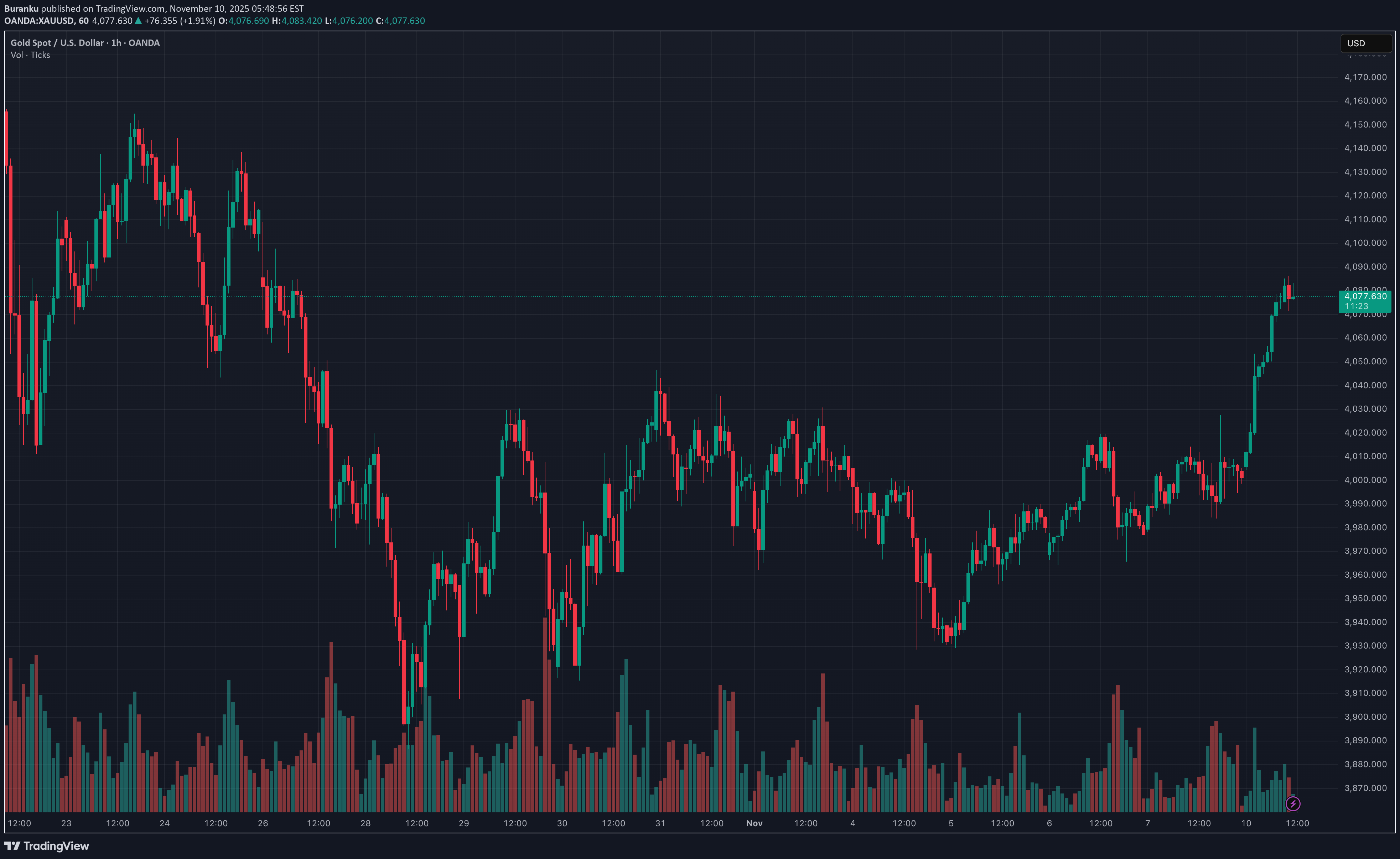
Report summary Next week’s Tesla shareholder vote on a record $1T performance package is more than governance theatre; it’s a referendum on whether public markets will underwrite a decade-long pivot from “auto + FSD” to “physical-AI” platforms, Robotaxi networks and the Optimus humanoid line, that currently contribute little revenue but anchor most of the equity story. In parallel, Big Tech’s AI capex divergence is reshaping cash-flow visibility and equity multiples: Meta is leaning into an asset-heavy model with a near-term margin drag, Alphabet and Microsoft offset depreciation with cloud monetization, and Apple is preserving an asset-light cash-return profile. Financials add a second macro thread: Bank of America is preparing a returns catch-up plan just as its legacy low-coupon securities book rolls off into higher yields, supporting 2026 net interest income. Policy tape risks eased modestly after a U.S.–China commercial détente that paused tariff escalation and rare-earth restrictions, yet the truce is partial and fragile. Meanwhile, the U.S. labor market shows erosion at the edges but retains a firm foundation; headline inflation near 3% has not morphed into the feared tariff-shock, with effective pass-through diluted by exemptions, corporate margins, and supply re-routing. China’s strategic crude stockpiling is quietly putting a floor under oil in the mid-60s even as Western sanctions keep reshuffling barrels. Finally, escalating AI compute demand crystalized in OpenAI’s multiyear cloud commitments, reinforcing the “cash now, depreciation later” story at the hyperscalers. Net-net, the risk mix argues for staying constructive on quality growth and cloud cash engines, tactically owning U.S. cyclicals into year-end liquidity, and hedging policy and single-name event risk around Tesla’s vote and the Supreme Court tariff case. Event rundown and market read The Tesla vote on Nov. 6 would lift Musk’s potential stake from 13% to ~25% contingent on extreme value and operating targets (including a decade path >$8.5T market cap), effectively hard-wiring strategic control over the robot platform build-out. Street frameworks increasingly ascribe minority value to legacy auto: one bank decomposition pegs 12% of equity value to vehicles, 17% to FSD subscriptions, ~45% to Robotaxi, and ~19% to Optimus. Bulls emphasize execution speed and “touching the physical world” advantages, bears note that FSD still requires active supervision and keeps Robotaxi “in park,” lengthening the cash runway to monetization. Big Tech earnings re-ranked AI spenders: Meta’s 2025 capex moved to the low-$70B area with depreciation set to more than double as a share of revenue over the decade; Alphabet lifted 2025 capex guidance into the low-$90Bs but pairs it with accelerating free cash flow and Cloud margins; Microsoft’s Azure growth near 40% and high-40s segment profitability continue to cushion capex; AWS remains the profit engine for Amazon even as depreciation trims margins short-term. In banks, BofA heads into an investor day with a targeted lift in ROTCE toward the high-teens, aided by reinvestment of its massive low-coupon securities book at today’s yields and ongoing buybacks. On policy, Washington and Beijing declared a limited truce, deferrals on rare-earth curbs, tariff hikes paused or partially rolled back, soybean buys resumed, fentanyl-related measures softened, taking the worst-case tail from markets without resolving core tech and export-control disputes. Labor data, while thinned by the shutdown, point to steady initial claims around ~220k and an easing but not collapsing hiring pulse; inflation at ~3% Y/Y remains above target but below spring fears, with tariff revenue and pass-through running lower than headline rates implied. China has been importing >11mb/d crude with an estimated 1.0–1.2mb/d going into storage, helping stabilize Brent near the mid-$60s despite sanctions churn. Finally, OpenAI’s additional ~$38B AWS commitment (on top of very large multicloud deals elsewhere) locks in multi-year compute demand that supports hyperscaler capacity build-outs. Strategic implications For equities, AI capex bifurcation now matters as much as AI narrative. Asset-heavy strategies (notably Meta) structurally raise depreciation and lower reported operating margins before the revenue flywheel fully arrives; models require higher confidence in multi-year usage to justify multiples. Asset-light strategies (Apple) preserve margin and cash returns but risk falling behind in platform infrastructure if they under-index spend. Alphabet and Microsoft sit in the sweet spot where every dollar of capex can be partially monetized immediately via Cloud, smoothing FCF even as D&A climbs. For Tesla, the vote outcome determines governance risk and the market’s tolerance for long-dated, binary optionality. If approved, it likely reduces overhang and keeps the “option value” premium alive; if it fails, the market will rapidly refocus valuation toward autos, FSD take-rates, and energy storage, compressing multiples. Macro-wise, the partial U.S.–China de-escalation, muted tariff pass-through, and still-firm labor base argue against a hard-landing baseline. China’s oil stockpiling should cap the downside in crude unless domestic growth stumbles; it also keeps refined-product margins and shipping spreads interesting. The Fed’s tone, policy modestly restrictive and each meeting “live”, supports a glide path of incremental cuts so long as the jobs picture softens at the margin and inflation drifts lower. Near-term U.S. fiscal frictions are real (e.g., SNAP partial payments during the shutdown), but markets are signaling they’re transitory policy noise, not systemic risk. Asset-by-asset impact and positioning S&P 500 / Dow Jones. Earnings leadership is broadening beyond the megacaps, but multiples remain rich, raising the penalty for misses. The U.S.–China cooling reduces tail risk on supply chains and semis policy without granting a durable peace. Into year-end, the combination of softer-than-feared inflation, resilient employment, and Fed optionality supports an upward bias. Prefer owning quality growth with cloud monetization, cash-rich platforms with operating leverage to AI demand, and select cyclicals tied to capex and freight normalization. Dow breadth should improve if banks deliver ROTCE uplift and industrials benefit from steadier input costs. Hedge event risk around Tesla’s vote with defined-risk put spreads if concentrated exposure exists. Tesla equity. Into the vote, realized volatility will remain elevated. Approval likely sustains the “long-dated options on autonomy + humanoids” premium and keeps multiple discipline at bay near-term; a failure would trigger a rapid de-rating toward auto + FSD fundamentals, especially with post-credit EV demand normalizing after September’s buy-ahead and a soft October print expectation. Portfolio stance: keep single-name sizing disciplined, fund upside with call spreads rather than stock in new money, and balance with short-dated protective puts into and through the meeting if exposure is material. Big Tech complex. Meta’s trajectory becomes a show-me path as depreciation ramps; treat drawdowns as tradable rather than structural until operating leverage from AI products is clearer. Alphabet and Microsoft remain core, with Cloud monetization cushioning capex and the OpenAI/AWS compute wave reinforcing secular demand across all hyperscalers. Apple’s asset-light cash-return story should keep a floor under the multiple while it times AI feature rollouts; treat it as a low-beta core within megacap baskets. DXY / USDJPY. A tempered tariff path and incremental global risk-on tone are dollar-negative at the margin, though the policy-rate gap still supports the greenback on dips. If the Fed leans into a gradual easing glide path while the BoJ remains slow-walking normalization, USDJPY downside is limited absent a surprise in Japanese policy. Bias is for range trading with a mild USD drift lower on better risk appetite; favor funding selective EM and Asia ex-Japan exposures on DXY rallies rather than chasing dollar strength. Crude oil (Brent/WTI). China’s 1.0–1.2mb/d stockbuild rate and spare storage capacity keep a firm floor in the mid-$60s even as sanctions reroute barrels and the IEA projects a temporary surplus. U.S. SPR refills remain slow, so the marginal bid is more Asian than American. With sanctions-related frictions raising transaction costs, prompt spreads can stay choppy. Trading stance: buy dips into the mid-$60s on Brent with conservative profit-taking near low-$70s unless evidence emerges of a meaningful Chinese stockbuild pause. XAUUSD (Gold). With inflation near 3% and policy still modestly restrictive, gold’s macro bid now leans more on central-bank demand and geopolitical hedging than on immediate real-rate collapse. A softer dollar on trade de-escalation helps at the margin. Use weakness driven by risk-on equity squeezes to add tactically; fade spikes that are purely headline-driven absent rate support. Risks and alternative paths The U.S.–China thaw could reverse quickly if export-control or semiconductor policy hardens; chip-license outcomes and any signal on Blackwell-class access will be key. The Supreme Court’s tariff case is a binary headline risk that could re-price cross-border exposures and the dollar. On Tesla, governance uncertainty is material: a failed package would compress the “option on autonomy” premium, spill over into AI-beta sentiment, and test megacap resilience. Meta’s capex path risks a longer-than-expected depreciation overhang if product revenue lags; conversely, faster AI monetization could force a rerate higher. Energy risk skews are two-sided: accelerated Chinese stockbuilding or a shipping disruption lifts crude; a growth wobble in China or a sanctions workaround oversupply pulls it back below $60. U.S. fiscal and shutdown dynamics can interrupt data flow and reduce signal quality precisely when the Fed wants clarity. What to do now possibly Maintain core exposure to quality growth where AI capex has near-term monetization through cloud, add selectively to U.S. banks with credible ROTCE uplift into 2026, and keep a tactical long bias in cyclicals that benefit from steadier input costs and capex. For crude, buy the mid-$60s and harvest in the low-$70s while watching China inventory signals. In FX, sell DXY strength into event relief and keep USDJPY range strategies while the policy-rate gap persists. Around Tesla, reduce gross exposure into the vote if position size is large, use options to express upside while capping downside, and pre-define stop-losses for a non-approval scenario. Maintain gold as a portfolio hedge, adding on dips when dollar strength fades.