16.12.2025 tarihinde sembol BTC hakkında Teknik GlobalWolfStreet analizi

Global Trade in the Modern Market
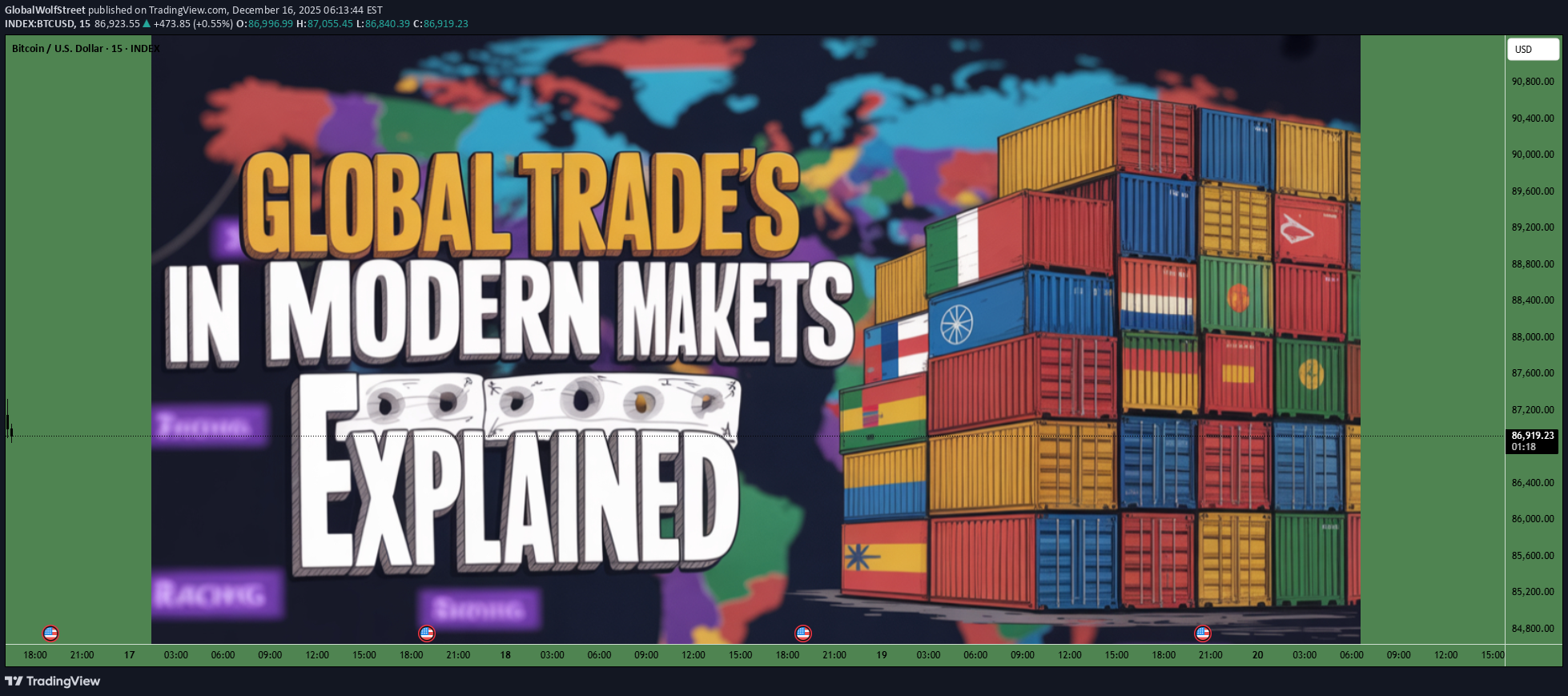
Structure, Dynamics, and Strategic Importance Global trade in the modern market represents one of the most powerful engines of economic growth, innovation, and international interdependence. Unlike earlier eras—when trade was limited by geography, slow transportation, and fragmented information—today’s global trade ecosystem operates at high speed, across digital platforms, and through deeply integrated supply chains. Goods, services, capital, data, and technology now move across borders with unprecedented scale and complexity, reshaping how nations compete and collaborate. 1. Evolution of Global Trade Modern global trade has evolved from simple bilateral exchange into a sophisticated, multi-layered network. Containerization revolutionized logistics, reducing costs and transit times. The rise of multinational corporations (MNCs) fragmented production into global value chains (GVCs), where design, manufacturing, assembly, and marketing occur in different countries. Digitalization further transformed trade by enabling real-time coordination, e-commerce, and cross-border services that require no physical shipment at all. 2. Key Drivers of Modern Global Trade Several forces define today’s trading environment: Technology and Digital Platforms: Cloud computing, AI, and data analytics optimize inventory, pricing, and demand forecasting. Digital marketplaces allow even small firms to access global customers. Trade Liberalization: Free trade agreements (FTAs) and regional blocs reduce tariffs, harmonize standards, and encourage cross-border investment. Capital Mobility: Global finance supports trade through credit, hedging instruments, and risk management tools such as futures, options, and insurance. Consumer Demand: Rising incomes in emerging markets fuel demand for diverse products, while developed markets seek cost efficiency and innovation. 3. Structure of Global Trade Flows Modern trade flows extend beyond physical goods: Merchandise Trade: Includes commodities (energy, metals, agriculture) and manufactured goods (electronics, automobiles, machinery). Services Trade: Finance, IT services, logistics, consulting, tourism, and digital services are growing faster than goods trade. Intellectual Property and Data: Licensing, software, patents, and data flows are now critical trade assets. Capital and Investment: Foreign direct investment (FDI) supports production hubs and market access. 4. Role of Global Value Chains (GVCs) Global value chains are the backbone of modern trade. A single product—such as a smartphone—may involve raw materials from Africa, components from East Asia, design from the US or Europe, and assembly in Southeast Asia. This specialization increases efficiency but also creates vulnerability. Disruptions like pandemics, geopolitical tensions, or natural disasters can ripple across the entire chain, forcing firms to rethink resilience and diversification. 5. Emerging Markets and Trade Power Shifts The modern trade landscape reflects a gradual shift from a unipolar system to a multipolar one. Emerging economies—particularly in Asia, Latin America, and parts of Africa—are no longer just low-cost manufacturers. They are becoming: Major consumer markets Innovation hubs Strategic suppliers of critical resources Countries like China, India, Vietnam, and Mexico play increasingly central roles in global production and trade negotiations, influencing pricing, standards, and supply-chain strategies. 6. Geopolitics and Trade Policy Trade today is inseparable from geopolitics. Tariffs, sanctions, export controls, and industrial policies are used as strategic tools. Governments prioritize: Economic security (semiconductors, energy, food) Supply-chain sovereignty Strategic alliances and friend-shoring This has led to partial de-globalization or “re-globalization,” where trade is restructured around trusted partners rather than purely cost-based efficiency. 7. Financial Markets and Trade Integration Modern trade is closely linked with global financial markets: Foreign Exchange (FX): Currency movements directly impact trade competitiveness and profitability. Derivatives: Futures and options help exporters and importers hedge price and currency risks. Trade Finance: Letters of credit, guarantees, and supply-chain finance enable liquidity and trust across borders. This integration allows trade to scale rapidly but also exposes it to financial volatility and capital flow reversals. 8. Sustainability and ESG in Global Trade Environmental, Social, and Governance (ESG) considerations are reshaping trade decisions. Companies and governments now factor in: Carbon footprints and green logistics Ethical sourcing and labor standards Circular economy principles Carbon border taxes, sustainability-linked financing, and green trade corridors are emerging as defining features of modern global commerce. 9. Digital Trade and the Future of Commerce Digital trade is one of the fastest-growing segments: Cross-border e-commerce platforms connect sellers and buyers directly. Digital payments and blockchain improve transparency and settlement. Services like cloud computing, online education, and remote work are traded globally without physical borders. Regulation of data flows, cybersecurity, and digital taxation will heavily influence the next phase of global trade. 10. Risks and Challenges in the Modern Trade System Despite its scale and efficiency, modern global trade faces key challenges: Supply-chain disruptions Trade wars and protectionism Currency volatility Regulatory fragmentation Climate-related risks Managing these risks requires diversification, strategic inventory management, and advanced risk-hedging tools. 11. Strategic Importance of Global Trade Global trade is more than economic exchange—it is a strategic asset. It shapes: National growth and employment Corporate profitability and competitiveness Innovation diffusion Global political influence Countries that master trade logistics, financial integration, and technological adoption gain long-term strategic advantages. Conclusion Global trade in the modern market is a complex, fast-moving, and deeply interconnected system. It blends physical goods, digital services, finance, and geopolitics into a single global framework. While efficiency and scale have reached historic highs, resilience, sustainability, and strategic alignment are now equally important. The future of global trade will not be defined solely by how cheaply goods move across borders, but by how intelligently, securely, and sustainably global markets are connected.